Top 10 Seed Starter Kit
We may earn a commission for purchases made using our links. Please see our disclosure for more details.
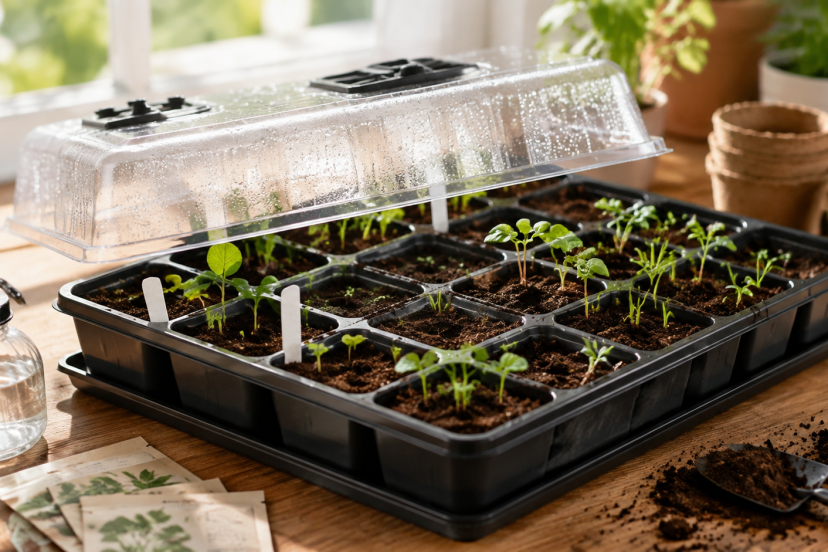
Starting plants from seed can save money, expand your variety choices, and give you more control over growing conditions. However, inconsistent moisture, weak lighting, and cramped cells can quickly undermine your efforts. A well-designed seed starter kit creates a stable environment during the vulnerable germination stage. This guide compares ten worthwhile options on Amazon, from affordable propagation trays to complete systems with lighting and bottom heat.
Our Top Picks
| Product | Best For | Key Feature | Rating | Read More |
| Bootstrap Farmer Extra Strength Kit | Best overall | Commercial-grade reusable trays | ★★★★★ | Read review |
| Bonviee Trays with Grow Lights | Best with lights | LEDs built into each dome | ★★★★⯪ | Read review |
| Burpee 72-Cell Self-Watering Kit | Best for beginners | Self-watering design | ★★★★⯪ | Read review |
| MIXC Grow-Light Starter Kit | Best compact system | Tall vented domes | ★★★★⯪ | Read review |
| Bonviee 5-Pack Starter Trays | Best budget trays | Clear cells and adjustable vents | ★★★★⯪ | Read review |
| Bootstrap Farmer 32-Cell Kit | Best for large seedlings | Roomy cells and 6-inch domes | ★★★★★ | Read review |
| MIXC 200-Cell Starter Kit | Best for high-volume sowing | 200 compact cells | ★★★★⯪ | Read review |
| Super Sprouter Premium Kit | Best complete system | Light, heat mat, tray, and dome | ★★★★⯪ | Read review |
| Gardzen 36-Cell Starter Trays | Best for small spaces | Compact modular trays | ★★★★⯪ | Read review |
| Bootstrap Farmer Countertop Kit | Best countertop option | Durable half-size tray system | ★★★★★ | Read review |
Best Seed Starter Kit Reviews
1. Bootstrap Farmer Extra Strength Seed Starter Kit

The Bootstrap Farmer Extra Strength Seed Starter Kit includes two 50-cell inserts, two heavy-duty 1020 trays, and two clear humidity domes. Its thick polypropylene construction offers better stability than lightweight, disposable trays.
The standard nursery dimensions also make it easier to replace individual components or use the kit with compatible heat mats and grow racks. It is a practical investment for gardeners who start seeds every season.
Pros: Heavy-duty construction, reusable components, stable trays, and practical 50-cell capacity.
Cons: More expensive than basic kits, and growing medium and lights are not included.
Best for: Gardeners seeking a durable seed-starting system for repeated use.
Why we recommend it: Its strong, reusable components provide better long-term value than thin trays that may crack after one season.
2. Bonviee Seed Starter Trays with Grow Lights

The Bonviee Seed Starter Trays with Grow Lights combine clear 12-cell inserts, drainage trays, vented humidity domes, and integrated LED lights. Each module creates a separate growing space for herbs, vegetables, or flowers.
Transparent cells let you monitor roots without removing seedlings from the growing medium. Adjustable vents also help you manage moisture and airflow as plants move from germination to early growth.
Pros: Integrated grow lights, adjustable vents, clear cells, and modular tray design.
Cons: Small cells require timely transplanting, and the lights may not support larger seedlings.
Best for: Indoor growers who need a compact seed starter kit with supplemental lighting.
Why we recommend it: It combines lighting, humidity control, and root monitoring in a convenient countertop-friendly system.
3. Burpee 72-Cell Self-Watering Seed Starter Kit

The Burpee 72-Cell Self-Watering Seed Starter Kit uses a water reservoir and capillary mat to supply moisture from below. It also includes 72 growing cells, coco coir pellets, a clear dome, and plant markers.
Bottom watering helps keep the growing medium consistently moist without disturbing newly planted seeds. The generous cell count makes the kit suitable for starting several vegetable, herb, and flower varieties at once.
Pros: Self-watering design, included growing pellets, 72-cell capacity, and beginner-friendly setup.
Cons: The cells are relatively small, and replacement pellets are required for future planting cycles.
Best for: Beginners and gardeners who want easier moisture management.
Why we recommend it: The self-watering system reduces daily maintenance while creating more consistent germination conditions.
4. MIXC Seed Starter Kit with Grow Light

The MIXC Seed Starter Kit with Grow Light features clear 12-cell trays, elevated humidity domes, adjustable vents, and full-spectrum LED lights. Its modular format allows different seed varieties to be watered and managed separately.
The elevated covers provide more room for young plants than many low-profile seed trays. Clear cells also help you judge root development and decide when seedlings are ready for larger containers.
Pros: Full-spectrum lights, elevated domes, adjustable ventilation, and transparent growing cells.
Cons: Limited capacity per tray, and larger seedlings may require stronger overhead lighting.
Best for: Herbs, flowers, and compact indoor seed-starting stations.
Why we recommend it: Its taller domes and built-in lighting give seedlings a useful head start in rooms with limited natural light.
5. Bonviee 5-Pack Seed Starter Trays

The Bonviee 5-Pack Seed Starter Trays provide five 12-cell inserts, watertight bases, and clear humidity domes. They are designed for growers who already have a separate grow light or a bright seed-starting location.
Each dome has an adjustable vent for controlling humidity and airflow. Because the trays are separate, you can remove a dome or change the watering schedule for one crop without affecting the others.
Pros: Affordable modular design, adjustable vents, drainage bases, and clear cells for monitoring roots.
Cons: No lighting or growing medium is included, and the plastic is lighter than commercial-grade trays.
Best for: Budget-conscious gardeners who already own grow lights.
Why we recommend it: The five separate trays make staggered planting and growing multiple seed varieties easier to manage.
6. Bootstrap Farmer 32-Cell Seed Starter Kit

The Bootstrap Farmer 32-Cell Seed Starter Kit uses spacious cells, heavy-duty 1020 trays, and six-inch humidity domes. Its larger cells provide more room for roots than high-capacity plug trays.
This extra space is helpful for tomatoes, peppers, squash, cucumbers, and other plants that may remain indoors for several weeks. The tall covers also allow seedlings to grow longer before the domes must be removed.
Pros: Roomy cells, tall humidity domes, commercial-grade trays, and reusable polypropylene construction.
Cons: Holds fewer seedlings and requires more growing medium than a fine-cell tray.
Best for: Large or fast-growing seedlings that need additional root space.
Why we recommend it: Its deeper cells and tall domes reduce the pressure to transplant vigorous seedlings too early.
7. MIXC 200-Cell Seed Starter Tray Kit
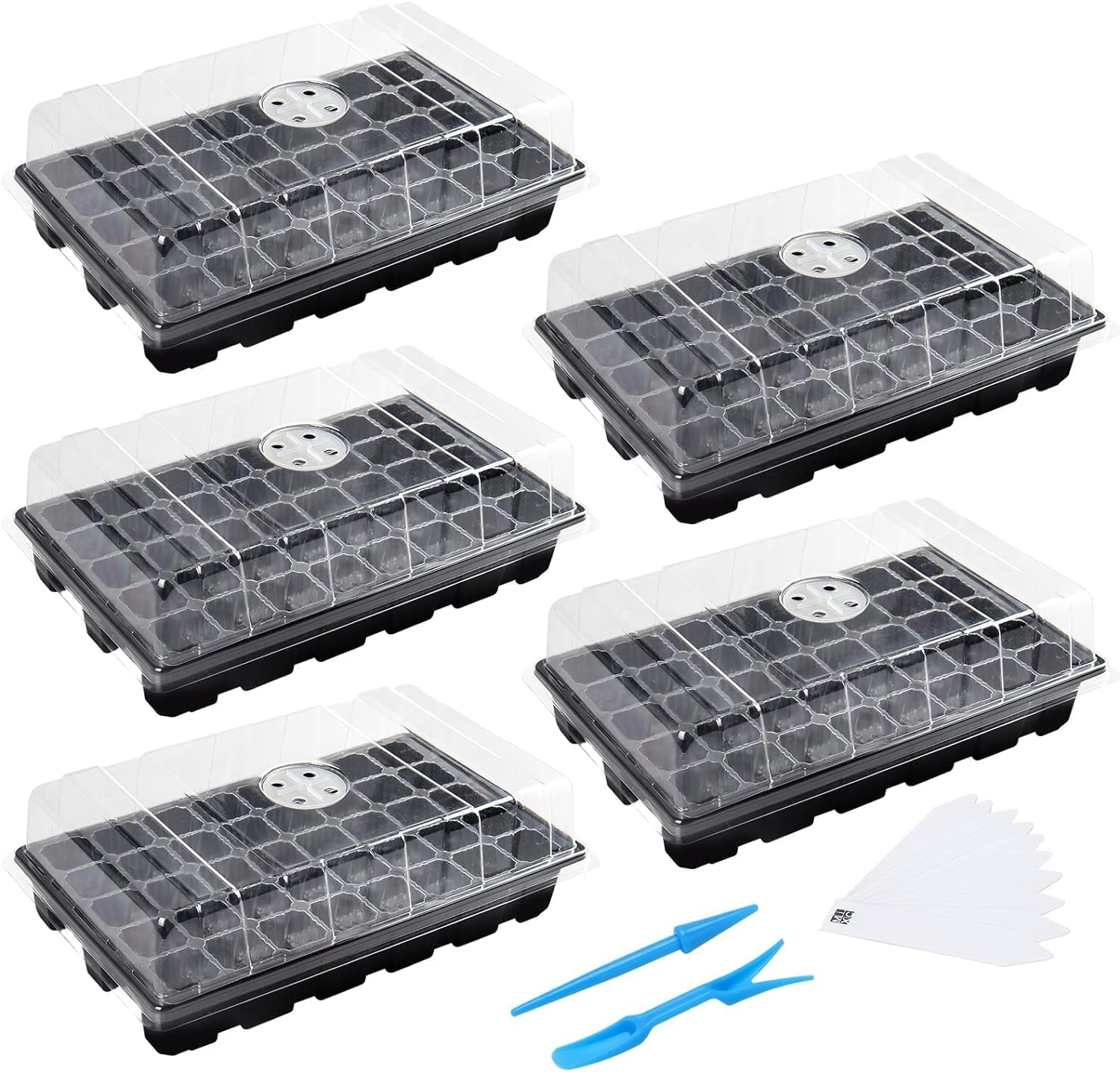
The MIXC 200-Cell Seed Starter Tray Kit includes five 40-cell trays with drainage bases and adjustable humidity domes. It provides substantial growing capacity without requiring a large number of full-size nursery flats.
The compact cells work particularly well for flowers, leafy greens, herbs, and other plants that can be transplanted while relatively small. Transparent inserts make it easier to inspect moisture and root growth.
Pros: High 200-cell capacity, adjustable vents, separate trays, and clear root-viewing inserts.
Cons: Small cells dry quickly and may become crowded if seedlings are not transplanted on time.
Best for: Gardeners starting large quantities of herbs, flowers, or leafy greens.
Why we recommend it: It offers excellent capacity for succession sowing and high-volume seed starting in a manageable footprint.
8. Super Sprouter Premium Propagation Kit

The Super Sprouter Premium Propagation Kit includes a heavy-duty propagation tray, seven-inch humidity dome, seedling heat mat, T5 grow light, and instructional booklet. It supplies both warmth and light rather than requiring several separate purchases.
The heat mat is useful for germinating warmth-loving crops such as peppers, tomatoes, and eggplants in cool rooms. Its tall dome can also accommodate plant cuttings and developing seedlings.
Pros: Includes a grow light, heat mat, tall humidity dome, sturdy tray, and propagation guide.
Cons: Costs more than tray-only kits, and the lighting fixture requires additional vertical space.
Best for: Gardeners who want a complete heated and illuminated propagation station.
Why we recommend it: Its coordinated components create a more controlled environment for seeds and cuttings from the start.
9. Gardzen 36-Cell Seed Starter Trays

The Gardzen 36-Cell Seed Starter Trays use compact growing modules with clear covers and adjustable ventilation. Their smaller footprint fits more easily on windowsills, countertops, and narrow shelves than a standard 1020 tray.
Separate modules allow you to organize plants by variety or germination speed. Once one group sprouts, you can increase its ventilation without changing the conditions around slower-germinating seeds.
Pros: Compact footprint, adjustable ventilation, separate drainage trays, and convenient crop organization.
Cons: Limited dome height and relatively small cells require close monitoring as seedlings develop.
Best for: Apartment gardeners and anyone working with limited indoor growing space.
Why we recommend it: The compact modules provide useful humidity control without occupying an entire table or grow rack.
10. Bootstrap Farmer Countertop Seed Starter Kit

The Bootstrap Farmer Countertop Seed Starter Kit brings the brand’s heavy-duty construction to a smaller 1010 tray format. It includes a reusable base tray, cell insert, and clear humidity dome.
Its half-size footprint fits comfortably beneath compact grow lights and is easier to carry than a fully loaded nursery flat. The durable components are suited to repeated batches of herbs, vegetables, flowers, and houseplants.
Pros: Strong reusable materials, compact footprint, stable base tray, and easy handling.
Cons: Lower capacity than a full-size system, and lighting and growing medium must be purchased separately.
Best for: Small-scale growers who want durable trays for a countertop or narrow shelf.
Why we recommend it: It delivers commercial-style durability in a convenient size for modest planting batches.
How to Choose a Seed Starter Kit
Look beyond cell count and consider how the kit will fit your actual growing routine.
- Cell size: Small cells maximize capacity, but seedlings must be moved sooner. Larger cells work better for tomatoes, squash, and other vigorous plants.
- Humidity dome: A dome slows moisture loss during germination. Adjustable vents make it easier to lower humidity after sprouts appear.
- Lighting: Built-in LEDs are convenient for germination and early growth, although larger seedlings may need a stronger overhead grow light.
- Bottom watering: Reservoirs and catch trays help maintain moisture without disturbing seeds.
- Durability: Thick polypropylene trays cost more initially but can survive multiple growing seasons.
- Heat: A seedling mat can improve germination for warmth-loving crops. Cool-season lettuce and spinach usually need less heat.
Whatever system you choose, keep the growing medium damp rather than saturated. Our guide to starting seeds for hydroponics explains why excess water can reduce oxygen around seeds and slow germination.
Final Thoughts
The best seed starter kit is the one that matches your available space, crop size, and growing schedule. Bootstrap Farmer’s Extra Strength Kit is our best overall choice for durability, while Bonviee and MIXC offer convenient illuminated systems for indoor shelves. Beginners who want simpler moisture control should consider Burpee’s self-watering kit, and growers who need heat and light in one package will get more from the Super Sprouter system. Choose adequate cell depth, provide bright light after germination, and transplant before roots become crowded.
Frequently Asked Questions
What should a seed starter kit include?
A basic kit should contain cell inserts, a watertight bottom tray, and a humidity dome. More complete systems may add growing plugs, labels, LED lights, a self-watering mat, or a seedling heat mat.
Are seed starter kits worth buying?
Yes, especially when indoor temperatures or humidity fluctuate. A kit organizes seedlings, manages drainage, and creates a more consistent germination environment than assorted household containers.
How long should seedlings stay under a humidity dome?
Remove the dome or open its vents once most seeds have sprouted. Prolonged high humidity after germination can encourage weak growth, mold, and damping-off disease.
Do seed starter kits need grow lights?
Seed does not always need light to germinate, but emerging seedlings need bright light quickly. Without adequate illumination, stems may become thin, pale, and stretched.
Can seed starter trays be reused?
Sturdy plastic and silicone trays can usually be reused. Remove old roots, wash the components, sanitize them with an appropriate garden-safe method, and let every part dry before storage.