Top 10 Hydroponic Net Cups
We may earn a commission for purchases made using our links. Please see our disclosure for more details.
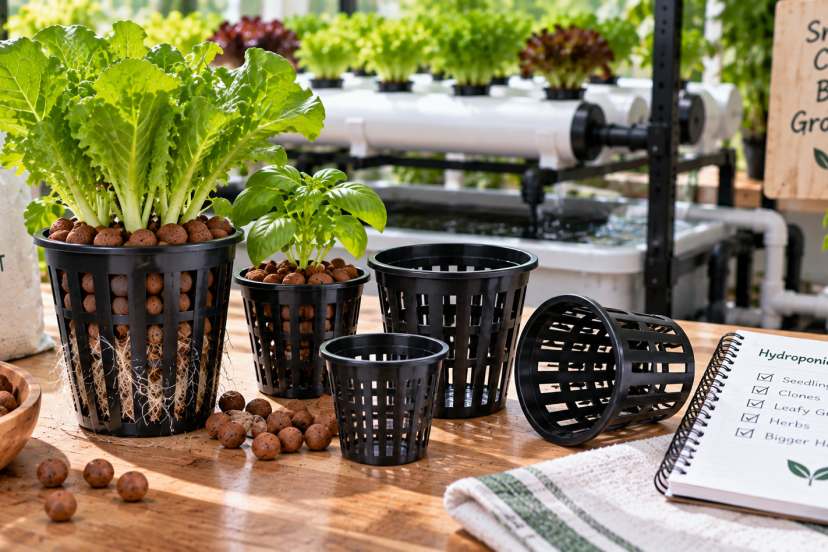
Hydroponic net cups look simple, but choosing the wrong size or design can make an otherwise good setup frustrating. A cup that slips through your lid, holds too little growing media, or restricts root growth can quickly become a weak point in the system.
The best hydroponic net cups give roots plenty of access to water, nutrients, and oxygen while keeping the plant and growing medium stable. Whether you’re building a small Kratky jar, a lettuce tower, or a larger DWC system, these ten options cover different plant sizes, budgets, and growing styles.
Our Top Picks
| Product | Best For | Key Feature | Rating | Read More |
| AC Infinity 3-Inch Net Cups | Best Overall | Heavy-duty, wide-rim design | ★★★★⯪ | Read Review |
| ORIMERC 3-Inch Net Cups | Best for Kratky | Includes wick and labels | ★★★★⯪ | Read Review |
| ORIMERC 2-Inch Net Cups | Best Starter Kit | Compact cups with accessories | ★★★★⯪ | Read Review |
| Hydrofarm 3-Inch Net Cups | Best Trusted Brand | Sturdy reusable construction | ★★★★⯪ | Read Review |
| Tmtamye 2-Inch Net Pots | Best Bulk Pack | 100 cups plus labels | ★★★★⯪ | Read Review |
| Panxxsen 3-Inch Net Pots | Best Bulk 3-Inch | 50-pack value | ★★★★⯪ | Read Review |
| 100 Pack 2-Inch Net Pots | Best Budget Pick | Compact 100-pack | ★★★★☆ | Read Review |
| HORTIPOTS 3.75-Inch Cups | Best Heavy-Duty | Reflective covers included | ★★★★⯪ | Read Review |
| CZ Garden Supply 5-Inch | Best for Larger Plants | Extra room for growing media | ★★★★⯪ | Read Review |
| Business King 2-Inch Cups | Best for Towers | UV-resistant 50-pack | ★★★★⯪ | Read Review |
1. AC Infinity 3-Inch Net Cups

The AC Infinity 3-inch net cups are a solid all-around choice for growers who want something sturdier than thin, disposable-style baskets. Their wide rim helps them sit securely in reservoir lids, rafts, and DIY hydroponic setups.
The ribbed interior gives roots and growing media extra support without restricting drainage. They cost a little more than generic bulk packs, but the stronger build makes them easier to reuse across multiple growing cycles.
Key features: 3-inch size, wide rim, ribbed interior, reusable plastic, 25-pack
Best for: DWC, Kratky, NFT, and general-purpose hydroponics
Pros: Strong construction; good root access; easy to remove; reusable
Cons: Higher cost per cup than large generic packs
Why I recommend it: It offers a good balance of durability, size, and versatility for most home hydroponic systems.
2. ORIMERC 3-Inch Net Cups

The ORIMERC 3-inch net cup set is especially useful for DIY growers because it includes wicking material and plant labels along with the cups. The 3-inch basket provides enough space for common growing media while still fitting many Kratky and DWC setups.
The included wick is handy for seedlings or passive systems, although growers using aerated DWC may not need it. Overall, it is a convenient starter bundle for smaller indoor gardens.
Key features: 3-inch net cups, self-watering wick, plant labels, reusable polypropylene
Best for: Kratky jars, herbs, leafy greens, and small DWC systems
Pros: Accessories included; versatile size; easy setup; reusable
Cons: Included wick may be unnecessary for some systems
Why I recommend it: It combines useful accessories with a practical cup size, which makes it easy for beginners to get started.
3. ORIMERC 2-Inch Net Cups

The ORIMERC 2-inch net cups are designed for tighter planting spaces where larger baskets would take up too much room. They work well for seedlings, herbs, lettuce, propagation, and compact vertical growing systems.
Because they use less growing media than 3-inch cups, they can also help keep costs down when setting up many planting sites. The smaller size does mean they are less suitable for large, top-heavy plants.
Key features: 2-inch cups, compact basket design, wick and plant labels included
Best for: Hydroponic towers, lettuce, basil, cloning, and seedlings
Pros: Compact; affordable; accessories included; good for close spacing
Cons: Limited support for larger mature plants
Why I recommend it: It is a practical choice for small plants and high-density hydroponic setups where space matters.
4. Hydrofarm 3-Inch Net Cups

Hydrofarm keeps things simple with a dependable 3-inch net cup that works with many popular hydroponic systems. The slotted basket gives roots plenty of room to grow into the nutrient solution while helping hold clay pebbles, rockwool, and similar media in place.
The design is straightforward and reusable, which is useful for growers who prefer proven equipment over accessory-heavy kits. As with any net pot, checking your lid opening before ordering is important.
Key features: 3-inch size, slotted basket, reusable plastic construction
Best for: DWC, Kratky, herbs, greens, and general hydroponic use
Pros: Established brand; simple design; reusable; versatile size
Cons: Fit can vary depending on the reservoir opening
Why I recommend it: It is a reliable, uncomplicated choice from a well-known hydroponics brand.
5. Tmtamye 100-Pack 2-Inch Net Pots

The Tmtamye 100-pack is built for growers who need a lot of planting sites without spending heavily on individual cups. The 2-inch size works well in towers, NFT channels, cloning systems, and other compact hydroponic builds.
The slotted sides allow roots to spread freely while the wide rims help keep each cup seated in the growing surface. A 100-pack may be excessive for a small countertop garden, but it offers strong value for larger projects.
Key features: 100 two-inch net pots, slotted sides, wide rims, plant labels
Best for: Large towers, NFT systems, classrooms, and multi-site hydroponic gardens
Pros: Excellent bulk value; reusable; compact size; large quantity
Cons: Too many cups for small hobby setups
Why I recommend it: It is one of the better options for growers who need dozens of net cups at a low cost per planting site.
6. Panxxsen 3-Inch Net Pots

The Panxxsen 3-inch net pots come in a 50-pack, giving growers a useful middle ground between small starter sets and very large bulk packs. The 3-inch size leaves more room for growing media than 2-inch cups while still fitting many standard hydroponic systems.
They are especially handy for medium-sized DWC and aquaponic setups where dozens of planting sites are needed. The main thing to watch is the rim diameter, since pre-cut holes can vary.
Key features: 50-pack, 3-inch baskets, wide rims, reusable design
Best for: Medium-sized DWC, aquaponics, herbs, and leafy greens
Pros: Good pack size; versatile 3-inch format; reusable; solid value
Cons: Rim dimensions may not match every pre-cut opening
Why I recommend it: It gives you a useful quantity of versatile 3-inch cups without forcing you into a 100-pack.
7. 100 Pack 2-Inch Net Pots
The 2-inch net pots are a simple budget-friendly option for growers who do not need heavy-duty baskets. Their compact size makes them easy to use in towers, cloning machines, Kratky jars, and tightly spaced hydroponic systems.
The plastic is lighter than some premium alternatives, but that is not necessarily a problem for lettuce, herbs, and seedlings. For basic growing projects, they offer a lot of usable planting sites for the money.
Key features: 2-inch size, slotted basket, wide rim, 50-pack
Best for: Seedlings, lettuce, herbs, towers, and DIY hydroponics
Pros: Affordable; lightweight; compact; suitable for common media
Cons: More flexible than heavier premium net cups
Why I recommend it: It keeps costs low while still covering the needs of most small-plant hydroponic systems.
8. HORTIPOTS 3.75-Inch Net Cups

The HORTIPOTS 3.75-inch net cups are noticeably larger and sturdier than standard 2-inch or 3-inch baskets. They provide more space for clay pebbles and other coarse media, making them a better fit for growers who want additional plant support.
The included reflective covers can also help reduce light exposure around the planting site. Their larger footprint is useful in DWC buckets and reservoirs but may be too bulky for compact towers.
Key features: 3.75-inch baskets, heavy-duty construction, reflective covers, 24-pack
Best for: DWC systems, larger herbs, clones, and heavier growing media
Pros: Sturdy build; roomy basket; reflective covers included; reusable
Cons: Too large for many compact systems; requires accurate hole sizing
Why I recommend it: It is a strong option for growers who want a heavier, more supportive basket than standard small net cups.
9. CZ Garden Supply 5-Inch Net Pots

The CZ Garden Supply 5-inch net pots are made for plants that need more room and support than small net cups can provide. Their larger basket holds more growing media, which helps stabilize bigger plants as roots and stems develop.
They are best suited to large DWC containers and other roomy setups rather than towers or compact NFT systems. Heavy crops may still need separate trellising, but the larger basket provides a more stable starting point.
Key features: 5-inch basket, wide rim, heavy-duty plastic, large media capacity
Best for: Bigger plants, large DWC reservoirs, and vegetable crops
Pros: Spacious basket; strong construction; extra plant support; reusable
Cons: Too large for towers and many compact hydroponic systems
Why I recommend it: The larger basket gives bigger plants more media and support without moving to an oversized commercial container.
10. Business King 2-Inch Net Pots

The Business King 2-inch net pots are designed for growers who need a practical quantity of compact cups for towers, aeroponic systems, and propagation setups. The 50-pack gives you enough planting sites for a decent-sized home garden without committing to a 100-pack.
Their slotted design allows roots to spread outward into the nutrient solution while helping contain larger growing media. Measuring the actual planting holes before installation is still important because rim dimensions can vary.
Key features: 50 two-inch cups, slotted sides, wide rims, reusable construction
Best for: Hydroponic towers, aeroponics, propagation, lettuce, and herbs
Pros: Good quantity; compact design; reusable; suitable for close spacing
Cons: Exact fit should be checked before cutting or drilling holes
Why I recommend it: It offers a sensible pack size for growers building a medium-sized tower or compact hydroponic system.
If you’re setting up a reservoir-based system, the deep water culture guide explains how net pots, nutrient solution, roots, and aeration work together.
Final Thoughts
The best hydroponic net cups are the ones that properly fit your system, crop, and growing medium. For most home growers, the AC Infinity 3-Inch Net Cups offer a strong balance of durability and versatility. ORIMERC is appealing for smaller DIY and Kratky setups, while Tmtamye provides excellent value when you need cups in bulk. Whatever option you choose, measure your planting holes before ordering—a secure fit is more important than simply picking the most popular size.
FAQs
What size hydroponic net cups should I use?
Two-inch net cups work well for seedlings, herbs, lettuce, cloning systems, and compact towers. Three-inch cups suit a broader range of herbs and leafy vegetables, while larger 4- to 6-inch baskets provide additional support and growing media for bigger plants.
Are 2-inch or 3-inch net pots better?
Neither size is automatically better. A 2-inch net pot saves space and growing media, while a 3-inch cup gives the plant a wider base and more room for media. Match the size to your plant and hydroponic system.
Can I reuse hydroponic net cups?
Yes. Most sturdy plastic hydroponic net cups can be washed, sanitized, dried, and reused for several growing cycles. Replace them when the plastic becomes cracked, brittle, or difficult to clean.
What growing medium works best in net cups?
Expanded clay pebbles, rockwool starter cubes, grow plugs, pumice, and similar hydroponic media are popular choices. Choose a particle size that won’t continually fall through the cup’s openings.
Do hydroponic net cups need to touch the water?
It depends on the system and the plant’s stage of growth. Young plants may need moisture close to the bottom of the net cup until roots extend into the nutrient solution. Once roots reach the reservoir, an air gap beneath the cup can help provide oxygen around the upper root zone.