Starting Seeds for Hydroponics: Tips for Better Growth
We may earn a commission for purchases made using our links. Please see our disclosure for more details.
Starting seeds for hydroponics is essential to producing healthy plants. A seed that germinates well has a healthier root system which makes it easier for the seed to adjust to hydroponic setup and it also speeds up the overall growth. On the other hand, a weak seedling may have a rough start and never reach their full potential. Let’s explore the key steps that help seeds germinate successfully and grow into productive plants.
Why Starting Seeds for Hydroponics Matters
A lot of growers don’t give the seedling stage enough credit, but this brief moment in time can dictate the rest of the plant’s life. Think of it as like building a house. If the base is too weak, everything above it is that much harder to hold up.
Healthy seedlings usually develop:
- Strong root systems
- Better nutrient uptake
- Faster growth rates
- Improved resistance to stress
- Higher overall yields
When growing in soil, plants can at times derive support from the natural environment surrounding them. But in hydroponics, the plant relies almost completely on the environment you provide. So moisture, oxygen, light, temperature and even cleanliness matter from the very beginning.
Research published in Horticulturae found that seed germination depends on the right environment. Moisture, oxygen, temperature, light, and sanitation all play important roles. The review also explains that strong seedlings develop better roots and adjust more easily to hydroponic systems.
Choosing the Right Seeds for Hydroponic Systems
Not all crops respond in the same way to hydroponics. Certain seeds germinate rapidly and root with little disturbance. Some require more time, more constant temperatures, and more attention.
If you’re new to this, opt for crops that have a quick germination time and grow easily. It smoothes the learning curve and gives you a better chance to get results fast.
Best Crops for Beginners
If you are new to hydroponics, start with easy-growing crops such as:
- Lettuce
- Spinach
- Kale
- Basil
- Mint
- Bok choy
- Swiss chard
- Arugula
These seeds tend to sprout fast and have good success rates in hydroponic systems. Leafy greens and herbs tend to be a bit more forgiving, which is why many new growers begin with them.
Seeds That Can Be More Challenging
Some crops can still grow well in hydroponics, but they need more patience. These include:
- Peppers
- Tomatoes
- Eggplants
- Strawberries
- Celery
These plants often take longer to germinate. They may also need more consistent warmth, stronger lighting, and careful feeding once they begin to grow.
Selecting the Best Growing Medium
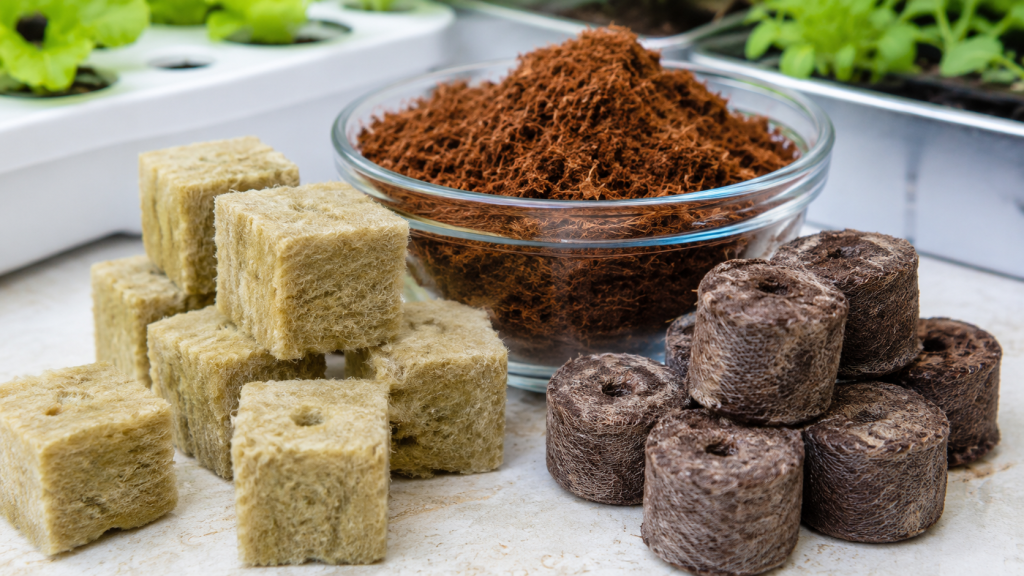
The growing medium supports the seed while it germinates. It also holds moisture and gives young roots a place to grow.
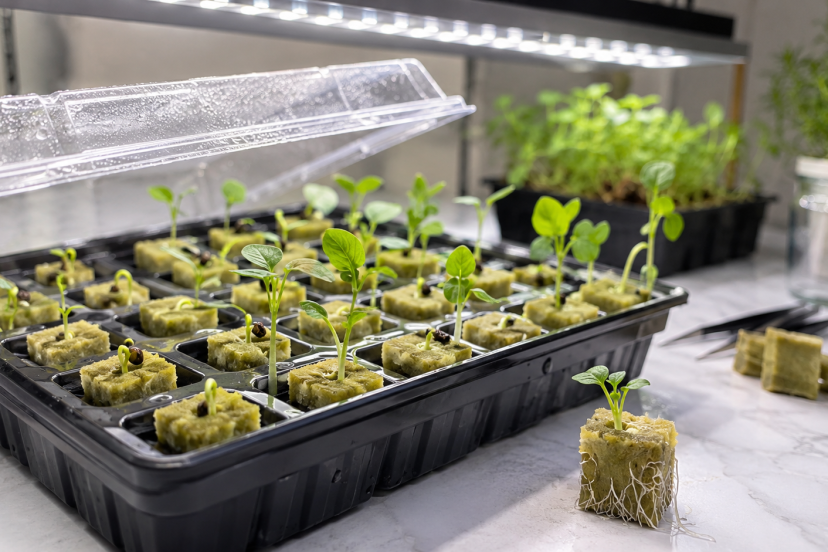
Rockwool Cubes
Rockwool is one of the most common options for hydroponic seed starting. It holds moisture well while still allowing air to reach the roots.
It offers:
- Strong moisture retention
- Good airflow around roots
- Easy transplanting
- A consistent structure
Before planting, soak rockwool cubes in pH-adjusted water.
Coco Coir
Coco coir is a renewable option made from coconut husks. It holds moisture well while still allowing air to reach the roots.
It offers:
- Good moisture balance
- Healthy root support
- Sustainable sourcing
- Easy handling
Many growers like coco coir because it is simple to use and more eco-friendly than some other options.
Peat Plugs and Starter Sponges
Peat plugs and starter sponges are beginner-friendly choices. They hold moisture well and make transplanting easier.
They also help reduce root disturbance, which can give seedlings a smoother move into the hydroponic system.
Essential Supplies for Starting Seeds for Hydroponics
Gathering the right materials before planting makes the process much smoother.
Basic supplies include:
- Quality seeds: Fresh seeds usually germinate better and produce stronger seedlings.
- Seed-starting medium: Rockwool, coco coir, or starter plugs hold moisture while supporting root growth.
- Seed tray: A tray keeps seedlings organized and makes watering easier.
- Humidity dome: This helps trap moisture and creates a warm, humid germination space.
- Spray bottle: Gentle misting keeps seeds moist without washing them away.
- Grow light: Seedlings need strong light after sprouting to avoid weak, leggy growth.
- Thermometer: This helps you monitor temperature for better germination.
- Heat mat: Optional, but useful for keeping seeds warm in cooler rooms.
- Clean water: Fresh, clean water helps reduce contamination and supports healthy roots.
Having everything ready helps maintain consistent conditions during germination.
How to Start Seeds for Hydroponics Step by Step
Starting seeds for hydroponics is mostly about keeping things simple and consistent. Seeds do not need much at first, but they do need the right balance of moisture, warmth, and oxygen.
Step 1: Prepare Your Growing Medium
Moisten the growing medium before planting. It should feel damp, not soaked.
Too much water can push out oxygen and slow germination. If the medium feels soggy or water drips when you squeeze it, it is too wet.
Step 2: Plant the Seeds
Check the seed packet for planting depth. Some seeds need light to germinate, while others prefer a thin covering.
As a general rule, plant seeds about two to three times deeper than their size. Small seeds should stay close to the surface, while larger seeds can go a little deeper.
Cover them lightly with the growing medium.
Step 3: Maintain Moisture
Seeds need steady moisture to germinate. If they dry out too much, germination may slow down or stop.
Use a spray bottle to mist the growing medium gently. This keeps the seeds moist without flooding them or pushing them around.
Step 4: Provide Warmth
Most vegetable seeds germinate best between 70°F and 80°F, or about 21°C to 27°C.
If your room is cool, a seedling heat mat can help keep temperatures stable. This is especially useful for crops like peppers and tomatoes, which often need more warmth to sprout well.
Step 5: Add Light at the Right Time
Once seedlings emerge, they need light right away. Without enough light, they stretch toward the nearest source and become weak.
This is one of the most common beginner mistakes. A seedling may look like it is growing fast, but if it is tall, pale, and floppy, it is usually reaching for more light.
Temperature and Humidity Tips for Better Germination
Temperature and humidity work together during germination.
Aim for:
- Temperature: 70°F–80°F (21°C–27°C)
- Humidity: 60%–80%
A humidity dome can help maintain ideal moisture levels during the first few days.
However, remove the dome once most seedlings emerge to improve airflow and reduce disease risk.
Lighting Requirements for Hydroponic Seedlings
Young seedlings require plenty of light for healthy development.
LED grow lights are commonly recommended because they are energy-efficient and produce less heat than many alternatives.
Position lights:
- 2–6 inches above seedlings
- 14–16 hours daily
- Adjust height as plants grow
Insufficient light often causes stretching and weak stems.
When and How to Feed Seedlings
Seeds contain enough stored energy for initial growth.
Most seedlings do not require nutrients until they develop their first true leaves.
Once true leaves appear:
- Start with a diluted nutrient solution
- Use approximately one-quarter to one-half strength
- Increase gradually as plants mature
Avoid overfeeding. Young roots are sensitive and can become damaged by concentrated nutrients.
Monitoring Water Quality and pH
Water quality plays a major role in hydroponic success.
Seedlings absorb nutrients most efficiently when the nutrient solution stays within the proper pH range.
A 2023 study published in Horticulturae found that small pH changes can affect hydroponic plant growth. These changes may influence nutrient uptake and mineral availability. The researchers also noted that stable pH levels help plants absorb nutrients more effectively.
If you want a deeper understanding of pH management, this guide on hydroponic nutrient solution pH management provides practical advice for maintaining healthy plant growth:
Regular monitoring helps prevent nutrient deficiencies and supports strong root development.
Transplanting Seedlings Into Your Hydroponic System
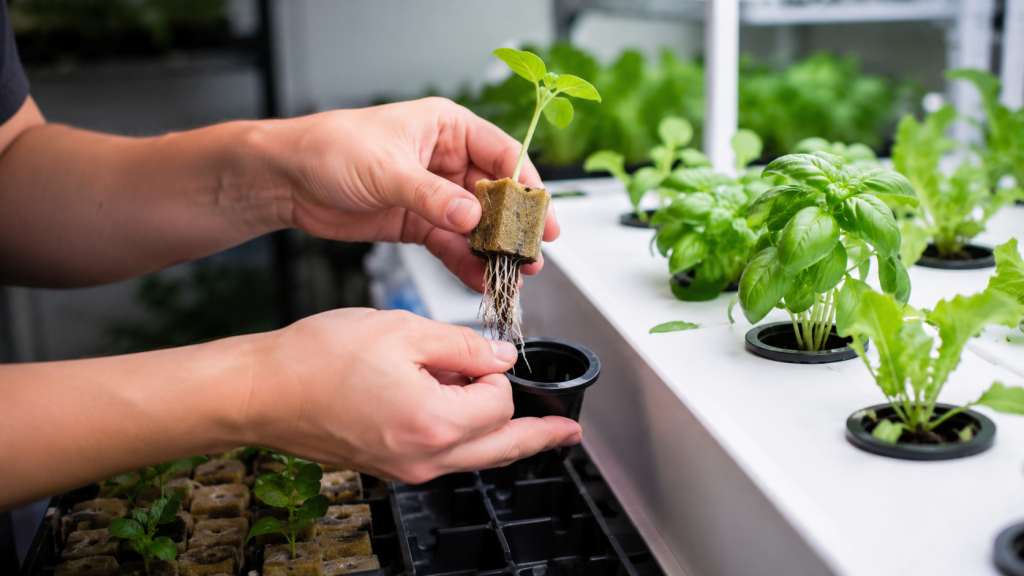
Timing matters when moving seedlings into their permanent hydroponic setup.
Most plants are ready when they have:
- Two to four true leaves
- Well-developed roots
- Strong stems
Handle seedlings gently to avoid root damage.
Place the growing medium directly into the net pot or hydroponic holder without disturbing the roots whenever possible.
After transplanting, monitor plants closely for several days while they adjust.
Conclusion
Starting seeds for hydroponics is all about creating the right conditions early. When you manage moisture, warmth, light, airflow, and pH from the beginning, seedlings can develop stronger roots and adapt more easily to your hydroponic system. A healthy start often leads to better growth, fewer setbacks, and a more productive garden.
FAQs
1. What is the best medium for starting seeds for hydroponics?
Rockwool cubes, coco coir, Rapid Rooter plugs, and starter sponges are among the most popular options because they retain moisture while providing adequate airflow.
2. How long does it take hydroponic seeds to germinate?
Most leafy greens germinate within 3 to 10 days, although some crops like peppers and celery may take longer.
3. Do hydroponic seedlings need nutrients immediately?
No. Most seedlings can rely on stored seed energy until they develop their first true leaves.
4. Can I use regular garden soil to start hydroponic seeds?
It is generally not recommended. Soil can introduce pests, diseases, and inconsistent moisture conditions into hydroponic systems.
5. When should I transplant seedlings into a hydroponic system?
Most seedlings are ready when they have two to four true leaves and a healthy root system extending from the growing medium.