Top 10 Hydroponic Grow Trays
We may earn a commission for purchases made using our links. Please see our disclosure for more details.
Finding good hydroponic grow trays sounds simple until you actually start shopping. Some trays flex when you lift them, others crack after repeated use, and a tray that’s perfect for microgreens may be completely wrong for starting dozens of seedlings.
For this guide, I focused on practical options for hydroponic growers: sturdy 1020 flats, bottom-watering trays, microgreen trays, and propagation kits. Whether you’re building your first indoor rack or replacing flimsy trays you’ve grown tired of throwing away, these are the options worth considering.
Our Top Picks
| Product | Best For | Key Feature | Rating | Read More |
| Bootstrap Farmer Extra Strength 1020 | Best Overall | Heavy-duty reusable design | ★★★★★ | Read review |
| RooTrimmer Heavy Duty 1020 | Heavy Loads | Thick reusable construction | ★★★★⯪ | Read review |
| Living Whole Foods 20 x 10 Trays | Best Value | No-hole bottom-watering design | ★★★★⯪ | Read review |
| Hemlock Home Brewing 1020 Trays | Repeated Use | Thick polypropylene | ★★★★★ | Read review |
| Gardzen Seed Starter Tray Kit | Seed Starting | 200-cell system | ★★★★⯪ | Read review |
| MIXC Seed Starter Tray Kit | Propagation | Adjustable humidity domes | ★★★★⯪ | Read review |
| Bonviee Seed Starter Trays | Beginners | Clear cells and vented dome | ★★★★⯪ | Read review |
| Bootstrap Farmer Shallow 1020 | Microgreens | Low-profile tray | ★★★★⯪ | Read review |
| EXTYQWC Plant Growing Trays | Budget Pick | Simple solid-bottom trays | ★★★★⯪ | Read review |
| SOLIGT Heavy Duty Trays | Compact Growing | Thick leak-resistant design | ★★★★⯪ | Read review |
Top 10 Hydroponic Grow Trays
1. Bootstrap Farmer Extra Strength 1020 Trays

Bootstrap Farmer’s Extra Strength 1020 trays are built for growers who want something sturdier than the thin nursery flats that bend when loaded. The standard 1020 footprint works well for seedlings, microgreens, propagation inserts, and bottom watering.
The solid-bottom design also makes these trays useful for catching runoff or holding perforated inserts. They cost more than disposable trays, but the added rigidity makes them better suited for repeated growing cycles.
Key features: Heavy-duty plastic, standard 1020 footprint, solid bottom, reusable design, compatible with common inserts
Best for: Growers who want a durable all-purpose tray
Pros: Very sturdy; reusable; easy to clean; versatile for seedlings and microgreens
Cons: Higher upfront cost; heavier than thin nursery flats
Why I recommend it: It offers the durability and flexibility most indoor growers need without forcing you into a specialized tray setup.
2. RooTrimmer Heavy Duty 1020 Growing Trays

RooTrimmer’s Heavy Duty 1020 trays are designed for growers who regularly move wet media, seedling inserts, or microgreen mats around a grow room. Their thicker construction helps reduce the sagging and bending you often get from cheaper trays.
The no-hole base also makes them useful for bottom watering and runoff control. They fit comfortably on common indoor growing racks and work with many standard 1020 accessories.
Key features: Heavy-duty 1020 design, solid bottom, reusable plastic, standard grow-rack size
Best for: Growers handling heavier trays of seedlings or microgreens
Pros: Strong construction; good water containment; reusable; compatible with common inserts
Cons: More expensive than lightweight flats; nested trays may stick together
Why I recommend it: It gives you more confidence when lifting a fully loaded tray and still keeps the familiar 1020 format.
3. Living Whole Foods 20 x 10 Growing Trays

Living Whole Foods growing trays are a simple choice for microgreens, wheatgrass, seedlings, and small hydroponic projects. Their solid bottoms work well for bottom watering or catching nutrient solution from perforated trays placed above them.
They are lighter than premium heavy-duty trays, so they are better suited to moderate loads. For growers who need several trays without spending heavily, the multipack format makes sense.
Key features: Approximately 20 x 10 inches, solid bottom, lightweight construction, stackable design
Best for: Budget-conscious growers running several trays at once
Pros: Affordable; easy to store; useful for microgreens and seedlings; simple design
Cons: More flexible than premium trays; less suitable for very heavy loads
Why I recommend it: It provides a practical way to expand a grow rack without paying premium prices for every tray.
4. Hemlock Home Brewing 1020 Seed Starting Trays

Hemlock Home Brewing’s 1020 trays use thicker polypropylene than many disposable nursery flats. That extra rigidity makes them useful for seed starting, propagation, microgreens, and holding smaller containers.
Their solid-bottom design works particularly well for bottom watering. The standard dimensions also make them easier to pair with common propagation inserts and grow racks.
Key features: Thick polypropylene, standard 1020 dimensions, no drainage holes, reusable construction
Best for: Growers who want sturdy trays for repeated propagation
Pros: Strong base; reusable; fits common rack systems; easy bottom watering
Cons: Costs more than disposable flats; fewer configuration choices than some brands
Why I recommend it: It is a straightforward heavy-duty tray that handles repeated indoor growing without unnecessary extras.
5. Gardzen 200-Cell Seed Starter Tray Kit

The Gardzen seed starter kit is aimed more at propagation than mature hydroponic growing. It combines high-capacity cell inserts with bottom trays and humidity domes, making it useful for starting herbs, lettuce, and other crops before moving them into a larger system.
The individual cells help keep seedlings organized, while the dome helps maintain humidity during germination. Once roots develop, the plants can be moved into net cups, channels, or another hydroponic setup.
Key features: Approximately 200 planting cells, bottom trays, humidity domes, adjustable ventilation, reusable components
Best for: Growers starting large batches of hydroponic seedlings
Pros: High seed capacity; good humidity control; organized propagation; useful for beginners
Cons: Small cells require transplanting; not intended for mature plants
Why I recommend it: It gives you a complete seed-starting setup rather than making you buy trays, cells, and domes separately.
6. MIXC Seed Starter Tray Kit with Humidity Dome

The MIXC seed starter kit combines individual planting cells with clear covers and adjustable vents. It works well for hydroponic growers who want better control over humidity during germination.
The transparent cells are especially handy because you can check root development without pulling seedlings out of the tray. This makes it easier to judge when plants are ready for transplanting.
Key features: Individual seed cells, clear trays, adjustable vents, humidity domes, heat-mat compatibility
Best for: Indoor propagation with close root monitoring
Pros: Easy root inspection; useful humidity control; compact design; beginner friendly
Cons: Limited space per seedling; plants need transplanting as they mature
Why I recommend it: The clear cells make propagation easier to monitor, which is helpful when timing transfers into a hydroponic system.
7. Bonviee 5-Pack Seed Starter Trays

Bonviee’s seed starter trays provide a compact propagation setup with cells, bottom trays, and humidity covers. They are a good fit for growers starting smaller batches of herbs, leafy greens, or vegetables indoors.
The transparent cells let you see root growth, while the vented domes help manage moisture during early germination. Their smaller footprint is also convenient when shelf space is limited.
Key features: Five tray sets, 12 cells per tray, clear cell design, vented humidity dome, reusable components
Best for: Beginners starting small batches of hydroponic plants
Pros: Compact; affordable; easy root monitoring; simple humidity control
Cons: Limited capacity per tray; not designed for mature plants
Why I recommend it: It keeps seed starting simple and gives beginners an easy way to monitor both moisture and root growth.
8. Bootstrap Farmer Shallow 1020 Microgreen Trays

Bootstrap Farmer’s shallow 1020 trays are designed with microgreens and compact crops in mind. The low-profile shape makes harvesting easier and reduces unnecessary tray depth on stacked growing racks.
Depending on the version, you can choose trays with or without drainage holes. Many growers pair a perforated upper tray with a solid lower tray for clean bottom watering.
Key features: Shallow 1020 profile, heavy-duty plastic, available with or without holes, stackable design
Best for: Dedicated hydroponic microgreen growers
Pros: Excellent for rack systems; durable; easy harvesting; multiple drainage options
Cons: Lower water capacity; premium price compared with basic trays
Why I recommend it: The shallow design is genuinely useful for microgreens rather than simply being another standard tray with a different label.
9. EXTYQWC Plant Growing Trays

EXTYQWC plant growing trays are a budget-friendly option for seedlings, microgreens, and general propagation. Their solid bases can hold water for bottom watering or catch runoff from smaller pots and inserts.
They are best for lighter-duty use rather than carrying very heavy media. The multipack format, however, makes them useful when you want several trays running at the same time.
Key features: Solid bottom, multipack design, stackable construction, suitable for seedlings and microgreens
Best for: Growers building an inexpensive multi-tray setup
Pros: Low cost per tray; easy to store; versatile; simple design
Cons: Less rigid than premium trays; not ideal for heavy loads
Why I recommend it: It gives beginners an inexpensive way to add more growing space without overinvesting in equipment.
10. SOLIGT Extra Thick Heavy Duty Seed Starting Trays

SOLIGT’s heavy-duty seed starting trays use thicker plastic and a solid base designed to hold water during bottom watering. Their compact size works well for smaller grow shelves, seedling plugs, and propagation pots.
They are not always the same dimensions as a traditional 1020 tray, so checking the exact measurements before buying is important. For growers with limited space, though, that smaller footprint can actually be an advantage.
Key features: Extra-thick plastic, solid leak-resistant base, compact design, reusable construction
Best for: Small propagation racks and compact indoor gardens
Pros: Sturdy construction; good water containment; easy to clean; reusable
Cons: May not fit standard 1020 accessories; smaller growing area
Why I recommend it: It offers a durable option for growers who want something smaller than a full-size 1020 tray without dropping down to flimsy plastic.
What to Look for in Hydroponic Grow Trays
Start with size. A standard 1020 tray is convenient because cell inserts, humidity domes, heat mats, and grow racks are widely designed around that footprint.
Next, decide whether you need drainage holes. A perforated tray is useful for microgreens and drainage, while a solid tray underneath catches water and allows bottom watering. Many growers eventually keep both.
Rigidity matters too. Wet growing media gets heavy quickly, and flimsy flats become frustrating once you start moving them regularly. A thicker reusable tray usually makes more sense if you’re growing throughout the year.
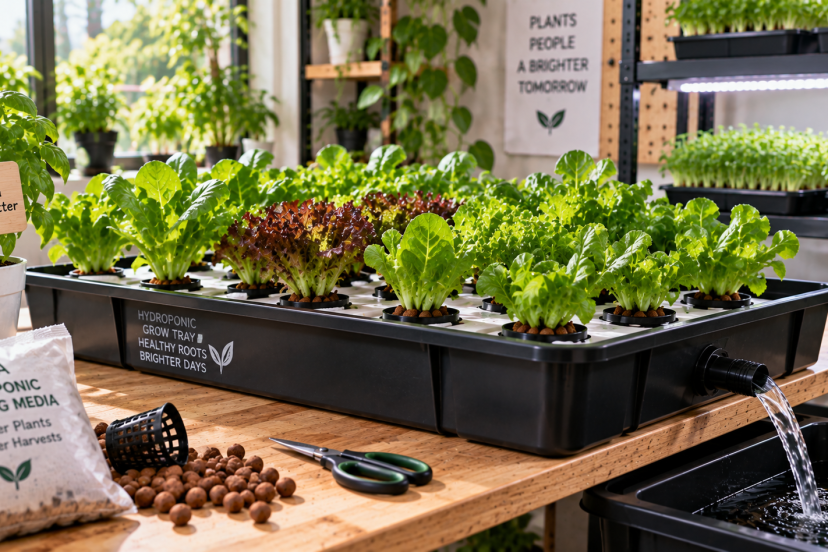
For a true flood-and-drain setup, you’ll also need to think beyond propagation flats. Larger flood tables must accommodate plumbing, water depth, drainage, and reservoir capacity. This beginner’s guide to ebb and flow hydroponics explains how the hydroponic grow trays , reservoir, pump, and fittings work together.
Final Thoughts
The best hydroponic grow trays depend on what you’re actually growing. For a durable all-purpose 1020 flat, Bootstrap Farmer Extra Strength Trays are my first choice. RooTrimmer and Hemlock are strong alternatives, while Living Whole Foods gives budget-minded growers a simpler option. For starting seeds, Gardzen, MIXC, and Bonviee make propagation easier, and dedicated microgreen growers will appreciate a shallow tray system. Whatever you choose, prioritize sturdy construction, the right drainage setup, and dimensions that fit your rack—you’ll notice those details every single growing cycle.
FAQs
What size tray is best for hydroponics?
For propagation and microgreens, the common 1020 tray, roughly 10 x 20 inches, is one of the most convenient choices. It fits many standard racks, inserts, humidity domes, and heat mats.
Do hydroponic grow trays need drainage holes?
Not always. Trays with holes work well for drainage and microgreens, while solid trays are better for bottom watering and catching runoff. Many growers use a perforated tray nested inside a no-hole tray.
Can I grow hydroponic microgreens directly in hydroponic grow trays?
Yes. Microgreens can be grown hydroponically on hemp, coco, jute, cellulose, or similar growing mats placed inside shallow trays. A solid lower tray makes bottom watering much easier.
Are 1020 trays reusable?
Heavy-duty 1020 trays are designed for repeated use. Clean and sanitize them between crops, especially when growing seedlings or edible plants, to reduce the chance of carrying pathogens into the next grow.
What is the difference between a grow tray and a flood table?
A propagation grow tray usually holds seedlings, microgreens, pots, or runoff. A flood table is generally larger and deeper and forms part of an ebb-and-flow system where nutrient solution is pumped into the tray and then drained back to a reservoir.