Top 10 TDS and EC Meter
We may earn a commission for purchases made using our links. Please see our disclosure for more details.
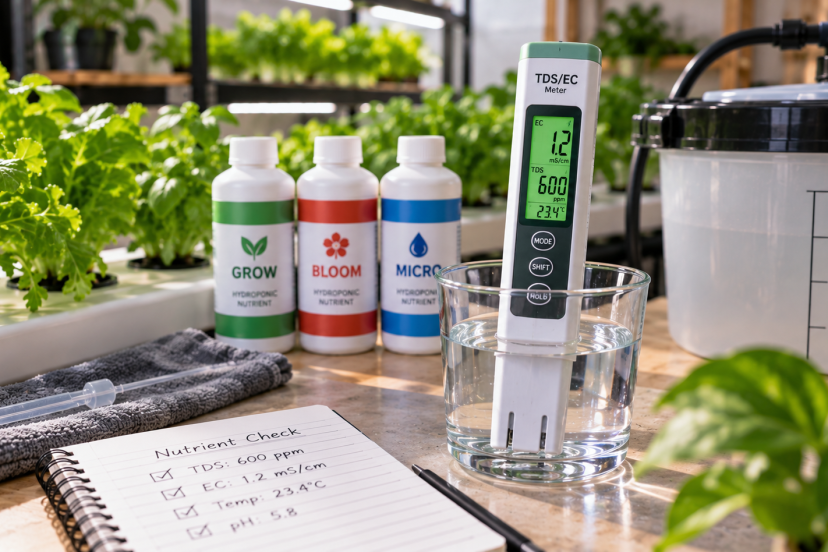
Getting nutrient strength right is one of those small hydroponic jobs that can make a big difference. Too strong, and plants may develop nutrient burn. Too weak, and growth can slow down. A reliable TDS and EC Meter takes the guesswork out of the process. You can quickly check your reservoir, see how concentrated the nutrient solution is, and make adjustments before your plants start showing problems. Below are ten meters worth considering, ranging from inexpensive pens for beginners to more dependable tools for growers who test their reservoirs regularly.
Our Top Picks
| Product | Best For | Key Feature | Rating | Read More |
| Bluelab Truncheon Nutrient Meter | Best Overall | No-calibration testing | ★★★★★ | Read review |
| Apera Instruments PC60 | Best All-in-One | Five measurements in one meter | ★★★★★ | Read review |
| Bluelab Conductivity Pen | Best Premium Pen | Waterproof EC/PPM testing | ★★★★★ | Read review |
| HM Digital COM-80 | Best Value | Fast EC and TDS readings | ★★★★★ | Read review |
| HM Digital COM-100 | Best Waterproof Pick | Multiple conductivity scales | ★★★★⯪ | Read review |
| HoneForest TDS/EC Meter | Best Budget | Simple 3-in-1 testing | ★★★★★ | Read review |
| Varify 4-in-1 TDS/EC Meter | Best for Beginners | Easy EC/TDS testing | ★★★★★ | Read review |
| Craft911 TDS/EC Meter | Best Low-Cost Pick | Wide testing range | ★★★★⯪ | Read review |
| 2026 All-New 4-in-1 TDS/EC Meter | Best Backup | Compact multi-function design | ★★★★⯪ | Read review |
| 4-in-1 TDS/EC Water Quality Tester | Best Spare Meter | Portable water testing | ★★★★★ | Read review |
Best TDS and EC Meter Reviews
1. Bluelab Truncheon Nutrient Meter — Best Overall

The Bluelab Truncheon is built for growers who want quick nutrient readings without dealing with complicated controls. You simply place the probe into the reservoir and read the illuminated EC or ppm scale.
It is especially handy for larger hydroponic systems where you may be checking nutrient strength several times a week. The long probe also makes it easier to test deeper reservoirs without getting your hands wet.
Key features: EC, CF, PPM 500 and PPM 700 readings, automatic temperature compensation, waterproof design, no user calibration required
Best for: Serious hydroponic growers and frequent reservoir testing
Pros: Very easy to use; rugged build; fast readings; no routine calibration
Cons: More expensive than standard digital pens; larger than pocket-style meters
Why I recommend it: It keeps nutrient testing simple while giving growers a durable meter designed specifically for hydroponic use.
Rating: ★★★★★
2. Apera Instruments PC60 5-in-1 Meter — Best All-in-One

The Apera Instruments PC60 is a good fit for growers who would rather carry one testing pen instead of separate meters for pH and conductivity. It measures pH, EC, TDS, salinity, and temperature from a single waterproof unit.
The replaceable probe is another useful feature, especially for growers who plan to use the meter long term. It costs more than a basic EC pen, but the extra functions can make reservoir testing much more convenient.
Key features: pH, EC, TDS, salinity and temperature testing, replaceable probe, automatic temperature compensation, waterproof housing
Best for: Growers who want one meter for both nutrient strength and pH testing
Pros: Multiple measurements in one device; replaceable probe; waterproof; easy calibration
Cons: Higher price; more features than casual growers may need
Why I recommend it: It combines the main water-testing tools hydroponic growers use into one compact meter, which means less equipment to maintain and carry.
Rating: ★★★★★
3. Bluelab Conductivity Pen — Best Premium Pen

The Bluelab Conductivity Pen offers a more compact alternative to the Truncheon while still focusing on the measurements hydroponic growers actually need. It checks conductivity and temperature from a waterproof handheld pen.
The digital display is particularly convenient if you prefer seeing an exact number rather than reading an indicator scale. It’s expensive compared with generic pens, but it is aimed at growers who expect to use their meter regularly.
Key features: EC, CF, PPM 500 and PPM 700 measurements, temperature display, automatic temperature compensation, waterproof construction
Best for: Growers wanting a premium pocket-style conductivity meter
Pros: Compact design; multiple conductivity scales; waterproof; easy-to-read display
Cons: Costs considerably more than entry-level meters; unnecessary for occasional testing
Why I recommend it: It gives you the convenience of a traditional digital pen without dropping down to bargain-level construction.
Rating: ★★★★★
4. HM Digital COM-80 EC/TDS Meter — Best Value

The HM Digital COM-80 sits nicely between inexpensive generic testers and high-end hydroponic meters. It measures EC, TDS, and temperature, covering the basics most home growers need.
Its slim design makes it easy to keep near your nutrient supplies or carry between reservoirs. Automatic temperature compensation also helps keep readings more consistent as water temperature changes.
Key features: EC, TDS and temperature measurements, automatic temperature compensation, digital calibration, water-resistant housing
Best for: Home hydroponic growers looking for good value
Pros: Straightforward controls; compact; reputable brand; useful measurement range
Cons: Not fully waterproof; fewer premium features than higher-priced models
Why I recommend it: It covers the important measurements without making you pay for functions that many hobby growers won’t use.
Rating: ★★★★★
5. HM Digital COM-100 Waterproof EC/TDS Meter — Best Waterproof Pick

The HM Digital COM-100 is worth considering if you like the COM-80 but want something better suited to frequent work around water. Its waterproof construction provides extra reassurance when you’re testing directly over an open reservoir.
It also offers several EC and TDS measurement modes, giving experienced growers more control over how readings are displayed.
Key features: EC, TDS and temperature measurements, waterproof housing, selectable conversion factors, automatic temperature compensation
Best for: Growers frequently testing multiple hydroponic reservoirs
Pros: Waterproof; several measurement scales; portable; established water-testing brand
Cons: More expensive than the COM-80; extra settings can feel unnecessary for beginners
Why I recommend it: The added waterproofing and selectable scales make it a sensible step up for growers who use their meter frequently.
Rating: ★★★★⯪
6. HoneForest TDS/EC Meter — Best Budget

The HoneForest meter keeps things simple. It checks TDS, EC, and temperature without loading the pen with controls that a beginner may never use.
That simplicity works well for small DWC buckets, countertop gardens, and other home hydroponic setups. It can also serve as an inexpensive backup meter if you already own a more advanced tester.
Key features: TDS, EC and temperature testing, automatic temperature compensation, hold function, compact digital display
Best for: Beginners and growers working with a limited budget
Pros: Affordable; lightweight; easy to operate; covers essential measurements
Cons: Basic construction; not intended to replace professional testing equipment
Why I recommend it: It provides the core EC and TDS measurements beginners need without requiring a big upfront investment.
Rating: ★★★★★
7. Varify 4-in-1 TDS/EC Meter — Best for Beginners

The Varify 4-in-1 meter is another approachable option if you’re just starting to monitor hydroponic nutrients. Its straightforward display lets you check water without working through complicated settings.
The small pen-style body is easy to store with your pH solutions and other reservoir tools. It can also be useful for checking tap water before you mix nutrients.
Key features: TDS, EC and temperature measurements, automatic temperature compensation, hold function, portable design
Best for: First-time hydroponic growers
Pros: Beginner-friendly; inexpensive; compact; quick to use
Cons: Less rugged than premium meters; fewer calibration options
Why I recommend it: It makes routine nutrient checks approachable for someone who doesn’t need professional-level testing equipment.
Rating: ★★★★★
8. Craft911 TDS/EC Meter — Best Low-Cost Pick

The Craft911 TDS/EC Meter is designed for quick water checks without a premium price tag. Along with hydroponic reservoirs, it can be used for drinking water, aquariums, and other situations where dissolved solids need monitoring.
Its broad measurement range is useful if you work with different nutrient concentrations. The tradeoff is that Craft911 doesn’t have the same long-standing reputation in water testing as brands such as HM Digital or Bluelab.
Key features: TDS and EC testing, temperature measurement, broad testing range, portable pen-style body
Best for: Budget growers who want a basic multi-purpose tester
Pros: Low price; simple controls; compact; useful for several water-testing tasks
Cons: Less established brand; basic construction
Why I recommend it: It gives budget-conscious growers the essential measurements needed for routine reservoir checks without much expense.
Rating: ★★★★⯪
9. 2026 All-New 4-in-1 TDS/EC Meter — Best Backup

Not every grower needs their second meter to be expensive. This 4-in-1 tester works better as a backup or occasional-use tool, especially if you already have a primary EC meter you trust.
Having another tester nearby is useful when a reservoir suddenly produces a strange reading. A quick comparison can tell you whether the nutrient solution actually changed or your main meter needs cleaning or calibration.
Key features: TDS, EC and temperature measurements, digital display, compact design, automatic temperature compensation
Best for: Backup testing and occasional reservoir checks
Pros: Affordable; lightweight; multiple measurements; convenient spare meter
Cons: Generic branding; limited long-term support compared with established manufacturers
Why I recommend it: It gives you an inexpensive second opinion when a reading from your primary meter doesn’t look right.
Rating: ★★★★⯪
10. 4-in-1 TDS/EC Water Quality Tester — Best Spare Meter

This compact water tester covers TDS, EC, and temperature measurements in one inexpensive pen. It isn’t trying to compete with a professional Bluelab or Apera meter, but that’s not necessarily a problem if you only need occasional readings.
Its portable size also makes it handy for growers running more than one system. You can leave one meter near a secondary reservoir rather than carrying your primary tester around every time.
Key features: TDS and EC testing, Celsius and Fahrenheit temperature readings, automatic temperature compensation, portable design
Best for: Secondary hydroponic systems and occasional testing
Pros: Affordable; compact; easy to store; covers basic conductivity testing
Cons: Generic branding; smaller track record than established meters
Why I recommend it: It’s a practical low-cost option when you want a spare tester rather than another premium instrument.
Rating: ★★★★★
How to Choose a TDS and EC Meter
For hydroponics, I would prioritize EC measurement first. EC measures the electrical conductivity of your nutrient solution, while a TDS meter typically converts conductivity into an estimated ppm value.
This matters because different meters can use different ppm conversion scales. Two meters can therefore display different ppm numbers even when they’re measuring essentially the same nutrient concentration.
Look for automatic temperature compensation, an easy-to-read display, a useful EC range, and at least some level of water resistance. If you test every day, spending extra for a waterproof meter from an established brand can be worthwhile.
EC vs. TDS for Hydroponics
Both readings can help you manage nutrients, but consistency matters.
EC is particularly convenient because you don’t have to worry about whether your meter uses a 500, 640, or 700 ppm conversion scale. If a nutrient manufacturer gives its recommendations in EC, sticking with EC throughout the grow keeps things simpler.
TDS can still be perfectly useful. Just make sure you understand which conversion scale your meter uses before comparing your readings with someone else’s feeding chart.
If you’re mixing nutrients yourself, this guide to making a DIY hydroponic nutrient solution provides useful background on managing nutrient concentration.
Final Thoughts
Choosing the right TDS and EC Meter doesn’t have to be complicated. The Bluelab Truncheon Nutrient Meter is my top choice for growers who want a durable, straightforward tool for regular reservoir testing, while the HM Digital COM-80 offers a good balance between price and functionality for most home setups. If you’re just getting started, the HoneForest TDS/EC Meter provides the basic measurements without much expense. Whichever meter you choose, use it consistently and pay attention to changes over time rather than treating one isolated reading as the whole story.
FAQs
What is the difference between a TDS meter and an EC meter?
An EC meter measures electrical conductivity directly. A TDS meter generally uses that conductivity measurement to estimate total dissolved solids and displays the result in ppm.
Is TDS or EC better for hydroponics?
EC is often easier to use consistently because it doesn’t depend on a ppm conversion factor. TDS is still useful as long as you know which conversion scale your meter uses.
How often should I check EC in hydroponics?
Checking once a day is a useful routine for many active hydroponic systems. Small reservoirs may need closer monitoring because water and nutrient concentrations can change faster than they do in larger reservoirs.
Do TDS and EC meters need calibration?
Many digital conductivity meters benefit from periodic calibration using the appropriate conductivity solution. Some models, such as the Bluelab Truncheon, are designed so the user doesn’t perform routine calibration. Follow the instructions supplied with your particular meter.
Can a TDS and EC meter detect individual nutrients?
No. These meters tell you the overall conductivity or estimated dissolved-solids concentration of the solution. They cannot tell you whether the water contains too little calcium, too much nitrogen, or a deficiency of another specific nutrient.