Top 10 pH Meters
We may earn a commission for purchases made using our links. Please see our disclosure for more details.
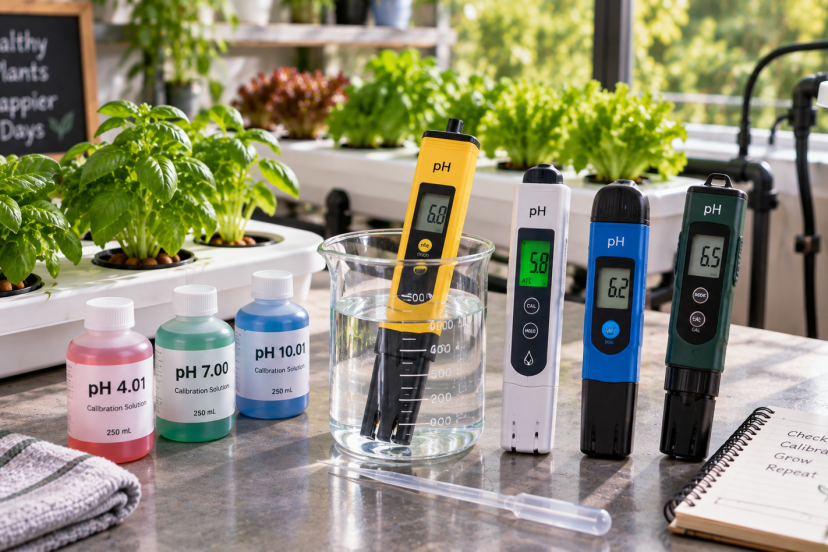
Keeping your hydroponic nutrient solution within the right pH range can make a noticeable difference in how well plants absorb nutrients. Even a well-mixed reservoir can cause problems when its pH drifts too far in either direction. A dependable pH meter takes the guesswork out of testing. Some growers only need an inexpensive handheld pen, while others will benefit from replaceable probes, EC measurements, or continuous monitoring. Here are 10 pH meters options covering different budgets and growing setups.
Our Top Picks
| Product | Best For | Key Feature | Rating | Read More |
| Apera Instruments PH20 | Best Overall | Automatic calibration | ★★★★⯪ | Read Review |
| Apera Instruments PH60 | Frequent Testing | Replaceable probe | ★★★★⯪ | Read Review |
| Apera Instruments PC60 | All-in-One Testing | pH, EC, TDS & temperature | ★★★★⯪ | Read Review |
| Bluelab pH Pen | Hydroponics | Double-junction probe | ★★★★⯪ | Read Review |
| Hanna Instruments HI98107 | Compact Testing | Automatic temperature compensation | ★★★★⯪ | Read Review |
| Hanna HI98130-6N | Advanced Growers | pH, EC and TDS testing | ★★★★⯪ | Read Review |
| VIVOSUN pH & TDS Meter Combo | Beginners | Two-meter testing kit | ★★★★⯪ | Read Review |
| YINMIK 4-in-1 pH Meter | Budget All-in-One | Four measurements | ★★★★⯪ | Read Review |
| Ruolan Digital pH Meter | Backup Testing | Simple digital testing | ★★★★⯪ | Read Review |
| Bluelab pH Controller | Large Reservoirs | Continuous monitoring | ★★★★⯪ | Read Review |
Top 10 Best pH Meters
1. Apera Instruments PH20

The Apera Instruments PH20 is a straightforward handheld tester that suits most home hydroponic gardens. Automatic calibration and temperature compensation remove much of the hassle that comes with cheaper manual testers.
Its waterproof body and complete calibration kit make it especially practical for regular reservoir checks. The main limitation is its non-replaceable probe, but for everyday home use, the PH20 offers a strong balance between price and dependable performance.
Key features: Automatic 1–3 point calibration, temperature compensation, waterproof housing, calibration solutions
Best for: Home hydroponic growers who want a dependable everyday meter
Pros: Simple calibration; waterproof design; stable readings; useful accessories included
Cons: Non-replaceable probe; costs more than basic generic pens
Why I recommend it: It gives most growers the accuracy and convenience they actually need without pushing into premium-meter pricing.
2. Apera Instruments PH60

The Apera Instruments PH60 is a step up for growers who expect to test nutrient solutions frequently. Its large backlit display makes readings easy to see, while automatic calibration and temperature compensation simplify routine testing.
More importantly, the PH60 uses a replaceable electrode. Instead of throwing away the entire meter once the sensor reaches the end of its useful life, you can replace the probe and keep using the tester.
Key features: Replaceable probe, three-point calibration, automatic temperature compensation, backlit display, waterproof housing
Best for: Frequent hydroponic testing and long-term use
Pros: Replaceable electrode; clear display; easy calibration; durable construction
Cons: Higher initial price; electrode needs correct storage
Why I recommend it: The replaceable sensor makes it a better long-term investment for growers who test their reservoirs regularly.
3. Apera Instruments PC60

The Apera Instruments PC60 combines several important water measurements in one handheld instrument. It measures pH, EC, TDS, salinity, and temperature, reducing the need to carry separate pH and conductivity meters.
That combination is particularly useful when mixing hydroponic nutrients. You can check acidity and nutrient concentration during the same testing session, making reservoir adjustments quicker and easier.
Key features: pH, EC, TDS, salinity and temperature measurements, replaceable probe, backlit display, IP67 waterproof construction
Best for: Serious growers who monitor both pH and nutrient concentration
Pros: Five measurements; replaceable probe; waterproof; convenient all-in-one design
Cons: Expensive for beginners; requires more calibration than a basic pH pen
Why I recommend it: It combines the two measurements hydroponic growers use most—pH and EC—without requiring separate meters.
4. Bluelab pH Pen

The Bluelab pH Pen is designed with hydroponic and horticultural growers in mind. Its double-junction probe and automatic temperature compensation make it well suited to repeated testing of nutrient solutions.
The interface stays fairly simple despite its premium positioning. Bluelab equipment is also widely used around hydroponic reservoirs, so this is an appealing choice for growers who prefer equipment built specifically for nutrient management.
Key features: Double-junction probe, automatic temperature compensation, backlit display, calibration indicators
Best for: Dedicated hydroponic growers who test frequently
Pros: Hydroponics-focused design; simple operation; durable probe construction; clear display
Cons: Premium price; proper probe storage is important
Why I recommend it: It’s purpose-built for the type of nutrient-solution testing hydroponic growers perform every week.
5. Hanna Instruments HI98107

The Hanna Instruments HI98107 pHep is a compact tester from a well-established measurement-equipment brand. It provides automatic temperature compensation and an exposed temperature sensor that helps the meter respond to changing sample temperatures.
Its renewable cloth junction is another useful detail. If deposits begin interfering with readings, a small section can be pulled out to expose fresh material rather than immediately replacing the tester.
Key features: Automatic temperature compensation, exposed temperature sensor, renewable cloth junction, compact waterproof body
Best for: Growers who value a reputable instrument brand and simple operation
Pros: Fast temperature response; compact design; established brand; maintainable junction
Cons: More expensive than generic pens; limited compared with multiparameter meters
Why I recommend it: It keeps things simple while offering thoughtful electrode features that make sense for repeated water testing.
6. Hanna HI98130-6N

The Hanna HI98130-6N is designed for growers who want more information than pH alone. It measures pH, electrical conductivity, TDS, and temperature, making it useful when managing larger nutrient reservoirs.
Its wired probe and larger meter body aren’t as pocket-friendly as a pen tester. In return, experienced growers get a practical multiparameter instrument for monitoring both nutrient strength and acidity.
Key features: pH, EC, TDS and temperature measurements, multiparameter probe, portable meter body
Best for: Advanced growers managing larger hydroponic reservoirs
Pros: Multiple water measurements; reputable brand; useful for nutrient management; suitable for frequent testing
Cons: Higher price; bulkier than pocket meters
Why I recommend it: It provides the key measurements needed to manage nutrient solutions without relying on several separate instruments.
7. VIVOSUN pH & TDS Meter Combo

The VIVOSUN pH and TDS Meter Combo is an accessible starting point for new hydroponic growers. Instead of one multiparameter device, the kit includes separate meters for pH and TDS/EC measurements.
Having two testers means an extra device to maintain, but it also keeps the controls simple. For a small indoor garden, the kit covers the basic measurements needed when mixing and monitoring nutrient solutions without requiring a large upfront investment.
Key features: Separate pH and TDS/EC meters, temperature measurement, calibration support, compact pen-style design
Best for: Beginners building their first hydroponic testing kit
Pros: Affordable; checks pH and nutrient concentration; easy to use; good starter setup
Cons: Two meters to maintain; less refined than premium instruments
Why I recommend it: It gives beginners both pH and nutrient-strength testing at a price that makes sense for a first hydroponic setup.
8. YINMIK 4-in-1 pH Meter

The YINMIK 4-in-1 pH Meter combines pH, EC, TDS, and temperature readings in a single pocket-sized device. That makes it an interesting middle ground between inexpensive single-purpose pens and premium combination meters.
A backlit display is useful when you’re working inside a dim grow tent or checking a reservoir beneath shelving. Automatic calibration also makes routine setup less frustrating for newer growers.
Key features: pH, EC, TDS and temperature measurements, backlit display, automatic calibration, waterproof construction
Best for: Budget-conscious growers who want one multiparameter tester
Pros: Four measurements; easy-to-read screen; compact; good feature set for the price
Cons: Less established brand; requires careful calibration for reliable results
Why I recommend it: It packs the measurements most home growers need into one affordable handheld tester.
9. Ruolan Digital pH Meter

The Ruolan Digital pH Meter keeps things basic. It’s a compact tester designed for checking acidity and alkalinity across the standard pH range without adding EC, salinity, or other measurements.
That simplicity makes it more appropriate for occasional use than intensive reservoir management. It can also work as an inexpensive backup for comparing a suspicious reading from your primary meter.
Key features: 0–14 pH testing range, digital display, compact pen design, calibration capability
Best for: Occasional testing or use as a backup pH meter
Pros: Low price; compact; simple operation; useful second meter
Cons: Less robust than premium testers; not ideal for demanding daily use
Why I recommend it: Keeping an inexpensive backup meter can help you verify unexpected readings before making a major reservoir adjustment.
10. Bluelab pH Controller

The Bluelab pH Controller goes far beyond occasional handheld testing. It continuously measures reservoir pH and can work with compatible dosing equipment to automatically make corrections.
That level of automation isn’t necessary for a small countertop system. For larger reservoirs, however, reducing manual testing and controlling pH around the clock can save considerable time.
Key features: Continuous pH monitoring, automated dosing support, digital display, high/low alarms, reservoir-focused design
Best for: Advanced growers managing large or high-value hydroponic systems
Pros: Continuous monitoring; supports automatic correction; reduces manual testing; suitable for large reservoirs
Cons: Expensive; unnecessary for small hobby gardens
Why I recommend it: It turns pH management from a repetitive manual task into an automated process for growers who genuinely need that level of control.
How to Choose a pH Meter for Hydroponics
Don’t choose a meter based on decimal places alone. A pen displaying 5.83 isn’t necessarily more trustworthy than one displaying 5.8. Calibration stability and electrode quality matter more.
For regular hydroponics, look for automatic temperature compensation, simple calibration, waterproofing, and readily available calibration and storage solutions. A replaceable electrode becomes worthwhile if you plan to use the meter heavily.
Growers mixing their own nutrients should also consider EC measurement. pH tells you whether the solution is acidic or alkaline, while EC helps indicate dissolved nutrient concentration. Our guide to making a DIY hydroponic nutrient solution explains how these measurements fit into nutrient preparation.
How to Keep a pH Meter Accurate
Calibration matters just as much as the meter itself. Use fresh calibration buffers recommended by the manufacturer, rinse the electrode between solutions, and never assume yesterday’s calibration will remain perfect indefinitely.
Probe storage is equally important. Many glass pH electrodes should remain hydrated in an appropriate storage solution rather than being allowed to dry out or being stored indefinitely in distilled water. Always follow the instructions supplied with your specific meter.
If you’re troubleshooting nutrient availability, this guide to hydroponic nutrient solutions provides additional context on balancing nutrients and reservoir conditions.
Final Thoughts
Choosing among the best pH meters comes down to how often you test and how much information you need. The Apera Instruments PH20 is a practical choice for most home hydroponic growers, while the PH60 makes more sense for frequent use because of its replaceable probe. If you want pH and nutrient-strength measurements from the same device, the Apera PC60 is the stronger all-in-one option. Beginners can start more affordably with the VIVOSUN pH & TDS Meter Combo, while large systems may justify continuous monitoring with the Bluelab pH Controller.
FAQs
What is the best pH meter for hydroponics?
The Apera Instruments PH20 is a strong overall choice for most home growers because it combines straightforward calibration, automatic temperature compensation, waterproofing, and reasonable pricing. Growers who want a replaceable electrode can step up to the PH60.
What pH should hydroponic water be?
Many hydroponic crops are commonly grown with nutrient solutions around pH 5.5 to 6.5, although the preferred range varies by crop and growth stage. Check the recommendations for the plants you’re growing rather than treating one number as universally ideal.
How often should I test hydroponic pH?
Daily testing is useful when establishing a new system or managing a small reservoir where conditions can change relatively quickly. Once you understand how your particular system behaves, you can adjust your testing routine accordingly.
Do digital pH meters need calibration?
Yes. Electrodes drift over time, so digital meters need periodic calibration against known buffer solutions. Recalibrate according to the manufacturer’s instructions and whenever readings appear unusual or inconsistent.
Should I buy a pH meter or a pH and EC meter?
A pH-only meter is enough if you already own an EC tester. If you’re starting from scratch and regularly mix hydroponic nutrients, a combined pH and EC meter can reduce the number of devices you need to maintain.