Top 10 LED Grow Lights
We may earn a commission for purchases made using our links. Please see our disclosure for more details.
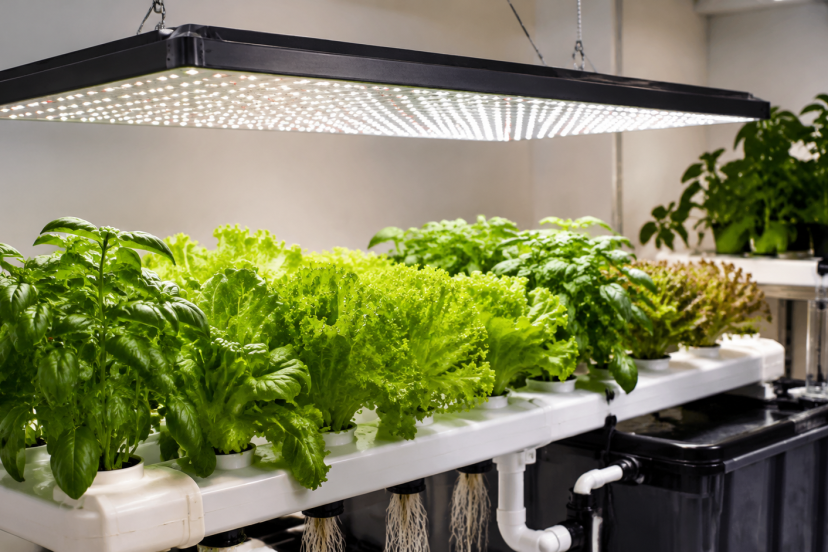
Choosing between dozens of LED grow lights can quickly become confusing. Some are designed for flowering plants inside tents, while others work better for seedlings, herbs, or a single houseplant that needs extra light.
This guide compares ten well-reviewed options available through Amazon. The recommendations cover compact lamps, shelf lighting, and powerful full-spectrum fixtures, helping you find a light that fits your plants, growing area, and budget.
Our Top Picks
| Product | Best For | Key Feature | Rating | Read More |
| Spider Farmer SF1000 | Best overall | Efficient 100W dimmable panel | ★★★★⯪ | Read more |
| VIPARSPECTRA XS1500 Pro | Even canopy coverage | Optical lens design | ★★★★⯪ | Read more |
| MARS HYDRO TS1000 | Small grow tents | Reflective hood and dimming | ★★★★⯪ | Read more |
| AC Infinity IONBOARD S22 | Premium 2×2 setups | Samsung LM301H diodes | ★★★★⯪ | Read more |
| Barrina T5 2-Foot Lights | Shelves and seedlings | Eight linkable light bars | ★★★★⯪ | Read more |
| SANSI 36W Grow Light Bulb | Existing lamp fixtures | Focused ceramic LED bulb | ★★★★☆ | Read more |
| GE BR30 Grow Light Bulb | Discreet home use | Natural-looking white light | ★★★★⯪ | Read more |
| Yadoker Plant Grow Light | Tall houseplants | Height-adjustable floor design | ★★★★⯪ | Read more |
| GooingTop Clip-On Light | Desks and small plants | Flexible heads and timer | ★★★★☆ | Read more |
| LBW Grow Light with Stand | Large potted plants | Adjustable tripod and panel | ★★★★⯪ | Read more |
Top 10 LED Grow Lights Reviewed
1. Spider Farmer SF1000 LED Grow Light

The Spider Farmer SF1000 is a dependable choice for a compact hydroponic garden or 2×2-foot flowering area. Its fanless board draws approximately 100 watts and includes a dimmer, allowing you to lower the intensity for seedlings and increase it as plants mature.
The broad-spectrum output supports plants from germination through flowering. Its aluminum heat sink also dissipates heat without the noise or maintenance of a cooling fan.
Key features:
- Approximately 100W power draw
- Full-spectrum white and red LEDs
- Dimmable, fanless design
- Recommended flowering footprint of about 2×2 feet
Pros:
- Strong output for its compact size
- Quiet operation
- Simple to install and adjust
Cons:
- No built-in timer
- More light than most decorative houseplants require
Best for: Small grow tents and serious indoor gardeners.
Why we recommend it: It offers the best balance of efficiency, control, build quality, and usable coverage for most small indoor gardens.
2. VIPARSPECTRA XS1500 Pro

The VIPARSPECTRA XS1500 Pro uses optical lenses to distribute light more evenly across a rectangular canopy. That makes it particularly useful when you want fewer weak spots around the edges of a small grow space.
It draws around 150 watts and features adjustable intensity. The extra capacity makes it suitable for demanding vegetables and flowering plants, although it may be excessive for one or two low-light houseplants.
Key features:
- Optical lenses for uniform PPFD
- Approximately 150W power draw
- Full-spectrum output
- Dimming and daisy-chain controls
Pros:
- Even canopy coverage
- Good intensity for fruiting crops
- Convenient control knob
Cons:
- Bright for an open living area
- Requires adequate hanging clearance
Best for: Dense plant canopies and 2×2-foot flowering spaces.
Why we recommend it: Its balanced coverage helps several plants develop more uniformly instead of favoring those directly beneath the center.
3. MARS HYDRO TS1000

The MARS HYDRO TS1000 is a popular step up for gardeners who need more output than a basic seed-starting lamp. Its reflective hood directs stray light toward the canopy, while the dimmer helps accommodate different growth stages.
This fixture works well above leafy greens, herbs, peppers, and compact flowering plants. It is relatively easy to use, but the board and driver still add heat to an enclosed tent.
Key features:
- Approximately 150W power draw
- Reflective hood
- Full-spectrum illumination
- Adjustable brightness
Pros:
- Strong value for small tents
- Useful from seedling to harvest
- Straightforward controls
Cons:
- Driver can become warm
- No integrated scheduling function
Best for: Growers who want powerful coverage without entering the premium price tier.
Why we recommend it: The combination of intensity and dimming makes it a versatile option for changing plant needs.
4. AC Infinity IONBOARD S22
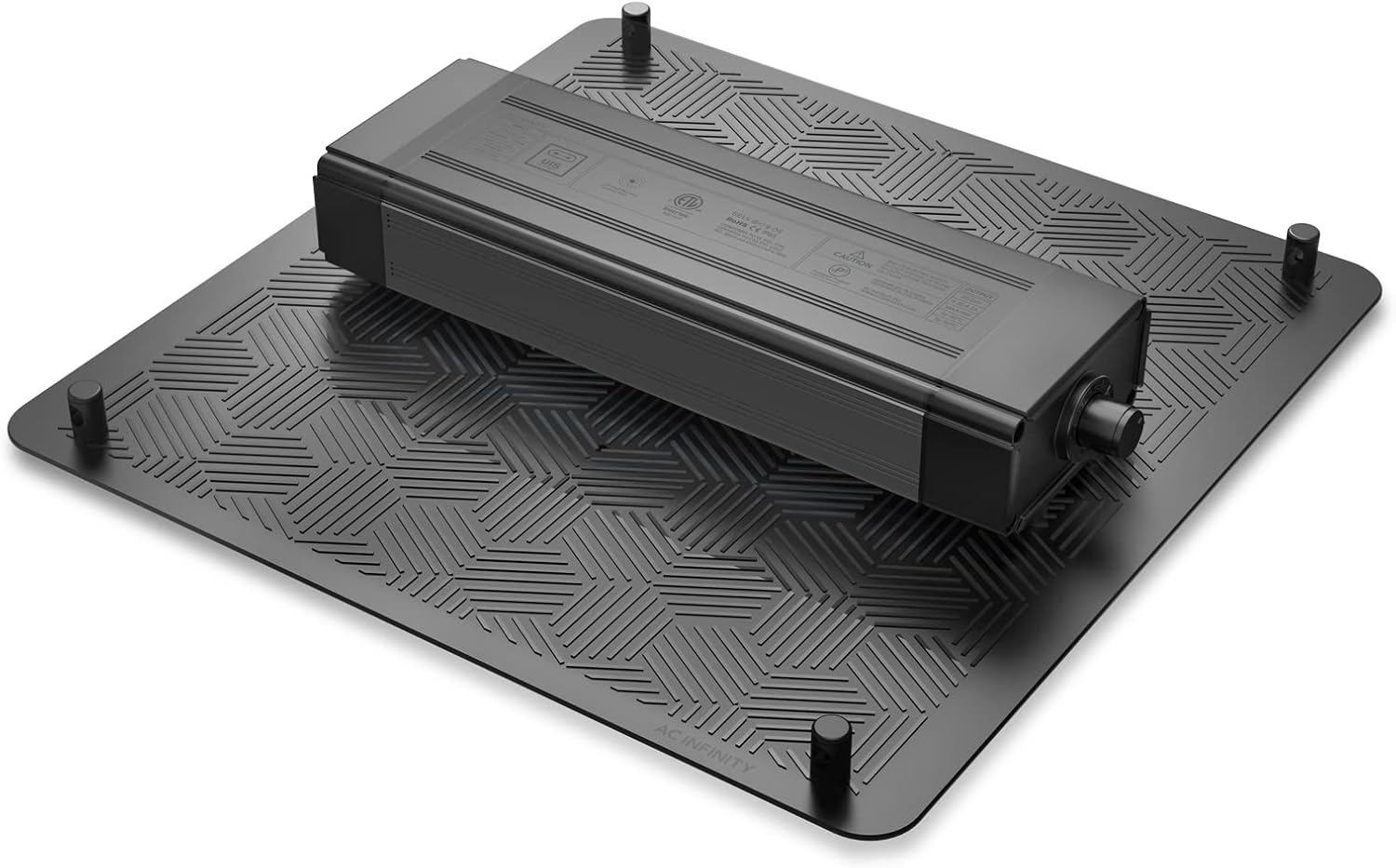
The AC Infinity IONBOARD S22 is built for growers who value polished controls and dependable components. Its Samsung LM301H diodes produce high-intensity, full-spectrum light, while the included dimmer offers ten brightness levels.
The S22 integrates especially well with other AC Infinity grow-tent equipment. Coverage is strongest near the center, so careful height adjustment matters when filling the entire footprint.
Key features:
- Samsung LM301H diodes
- Passive heat dissipation
- Ten dimming levels
- Designed for 2×2-foot spaces
Pros:
- Solid construction
- Precise brightness settings
- Quiet, fanless operation
Cons:
- Costs more than many similar-sized boards
- Center intensity can be strong
Best for: Premium compact grow-tent builds.
Why we recommend it: It has the refined construction and control range that frequent indoor growers appreciate.
5. Barrina T5 2-Foot Grow Lights

The Barrina T5 Grow Lights take a different approach from square LED boards. This eight-pack of narrow, two-foot bars can be mounted beneath shelving, making it convenient for seed trays, microgreens, and several rows of herbs.
You can connect the bars to reduce cord clutter or spread them across separate shelves. They offer less canopy penetration than a powerful board, so they are better for short plants than tall, flowering crops.
Key features:
- Eight 10W light bars
- Linkable design
- Installation hardware included
- White full-spectrum output
Pros:
- Excellent shelf coverage
- Flexible layout
- Suitable for multiple seed trays
Cons:
- Numerous pieces require installation
- Limited penetration through dense foliage
Best for: Seed-starting racks, microgreens, and propagation shelves.
Why we recommend it: Few systems offer this much flexible linear coverage for the price.
6. SANSI 36W Grow Light Bulb

The SANSI 36W Grow Light Bulb turns a suitable E26 lamp into a focused plant light. Its ceramic heat-dissipation design avoids a built-in fan, and the concentrated beam works well over a single medium-sized plant.
This is an easy solution when you already own a secure, appropriately rated fixture. Because the bulb is relatively large and heavy, a flimsy desk lamp is not ideal.
Key features:
- Standard E26 base
- Concentrated full-spectrum beam
- Ceramic heat-management system
- Fanless operation
Pros:
- No specialized hanging system required
- Strong output for a bulb
- Easy to reposition
Cons:
- Lamp fixture is not included
- Narrower coverage than a panel
Best for: One prized houseplant or a compact growing station.
Why we recommend it: It delivers meaningful plant-growing intensity without requiring a complete tent-light system.
7. GE BR30 LED Grow Light Bulb

The GE BR30 Grow Light Bulb is a practical option for gardeners who do not want purple light dominating their living room. It resembles a conventional floodlight and produces a visually comfortable white spectrum.
Installation is as easy as placing it in a compatible E26 fixture. Its modest coverage is best for herbs, seedlings, or one houseplant rather than a productive hydroponic canopy.
Key features:
- BR30 floodlight shape
- Standard E26 base
- Balanced white appearance
- No separate control panel
Pros:
- Blends into home décor
- Simple installation
- Made by an established lighting brand
Cons:
- Limited coverage
- No dimmer or timer
Best for: Kitchens, offices, and visible living spaces.
Why we recommend it: It provides supplemental plant light without making a room look like a commercial growing facility.
8. Yadoker Plant Grow Light

The Yadoker Plant Grow Light combines a slim vertical pole with an overhead light ring. The pole extends to accommodate taller plants, and its integrated timer can repeat a daily lighting schedule.
It is less intrusive than a hanging board and works especially well for fiddle-leaf figs, citrus trees, and floor-standing tropical plants. However, it does not provide enough broad, high-intensity coverage for a packed grow tent.
Key features:
- Height-adjustable pole
- Multiple brightness settings
- Automatic timer modes
- Full-spectrum light ring
Pros:
- Neat, space-saving design
- No ceiling hooks needed
- Convenient automated schedule
Cons:
- Mainly covers one plant
- Pole stability depends on the planter
Best for: Tall decorative plants in darker rooms.
Why we recommend it: It places supplemental light directly over a large houseplant without taking up valuable floor space.
9. GooingTop Clip-On Grow Light

The GooingTop Clip-On Grow Light is designed for small-scale supplemental lighting. Its flexible goosenecks can be aimed at separate plants, while the clamp attaches to a desk, shelf, or plant stand.
The integrated timer and brightness controls make daily use convenient. The tradeoff is lower intensity, so this model is better for foliage plants and young seedlings than fruiting vegetables.
Key features:
- Flexible light heads
- Clamp-on installation
- Adjustable brightness
- Repeating timer
Pros:
- Affordable and easy to position
- Useful in tight spaces
- Controls are built into the cord
Cons:
- Clamp requires a sturdy edge
- Not powerful enough for a large canopy
Best for: Desks, propagation areas, and small houseplant groups.
Why we recommend it: It is an accessible starting point for anyone who needs targeted light rather than tent-level power.
10. LBW Grow Light with Stand

The LBW Grow Light with Stand provides a broader panel on an adjustable floor stand. You can raise, lower, or angle the light without drilling holes or attaching hardware to furniture.
Its panel covers more foliage than a narrow ring lamp, making it useful for a group of potted plants. The stand requires open floor space, and it is not as compact as a bulb or clamp lamp.
Key features:
- Height-adjustable floor stand
- Tilting LED panel
- Several brightness levels
- Built-in timer controls
Pros:
- Covers multiple nearby plants
- No permanent installation
- Easy to move between growing areas
Cons:
- Tripod occupies floor space
- Less powerful than a dedicated tent fixture
Best for: Large houseplants and mixed indoor plant displays.
Why we recommend it: Its wide, adjustable panel offers more positioning freedom than most decorative plant lamps.
How to Choose the Best LED Grow Lights
Start by matching the fixture to the area you actually need to illuminate. Manufacturer coverage estimates can be helpful, but flowering coverage is usually smaller than vegetative coverage because fruiting plants need greater intensity.
Consider these factors before buying:
- Actual power draw: Product names may imply far more power than the fixture consumes. Check the listed wall draw for a useful comparison.
- Coverage: A strong panel suits a compact tent, whereas bars distribute light more effectively across shelves.
- Dimming: Adjustable output protects seedlings and lets you manage heat and electricity use.
- Spectrum: Full-spectrum white LEDs are versatile enough for seedlings, leafy growth, and flowering.
- Heat management: LEDs run cooler than many older grow lamps, but high-output models still add heat.
- Installation: Decide whether you can hang a panel or need a bulb, clamp, or freestanding light.
- Timer: Integrated timers are convenient, although an inexpensive outlet timer works with most fixtures.
Lighting is only one part of a successful indoor setup. Hydroponic growers should also control nutrient strength, water temperature, airflow, and pH. Our guide to creating a hydroponic grow tent explains how these pieces work together.
For a closer look at output, spectrum, and PPFD, see this guide to choosing hydroponic LED grow lights.
Final Thoughts
The best LED grow lights match the plant, canopy size, and growing environment instead of simply offering the highest wattage. The Spider Farmer SF1000 is the most balanced option for a small indoor garden, while the Barrina T5 bars excel on seedling shelves and the Yadoker model suits a single tall houseplant. Measure your growing area, decide how you will mount the fixture, and choose adjustable output whenever possible. That approach gives your plants useful light without wasting electricity or paying for more capacity than you need.
FAQs
How many hours should LED grow lights run each day?
Most seedlings and leafy plants perform well with 14–16 hours of light followed by at least eight hours of darkness. Flowering schedules vary by crop, so follow the needs of the specific plant rather than leaving the light on continuously.
How far should an LED grow light be from plants?
Small household lamps may sit 6–12 inches above foliage, while powerful panels often need 12–24 inches or more. Begin with the manufacturer’s recommendation and watch for bleaching, curled leaves, or excessive stretching.
Can LED grow lights burn plants?
Yes. High-intensity LEDs can cause light stress or heat damage when placed too close to the canopy. Raise the fixture or reduce its brightness if upper leaves become pale, dry, or curled.
Are white or purple LED grow lights better?
Both can grow plants, but full-spectrum white lights make it easier to inspect foliage and identify pests or nutrient problems. They are also more comfortable in living areas and usually provide a balanced spectrum for the full growth cycle.
How do I calculate the right grow-light size?
Measure the illuminated canopy rather than the room. As a rough starting point, leafy plants often need less light per square foot than flowering and fruiting crops, so consult the fixture’s PPFD map and flowering-coverage recommendation before buying.