5 Hydroponic Reservoir Tips to Keep Your System Running Smoothly
We may earn a commission for purchases made using our links. Please see our disclosure for more details.
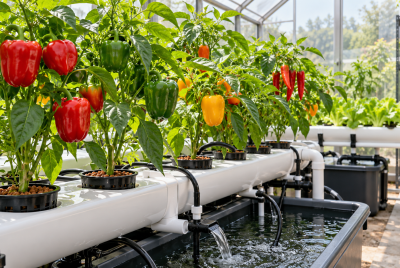
A hydroponic reservoir holds the primary source of water and nutrients for your plants, so it is important to keep it clean and balanced. If the reservoir is too warm, not properly oxygenated, or out of the pH and nutrient range, growth of the plants slows rapidly. In this article you will learn five practical reservoir tips to help you avoid common pitfalls, promote healthy roots, and keep your hydro system running like smoothly.
Why Your Hydroponic Reservoir Matters
Your hydroponic reservoir contains the nutrient solution for your plants. Rather than searching for water and minerals in the soil, plant roots rely on that solution to provide them with everything they need.
It even influences root health, nutrient absorption, oxygen availability and plant growth in general.
When the reservoir stays stable, your plants can focus on growing. However, when the water becomes too warm, too concentrated, too weak, or poorly oxygenated, plants often show stress through yellow leaves, slow growth, drooping, or root problems.
A healthy hydroponic reservoir gives you more control. It also makes troubleshooting easier because you can test the water and see what is happening before your plants suffer.
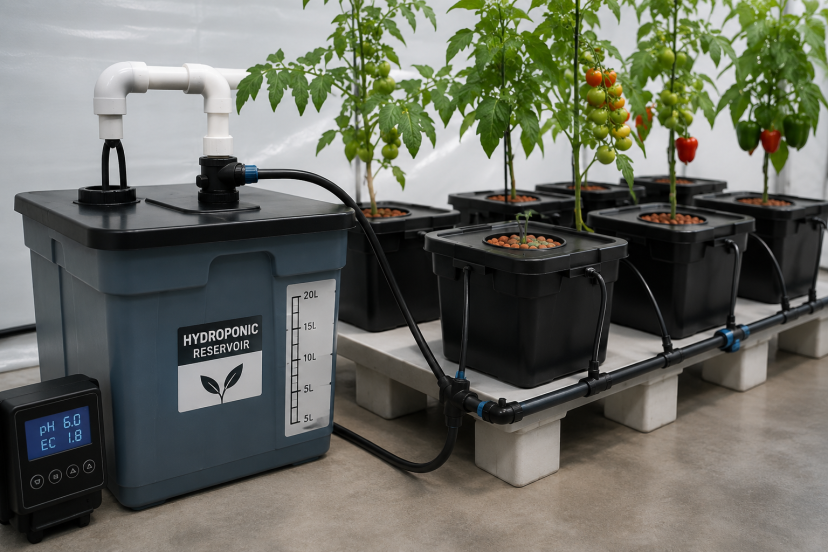
Tip 1: Choose the Right Hydroponic Reservoir Size
One of the easiest mistakes beginners make is using a reservoir that is too small.
A small reservoir can work for tiny setups, but it changes quickly. Water level drops faster. Nutrient strength can rise as plants drink. pH may swing more often. Temperature also shifts faster in a small container.
A larger hydroponic reservoir gives your system more stability. It acts like a buffer, which means small changes happen more slowly.
How Much Reservoir Space Do You Need?
There is no one perfect size for every system, but here is a simple starting point:
- Small herbs and lettuce: at least 1 gallon per plant
- Medium plants like basil or kale: 1–2 gallons per plant
- Larger fruiting plants like tomatoes or peppers: 3–5 gallons per plant
If you are unsure, choose slightly larger. Plants rarely complain about having too much stable nutrient solution, but they definitely react when water runs low.
Choose a Dark, Food-Safe Container
Light is not your friend inside the reservoir. When light reaches nutrient-rich water, algae can grow. Algae competes for oxygen and nutrients, clogs parts, and makes the system harder to clean.
Use an opaque, food-safe container with a lid. Black storage totes, dark hydroponic buckets, and purpose-built reservoirs usually work well.
Tip 2: Monitor pH and EC Regularly
Your plants can only use nutrients properly when the solution stays in the right range. That is where pH and EC come in.
pH shows whether your water leans acidic, neutral, or alkaline. EC, or electrical conductivity, gives you an idea of how strong the nutrient solution is.
According to this helpful hydroponic pH and EC guide from Oklahoma State University, nutrient solution pH affects nutrient availability, and many soilless systems perform best in a slightly acidic range.
For many common hydroponic crops, growers often aim for a pH around 5.5 to 6.5. However, different crops may prefer slightly different ranges, so always check the needs of what you are growing.
How Often Should You Test?
For a small home system, test pH and EC at least a few times per week. If your plants are young, newly transplanted, or growing fast, daily checks can help you catch changes early.
Write your readings down. This simple habit makes you a better grower because patterns become easier to spot.
For example:
- pH keeps rising? Your source water may have high alkalinity.
- EC keeps climbing? Plants may be drinking more water than nutrients.
- EC keeps dropping? Plants may be feeding heavily.
- pH swings wildly? The reservoir may be too small, dirty, or unbalanced.
Do not adjust blindly. Test first, then make small corrections.
Tip 3: Keep Water Temperature Stable
Reservoir temperature matters more than many beginners realize.
If the nutrient solution gets too warm, it can hold less oxygen. Warm water can also encourage unwanted microbial growth. If the solution gets too cold, plant growth may slow because roots become less active.
A study on cucumber production found that cooled nutrient solution improved dissolved oxygen levels and positively influenced growth, yield, and quality in hydroponic cucumber crops. You can read the research here: nutrient solution temperature and oxygen levels in hydroponics.
For many home hydroponic systems, a practical reservoir temperature range is around 65°F to 72°F. You do not need to obsess over every degree, but you should avoid letting the reservoir sit in a hot, sunny spot.
Simple Ways to Control Reservoir Temperature
Place the reservoir away from direct sunlight. Keep it off hot concrete if possible. Use a lid to reduce heat gain and evaporation. In warm rooms, add insulation around the container or use frozen water bottles for short-term cooling.
For larger or high-value systems, a water chiller may be worth considering. For most small growers, shade, airflow, and reservoir placement solve a lot of problems.
Tip 4: Add Oxygen and Maintain Circulation
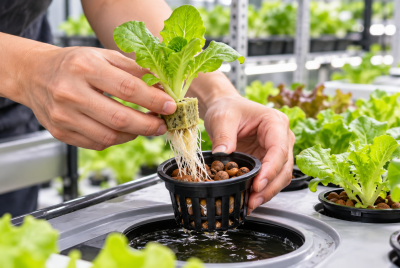
Roots need oxygen. In soil, air pockets help provide it. In hydroponics, your reservoir has to support that oxygen supply.
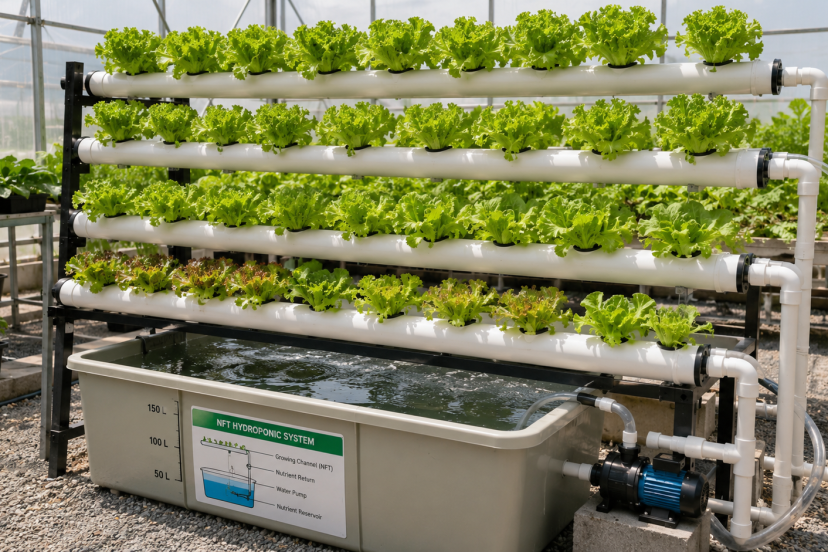
Deep water culture systems usually rely on an air pump and air stone to create bubbles. NFT, drip, and ebb-and-flow systems often use a water pump to keep nutrient solution moving.
Stagnant water is a problem. It can create low-oxygen zones, encourage buildup, and make the reservoir smell unpleasant.
Signs Your Reservoir Needs More Oxygen
Watch for these clues:
- Roots look brown or slimy
- Plants droop even when water is available
- Water smells stale or sour
- Growth slows without an obvious reason
- Bubbles or circulation look weak
Healthy roots are usually pale, firm, and fresh-looking. Some nutrient stains are normal, especially with darker nutrient formulas, but slime and odor are warning signs.
Do Not Forget Pump Maintenance
Air stones can clog over time. Tubing can kink. Water pumps can collect debris. Check these parts during your regular maintenance routine.
A strong hydroponic reservoir setup does not need to be fancy. It just needs steady movement and enough oxygen to keep roots comfortable.
Tip 5: Clean the Reservoir Before Problems Start
Reservoir cleaning is not glamorous, but it saves you from bigger headaches later.
Over time, nutrient salts, biofilm, algae, and organic debris can build up. Even if the water looks fine from the top, the sides, bottom, pump, and tubing may need attention.
A Simple Cleaning Schedule
For many small systems, a full reservoir change every 1–3 weeks works well. The exact timing depends on crop size, water quality, nutrient strength, and system type.
Between full changes, top off the reservoir with fresh water as needed. Then test pH and EC before adding more nutrients.
When you do a full clean:
- Move plants safely if needed.
- Drain the old nutrient solution.
- Rinse the reservoir.
- Scrub away buildup.
- Clean pumps, tubing, and air stones.
- Refill with fresh water and nutrients.
- Test pH and EC before restarting.
Avoid harsh residues. If you use cleaning products, rinse thoroughly. Plant roots are sensitive, and leftover cleaners can cause problems.
If you are still getting your young plants started, check out this guide on starting seeds for hydroponics before moving them into your reservoir setup.
Recommended Products for Hydroponic Reservoir
1. Bluelab Combo Meter for pH, Temperature, and Conductivity
This is a strong pick for growers who want one tool for pH, EC, and temperature. It is especially useful if you manage multiple reservoirs or want more precise readings than basic test strips can offer.
2. General Hydroponics pH Control Kit
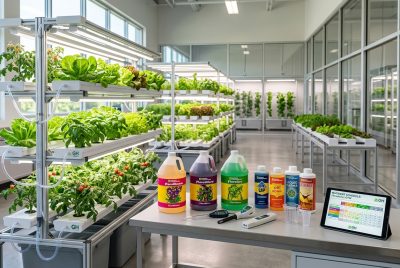
This kit is helpful for beginners because it includes pH Up, pH Down, test indicator, a vial, and a pH chart. It gives you the basics needed to test and adjust reservoir pH.
3. VIVOSUN 210 GPH Submersible Water Pump
A compact submersible pump helps keep nutrient solution moving. It can work well for smaller hydroponic systems, fountains, aquariums, and circulation setups.
4. VIVOSUN Air Stone 2-Pack
Air stones help oxygenate the nutrient solution by creating fine bubbles. They are especially useful in deep water culture systems where roots sit directly in the reservoir.
5. MARS HYDRO DWC Hydroponic Grow System Kit
This kit is a practical option if you want a more complete deep water culture setup. It includes buckets, air stones, tubing, an air pump, grow baskets, and other core parts for indoor growing.
Conclusion
You don’t have to be constantly adjusting a hydroponic reservoir, but you do have to keep its maintenance consistent. Select a reservoir with a capacity suitable for the size of your plants. Light should be kept out. Monitor pH and EC. Watch water temperature. Oxygen is added. Clean before the system is fouled with deposits. These may seem like tiny habits, but they all contribute greatly to making your entire hydro system more stable. And if the reservoir is steady, your plants can do what they’re supposed to do: grow.
FAQs
1. How often should I change my hydroponic reservoir water?
Most small hydroponic systems do well with a full reservoir change every 1–3 weeks. Fast-growing plants, small reservoirs, and warm conditions may need more frequent changes.
2. What pH should a hydroponic reservoir be?
Many hydroponic crops grow well around pH 5.5 to 6.5. However, the best range depends on the crop, so check the needs of your specific plants.
3. Why does my hydroponic reservoir smell bad?
A bad smell often points to low oxygen, warm water, decaying roots, algae, or bacterial buildup. Clean the reservoir, inspect the roots, and check your aeration.
4. Can I use tap water in my hydroponic reservoir?
Yes, many growers use tap water. However, you should test it first. Tap water can contain minerals, chlorine, chloramine, or high alkalinity that may affect pH and nutrient balance.
5. Should my hydroponic reservoir have a lid?
Yes, a lid is usually a good idea. It blocks light, reduces algae growth, limits evaporation, and helps keep debris out of the nutrient solution.