Vertical Hydroponic Gardening Ideas For Small Homes
We may earn a commission for purchases made using our links. Please see our disclosure for more details.
Vertical hydroponic gardening lets you grow fresh food when floor space is limited. Instead of spreading pots across a balcony or kitchen, you arrange plants upward and deliver water and nutrients directly to their roots. The method suits apartments, compact patios, and sunny indoor corners. You still need good light, airflow, and regular care, but you do not need a yard or deep soil.
Why Vertical Hydroponic Gardening Works in Small Spaces
A vertical system uses height rather than width. Plants sit in stacked pockets, channels, shelves, or tower openings while a pump moves nutrient solution from a reservoir to the roots.
In a controlled lettuce study, a vertical hydroponic system produced more crop per unit of floor area than a horizontal system. However, plants near the bottom received less light and produced smaller shoots, which matters when planning an indoor tower.
A 2025 bok choy study also reported higher water-use efficiency and major space savings compared with soil cultivation. Results vary by crop and setup, but the research shows why vertical growing appeals to urban gardeners.
Choose the Right Spot First
Measure the available floor area, ceiling height, and distance from an electrical outlet. Leave enough room to reach the reservoir, inspect roots, and clean around the base.
A bright balcony may support leafy crops with little extra lighting. Indoors, check whether sunlight reaches every growing level. A window that lights the top but leaves the lower half shaded will cause uneven growth.
Use a waterproof mat or shallow tray under the reservoir. Secure the tubing and keep electrical connections above possible splash points.
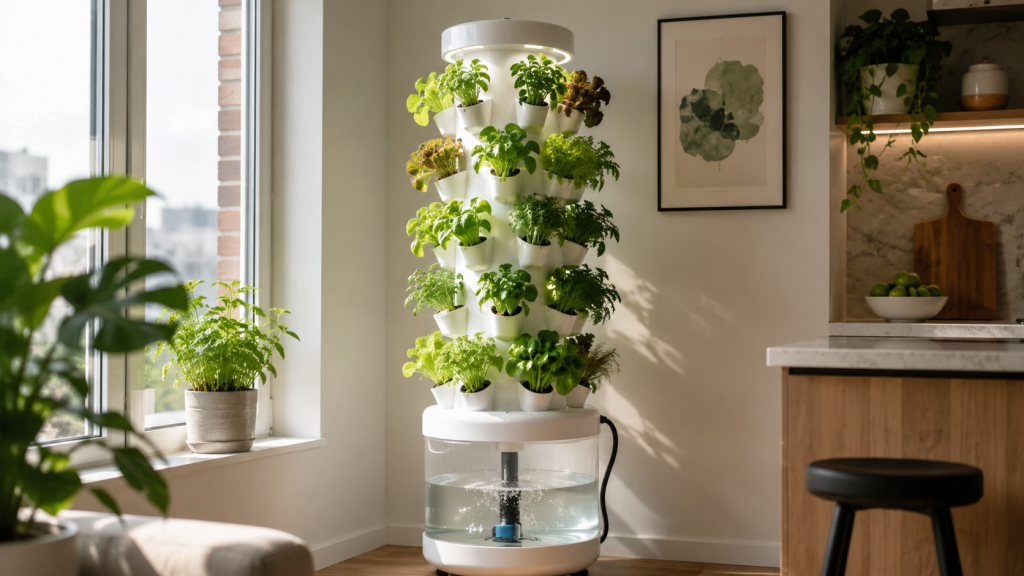
Vertical Hydroponic Gardening Ideas for Small Homes
1. Use a Slim Freestanding Tower
A narrow tower fits neatly in a kitchen corner, balcony, or enclosed patio. Most designs pump nutrient solution to the top, where it flows past each plant and returns to the reservoir.
Choose a model with removable sections. Modular parts make cleaning easier and let you adjust the tower height.
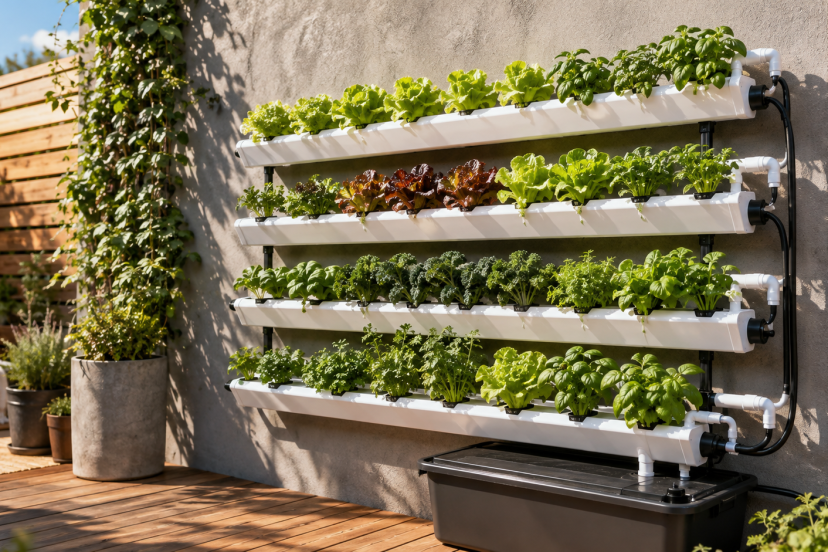
2. Build a Wall-Mounted NFT System
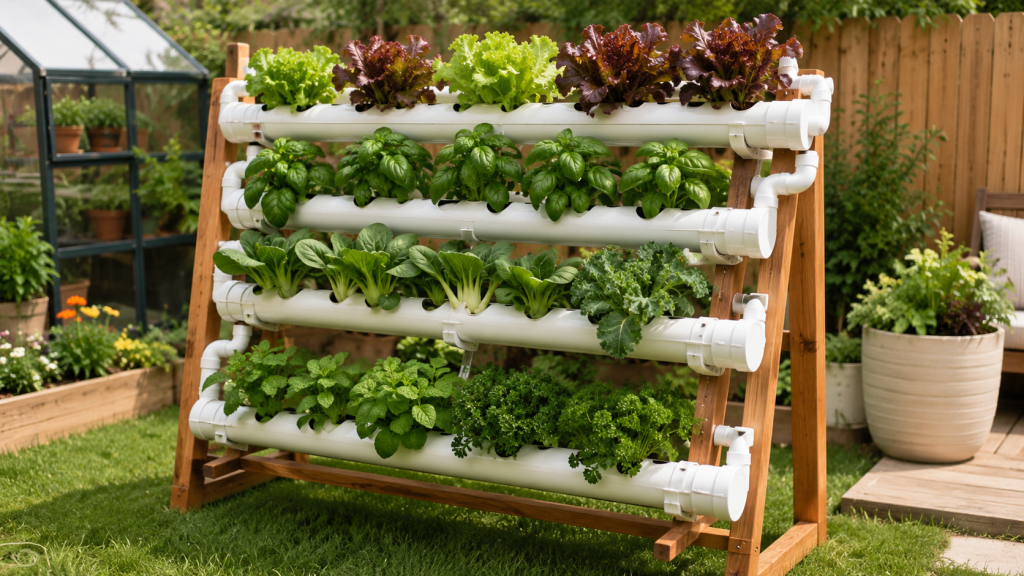
A wall-mounted nutrient film technique system uses slightly sloped channels. A thin stream of nutrient solution moves along the roots before draining back into the tank.
This design keeps the floor mostly clear. Mount the channels to a sturdy frame because water, plants, pipes, and growing media add considerable weight.
For more detail on pumps, reservoirs, and system layouts, read this guide to vertical hydroponic systems.
3. Turn a Storage Rack Into a Hydroponic Shelf
A metal shelving unit can hold several shallow hydroponic trays while using little floor space. Place compact LED bars under each shelf so every level receives direct light.
This layout works well for lettuce, basil, cilantro, seedlings, and microgreens. It also gives you easier access than a round tower because every tray faces forward.
4. Create a Balcony Column Garden
For a covered balcony, try a vertical column or stacked planter connected to a reservoir. Use opaque tubing and containers because direct sunlight can encourage algae growth inside the system.
Secure tall equipment to a railing or wall support. Wind can tip a lightly loaded tower, especially when the plants are still small.
5. Pair a Countertop Nursery With a Tower
Start seedlings in a small countertop unit, then transfer healthy plants into the main tower. This keeps tower sites productive and makes it easier to replace harvested greens quickly.
A separate nursery also lets you give young seedlings gentler lighting and closer attention during their first few weeks.
Best Crops for a Compact Vertical System
Start with light, fast-growing plants. Loose-leaf lettuce, basil, parsley, chives, mint, arugula, kale, and bok choy fit many home systems. Research into vertical systems has successfully grown crops such as lettuce, bok choy, and strawberries, although each crop requires a different level of care.
Place compact herbs and young greens near the lower levels. Reserve the brightest upper positions for crops that need stronger light. Rotate plants when possible so one side does not remain shaded.
Tomatoes, cucumbers, peppers, and strawberries can grow hydroponically, but they need more root room, support, light, and nutrient control. Add them after you feel comfortable managing leafy crops.
Manage Light and Airflow
Light distribution creates one of the biggest challenges in vertical hydroponic gardening. A single lamp above a tower may not reach plants around the sides or near the base. Research comparing vertical and horizontal systems found measurable reductions in light and plant weight toward the bottom of a vertical unit.
For indoor towers, use vertical light bars or rotate the unit regularly. For shelf systems, hang one light above each level. Keep leaves from touching the fixtures.
Run a small fan nearby to move air gently through the foliage. Steady airflow helps prevent stagnant, damp pockets from developing around crowded plants.
Keep Water and Nutrients Stable
Use a complete fertilizer made for hydroponics rather than ordinary garden feed. Hydroponic formulas contain water-soluble nutrients that roots can absorb without relying on soil.
Check the reservoir often. Top it up with clean water, remove dead roots and leaves, and watch for leaks or unusual pump noise. Measure pH with a calibrated meter instead of judging the nutrient solution by plant color alone.
Nutrient requirements change with the crop, growth stage, reservoir size, and quality of the source water. Our guide to hydroponic nutrient solution management explains essential minerals and why pH and electrical conductivity matter.
Common Mistakes to Avoid
Do not fill every opening with a mature plant. Dense foliage blocks light and traps moisture, so leave some sites empty when growing larger herbs or greens.
Avoid using a reservoir that is difficult to remove or clean. Sediment, dead roots, and organic debris can collect around the pump and restrict water flow.
Finally, do not assume automation means zero work. Timers reduce daily labor, but you still need to inspect the roots, water level, lighting, tubing, and overall plant health.
Five Helpful Products for a Vertical Hydroponic Setup
Product availability and package contents may change over time. Before ordering, check the latest dimensions, specifications, and compatibility with your hydroponic system.
1. Vertical Hydroponics Indoor Growing System
This vertical system offers a convenient option for gardeners who want a complete setup rather than building one from individual parts. It includes a vertical growing tower, water reservoir, pump, grow lights, and a reflective enclosure.
This system may suit indoor growers who want to manage several plants within a relatively small footprint.
2. General Hydroponics FloraSeries Trio
The FloraSeries Trio includes three separate nutrient formulas that you can adjust as plants move through different growth stages.
This flexibility makes it useful for gardeners growing several types of herbs, leafy greens, or fruiting plants in the same hydroponic space.
3. Apera Instruments PH20 pH Meter
The Apera Instruments PH20 is a waterproof digital meter designed to test the pH of water and nutrient solutions.
It provides a quicker and more precise alternative to disposable test strips, helping you identify pH changes before they begin affecting plant growth.
4. Barrina T5 Two-Foot Full-Spectrum Grow Lights
These slim, linkable grow lights work well with hydroponic shelves, wall-mounted systems, and compact growing towers.
Their narrow design makes it easier to position light near plants at different heights, which can help reduce uneven growth in a vertical garden.
5. AC Infinity 3-Inch Net Cups, 25-Pack
These reusable net cups fit many homemade hydroponic towers, channels, buckets, and reservoir lids.
The slotted sides support plants and growing media while allowing roots to extend freely into the nutrient solution. Check the opening size in your system before choosing a net cup diameter.
The Science Behind Vertical Hydroponic Systems
The controlled comparison of vertical and horizontal hydroponics found that the vertical system produced more lettuce per unit of floor area. However, it also recorded weaker light and lower plant weight near the bottom of the structure.
A newer study of vertical hydroponic bok choy reported better water-use efficiency, higher production, and lower space requirements than soil cultivation under the study conditions.
Together, these findings support vertical hydroponic gardening as a practical space-saving method. They also show that a tall structure alone does not guarantee better results. Lighting, spacing, nutrient control, and system design still shape the final harvest.
Conclusion
Vertical hydroponic gardening can turn an unused corner, narrow balcony, or compact wall into a productive growing area. The best setup is not always the largest or most automated one. It is the system you can light evenly, reach easily, and maintain without disrupting your home.
Begin with leafy greens, keep the reservoir accessible, and watch the lower growing levels closely. Once the routine feels natural, you can expand the tower, add growing shelves, or experiment with more demanding crops.
FAQs
How much space does a vertical hydroponic garden need?
Some towers use only a few square feet of floor area. Measure the complete footprint, including the reservoir, lights, maintenance access, and the width of mature plants.
Can I put a hydroponic tower in my living room?
Yes, provided you protect the floor, manage humidity, control light spill, and choose a reasonably quiet pump. Place it somewhere that allows you to reach and clean the reservoir easily.
Which plants should a beginner grow first?
Start with loose-leaf lettuce, basil, arugula, chives, or bok choy. These crops grow relatively quickly and need less physical support than tomatoes, cucumbers, and other fruiting plants.
How much power does a vertical hydroponic setup consume?
Small pumps use electricity continuously or at scheduled intervals. Indoors, grow lights often create the larger electrical load. Actual consumption depends on the pump size, light wattage, and daily operating schedule.
When should a vertical hydroponic system be cleaned?
Inspect the garden weekly and clean components whenever you notice algae, sediment, blocked tubing, or unhealthy roots. Perform a deeper cleaning between crop cycles before adding new seedlings.