How to Fix pH Problems in Your Hydroponic Garden
We may earn a commission for purchases made using our links. Please see our disclosure for more details.
Your hydroponic plants have enough nutrients, clean water, and proper lighting, yet their leaves are turning yellow or growth has slowed. What could be wrong? Sometimes, the problem is hiding in your nutrient solution. pH problems can interfere with how plants absorb essential minerals, even when those nutrients are already available. A solution that becomes too acidic or alkaline can gradually affect plant health. Understanding what causes these changes and how to correct them can help you maintain a healthier, more productive hydroponic garden.
Why pH Matters in Hydroponics
The pH level indicates the acidity or alkalinity of your nutrient solution. On the pH scale, which ranges from 0 to 14, the midpoint of 7 indicates a balance between acidity and alkalinity. Lower readings indicate acidity, while higher readings indicate alkalinity.
In hydroponics, pH directly affects nutrient availability. If the pH becomes too high or too low, certain nutrients may become harder for plants to take up.
Growers often refer to this problem as nutrient lockout.
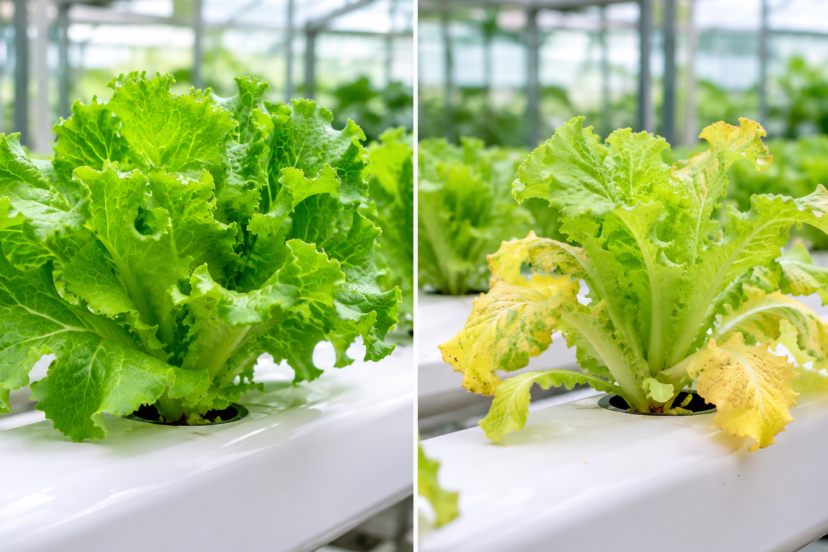
For example, excessively high pH can limit iron availability, potentially causing yellowing between the veins of young leaves.
The Oklahoma State University guide to hydroponic pH and electrical conductivity explains how maintaining suitable pH supports nutrient availability.
What pH Range Works Best for Hydroponic Plants?
Most hydroponic growers use 5.5 to 6.5 as a practical general range. However, different crops have slightly different requirements.
| Hydroponic crop | Suggested pH range |
| Lettuce | 6.0–7.0 |
| Basil | 5.5–6.0 |
| Tomatoes | 6.0–6.5 |
| Peppers | 5.5–6.0 |
| Strawberries | Around 6.0 |
| Spinach | 6.0–7.0 |
These values follow crop-specific guidance from Oklahoma State University.
You don’t need to maintain one exact reading continuously. Small changes within an appropriate range are normal.
The priority is preventing prolonged extremes and sudden, unnecessary corrections.
Common Signs of pH Problems
Plants often show stress before you notice something wrong with the nutrient solution.
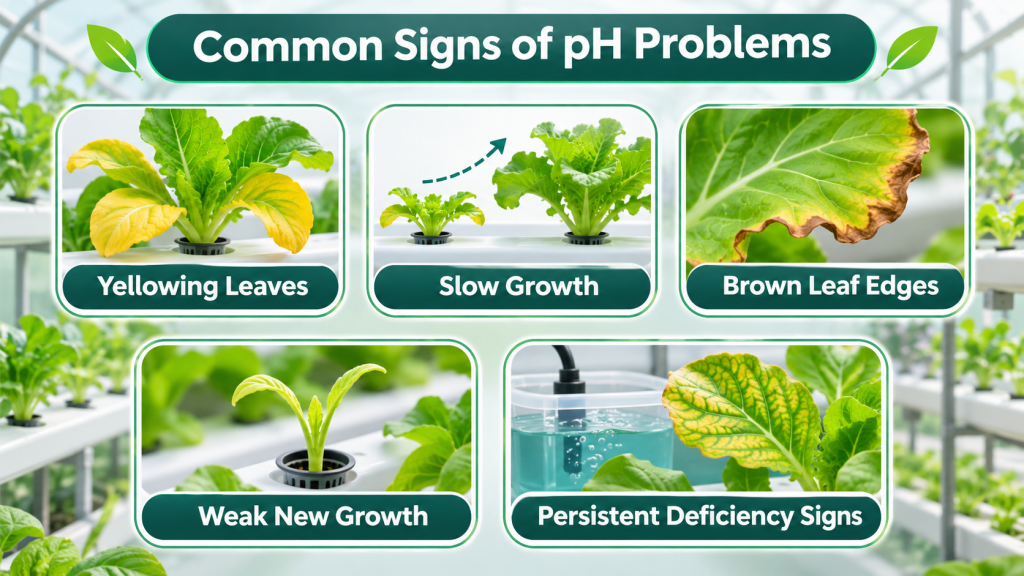
Watch for these warning signs:
- Yellowing leaves: Certain nutrients may become less available.
- Slow growth: Plants may struggle to maintain healthy development.
- Brown leaf edges: Nutrient imbalance or another growing problem may be involved.
- Weak new growth: Young leaves may develop poorly.
- Persistent deficiency symptoms: Adding fertilizer doesn’t improve plant health.
These symptoms don’t automatically indicate incorrect pH. Excess nutrients, damaged roots, and unsuitable temperatures can produce similar effects.
Always test your solution before making adjustments.
What Causes pH Levels to Change?
Several factors can influence reservoir chemistry, even when you’re following your regular feeding routine.
Water Quality
Tap water may contain bicarbonates and dissolved minerals that affect pH stability.
Water with high alkalinity can resist acidification and cause the reservoir pH to rise again after adjustment.
Nutrient Uptake
Plants absorb different nutrients at different rates. This changes the balance of charged particles in your solution and can gradually shift pH.
Fertilizer Composition
Some fertilizers tend to increase acidity, while others have the opposite effect.
Improper mixing and excessive fertilizer additions can also complicate pH management.
Reservoir Conditions
Evaporation, water top-ups, microbial activity, and accumulated salts can affect solution chemistry.
When troubleshooting recurring changes, consider the entire reservoir rather than focusing only on the pH reading.
How to Test Your Hydroponic pH Correctly
Accurate testing prevents unnecessary adjustments.
A digital pH meter usually offers more precise readings than basic strips, provided you maintain and calibrate it properly.
Follow these steps:
- Calibrate your meter using the recommended buffer solutions.
- Mix the reservoir thoroughly.
- Collect a clean sample or measure directly according to the meter instructions.
- Allow the reading to stabilize.
- Record the result before making changes.
Check electrical conductivity (EC) alongside pH. EC estimates the concentration of dissolved nutrient salts.
The University of Minnesota Extension’s small-scale hydroponics guidance emphasizes testing water quality and considering both pH and nutrient concentration.
For a more detailed explanation, see this guide to maintaining proper pH and EC levels in hydroponic water.
How to Fix High pH in Hydroponics
A high reading means your nutrient solution is more alkaline than your crop’s recommended range.
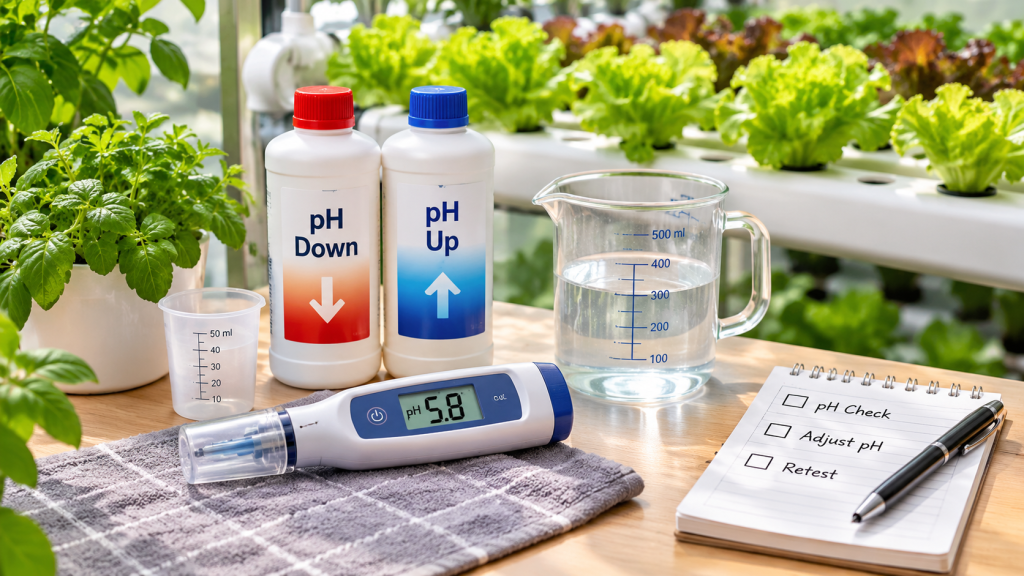
Use a hydroponic pH Down product to lower it gradually.
Step-by-Step Instructions
- Measure the current pH and EC.
- Confirm your reservoir contains the correct nutrient concentration.
- Add a small amount of pH Down according to the product directions.
- Circulate or stir the solution thoroughly.
- Allow several minutes for mixing, then test again.
- Repeat cautiously until you reach the desired range.
Never add a large amount of acid without measuring its effect.
Wear appropriate protective equipment, follow the product label, and never mix concentrated pH adjusters directly with each other.
If high pH repeatedly returns, investigate the alkalinity of your source water.
How to Fix Low pH in Hydroponics
Low pH means your solution has become too acidic.
A hydroponic pH Up product can bring the reading back toward your target.
Step-by-Step Instructions
- Confirm the reading with a calibrated meter.
- Check that your nutrient concentration is appropriate.
- Add a small amount of pH Up following the label.
- Stir the reservoir water until everything is evenly distributed, then give the pH reading time to settle.
- Retest before adding more.
Avoid repeatedly switching between pH Up and pH Down. This makes adjustments harder to control and adds unnecessary dissolved substances.
If the reservoir has become severely unbalanced, replacing the nutrient solution may be more practical than repeatedly correcting it.
What to Do When pH Keeps Fluctuating
A reservoir that constantly changes pH usually needs more investigation, not simply more adjuster.
Start by checking three things:
- Source water: Test its pH, EC, and, when possible, alkalinity.
- Nutrient concentration: Confirm your feeding strength matches the crop’s needs.
- Reservoir condition: Inspect roots, water level, temperature, and cleanliness.
Also check your meter’s calibration. An unreliable instrument can make a stable reservoir appear unstable.
If problems persist despite proper mixing and testing, prepare a fresh nutrient solution and monitor how its pH changes.
How to Prevent Future pH Problems
Preventing extreme changes is easier than correcting a severely unbalanced reservoir.
Build these habits into your routine:
- Test pH and EC daily when establishing or troubleshooting a system.
- Calibrate and store your meter according to its instructions.
- Mix nutrients completely before adjusting pH.
- Replace aging nutrient solution when its balance becomes difficult to maintain.
- Record your readings to identify recurring changes.
For an established, stable home system, testing frequency can reflect the system’s size, crop demands, and observed changes.
A simple log of pH, EC, and water additions can reveal patterns that occasional readings miss.
Recommended Products
The right testing and adjustment tools make managing your nutrient solution easier. These five products can help you monitor and manage pH levels in your hydroponic system.
1. General Hydroponics pH Control Kit
Best for: Beginners who need a complete pH testing and adjustment kit.
This kit includes pH Up, pH Down, a liquid test indicator, and testing accessories. It allows you to check your solution and make adjustments without purchasing a digital meter separately.
2. Apera Instruments PH20 Digital pH Meter
Best for: Growers who want convenient digital measurements.
The Apera PH20 features automatic temperature compensation, a waterproof design, and automatic calibration. Its portable size makes it convenient for regular reservoir checks, although proper calibration remains essential.
3. Bluelab pH Pen
Best for: Frequent pH and temperature monitoring.
The Bluelab pH Pen measures both pH and temperature. It features a backlit display, waterproof construction, and two-point calibration, making it a practical option for growers who monitor their solution regularly.
4. General Hydroponics pH Down
Best for: Lowering excessively alkaline nutrient solutions.
General Hydroponics pH Down helps reduce the pH of hydroponic nutrient solutions. It is useful when your reservoir consistently tests above the recommended range. Add it gradually according to the instructions.
5. General Hydroponics pH Up
Best for: Raising excessively acidic nutrient solutions.
General Hydroponics pH Up helps increase pH when a solution becomes too acidic. It provides a dedicated adjustment option without relying on improvised household treatments.
Conclusion
Fixing pH problems in your hydroponic garden starts with understanding what is happening inside your nutrient solution. An unusual reading isn’t always a reason to add more chemicals immediately. Check your meter, confirm nutrient strength, and investigate your water source before making adjustments. When correction is necessary, use small amounts of the appropriate product and retest carefully. Most importantly, monitor changes over time. A consistent testing routine helps you recognize problems early, avoid unnecessary adjustments, and maintain conditions that support healthy nutrient uptake.
FAQs
1. What happens if pH is too high in hydroponics?
When the nutrient solution becomes too alkaline, plants may have difficulty accessing essential minerals, including iron and manganese. Plants may develop yellowing leaves, poor growth, or deficiency symptoms despite receiving fertilizer.
2. Can I use vinegar to lower hydroponic pH?
Vinegar can temporarily lower pH, but its effects may be less predictable over time. A properly formulated hydroponic pH Down product is generally preferable for routine adjustments.
3. How often should I check hydroponic pH?
Daily testing is useful for new systems, small reservoirs, or situations involving unstable readings. Established systems may need less frequent testing depending on their stability and crop requirements.
4. What causes pH levels to increase repeatedly in a hydroponic system?
High source-water alkalinity, nutrient uptake, and changes in reservoir chemistry can cause pH to rise repeatedly. Testing your source water and checking nutrient concentration can help identify the cause.
5. Can plants recover from pH problems?
Yes, many plants can recover once suitable growing conditions return, provided the damage is not severe. New growth is often a better indicator of recovery than leaves that were already damaged.