Top 10 Cloning Machine
We may earn a commission for purchases made using our links. Please see our disclosure for more details.
Propagating plants from cuttings sounds straightforward, but keeping stems hydrated while encouraging healthy roots can be surprisingly difficult. A reliable cloning machine removes much of that uncertainty by continuously misting exposed stems with oxygenated water. This guide compares ten aeroponic cloners for home gardeners, hydroponic growers, and larger propagation projects. The picks cover compact systems for occasional use as well as high-capacity machines designed for frequent cloning.
Our Top Picks
| Product | Best For | Key Feature | Rating | Read More |
| CLONE KING 25-Site Cloner | Best overall | Compact complete system | ★★★★⯪ | Read review |
| CLONE KING 36-Site Cloner | Higher capacity | 317 GPH pump | ★★★★⯪ | Read review |
| HORTIPOTS 35-Site Cloner | Home growers | Humidity dome included | ★★★★⯪ | Read review |
| HORTIPOTS 48-Site Cloner | Best value | Standard 2-inch collars | ★★★★⯪ | Read review |
| HORTIPOTS 70-Site Cloner | Serious growers | Space-efficient layout | ★★★★⯪ | Read review |
| HORTIPOTS 70-Site Oxygen Kit | Faster propagation | Added root-zone aeration | ★★★★⯪ | Read review |
| HORTIPOTS 35-Site Aeroponic Cloner Machine | Small to medium propagation batches | 35 reusable 1.625-inch neoprene inserts | ★★★★⯪ | Read review |
| HORTIPOTS 140-Site Cloner | Commercial use | Very high capacity | ★★★★⯪ | Read review |
| Psycloner 24-Site Machine | Beginners | Simple compact setup | ★★★★⯪ | Read review |
| EZ-CLONE Low Pro 16 | Premium small cloner | Durable low-profile design | ★★★★⯪ | Read review |
Top 10 Cloning Machine Reviews
1. CLONE KING 25-Site Aeroponic Cloning Machine

The CLONE KING 25-Site Aeroponic Cloning Machine includes a reservoir, lid, spray manifold, submersible pump, misters, and reusable inserts. Its 25-site capacity provides enough room for a productive batch without taking over a small growing area.
The compact system is also easier to clean and monitor than many high-capacity alternatives. Growers only need to add suitable lighting, water, and healthy plant cuttings.
Pros: Complete propagation system, compact footprint, reusable inserts, and manageable 25-site capacity.
Cons: Closely spaced plants may become crowded, and the submersible pump can warm the water.
Best for: Home growers seeking a dependable, moderately sized aeroponic cloner.
Why we recommend it: It offers a practical balance of capacity, simplicity, and overall value for routine plant propagation.
2. CLONE KING 36-Site Aeroponic Cloning Machine

The CLONE KING 36-Site Aeroponic Cloning Machine increases capacity while maintaining the brand’s straightforward design. It comes with a reservoir, lid, inserts, spray manifold, misters, and a 317 GPH submersible pump.
Its spray system continually wets the exposed stems, helping cuttings remain hydrated while new roots form. The 36-site layout works well for growers who regularly propagate several plant varieties.
Pros: Complete system, powerful pump, 36 cutting sites, reusable inserts, and multiple spray heads.
Cons: Requires more space than a compact cloner, and pump heat may increase the reservoir temperature.
Best for: Growers running medium-sized propagation cycles.
Why we recommend it: It provides additional capacity without becoming difficult to assemble, operate, or maintain.
3. HORTIPOTS 35-Site Aeroponic Cloning Machine

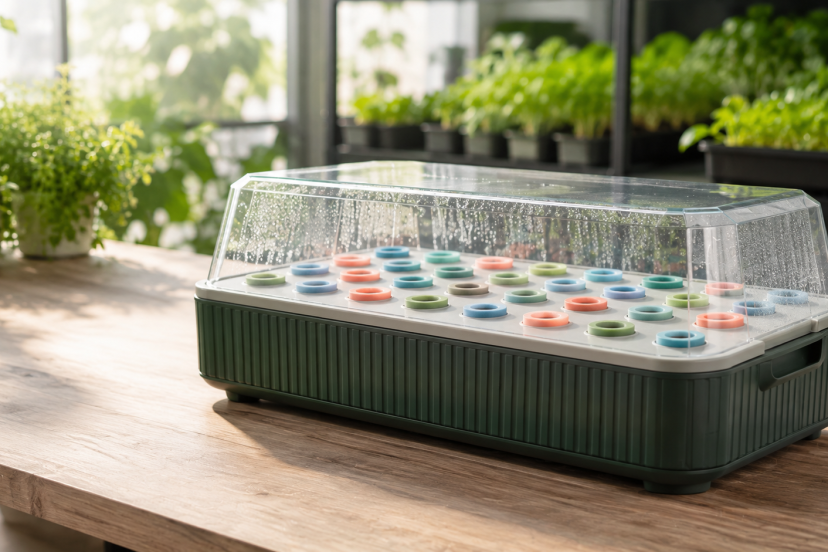
The HORTIPOTS 35-Site Aeroponic Cloning Machine combines a manageable growing capacity with a transparent humidity dome. The dome helps reduce moisture loss during the first stage of propagation, particularly in dry indoor environments.
A spray manifold beneath the lid keeps the stems moist while allowing developing roots to receive oxygen. Growers can gradually increase ventilation after the cuttings recover and begin forming roots.
Pros: Humidity dome included, compact design, reusable collars, and practical 35-site capacity.
Cons: The dome needs regular ventilation, and the lid may feel less rigid than premium alternatives.
Best for: Home growers propagating cuttings in rooms with low humidity.
Why we recommend it: The included dome offers additional environmental control without requiring a separate propagation chamber.
4. HORTIPOTS 48-Site Aeroponic Cloning Machine

The HORTIPOTS 48-Site Aeroponic Cloning Machine uses widely available two-inch neoprene collars to support plant cuttings. Its larger capacity suits gardeners who want to propagate multiple varieties in the same cycle.
The filtered submersible pump helps stop loose debris from reaching the spray nozzles. Even with the filter, cleaning the manifold between cycles remains important for maintaining even spray coverage.
Pros: Standard two-inch collars, filtered pump, replaceable components, and generous capacity.
Cons: The closely spaced sites can restrict airflow, and the manifold requires routine cleaning.
Best for: Growers propagating several varieties or larger batches at home.
Why we recommend it: Its standard collar size, useful capacity, and accessible replacement parts make it a versatile option.
5. HORTIPOTS 70-Site Aeroponic Cloning Machine

The HORTIPOTS 70-Site Aeroponic Cloning Machine accommodates up to 70 cuttings while occupying less room than several separate cloners. Its 1⅝-inch neoprene collars create a compact arrangement for high-volume propagation.
The system includes a reservoir, pump, collars, and a pretested spray manifold. Because many cuttings share the same water supply, growers should monitor cleanliness and reservoir temperature carefully.
Pros: High capacity, efficient footprint, reusable collars, and complete aeroponic spray system.
Cons: Smaller collars are less universal, and contamination could affect a large batch.
Best for: Experienced growers who propagate plants frequently.
Why we recommend it: It handles substantial propagation runs without requiring multiple reservoirs and pumps.
6. HORTIPOTS 70-Site Cloning Machine With Oxygen Kit
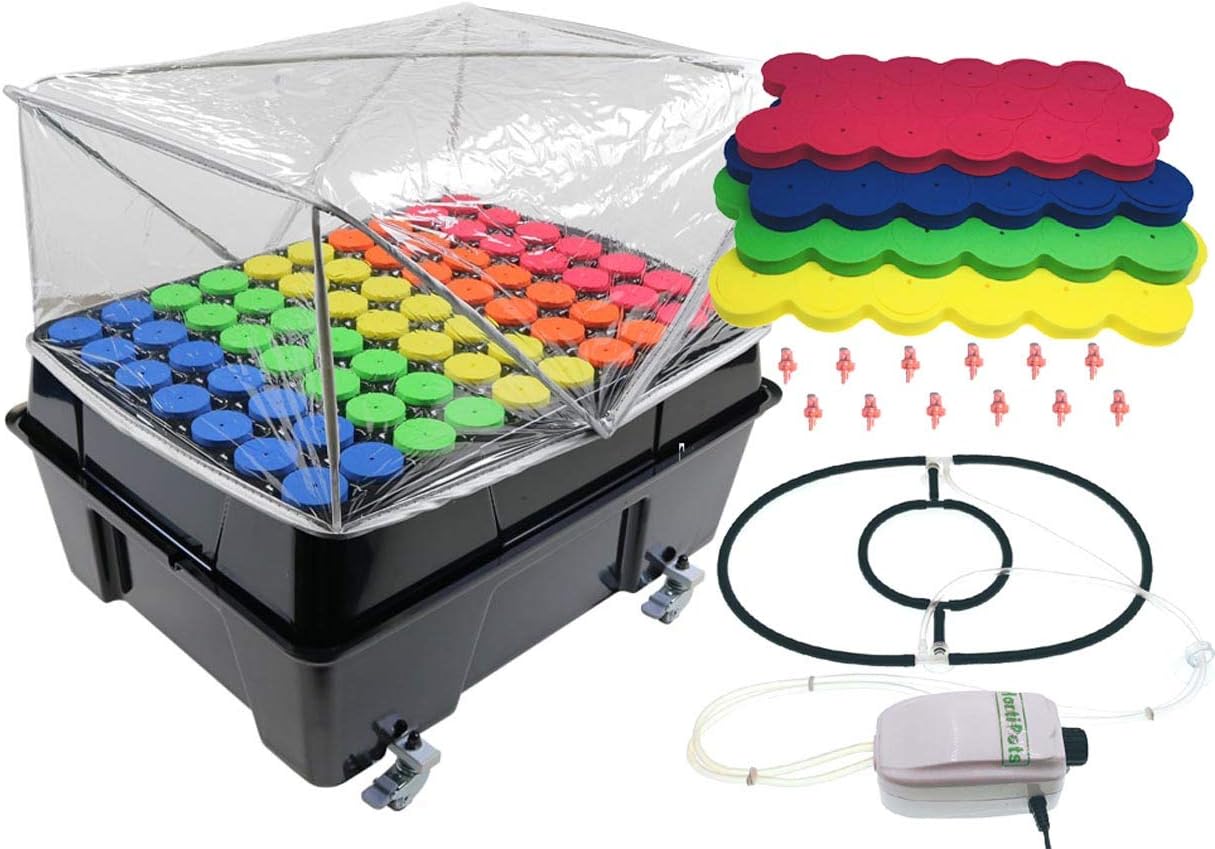
The HORTIPOTS 70-Site Cloning Machine With Oxygen Kit adds an aeration system to the standard high-capacity cloner. Supplemental oxygen can support developing roots, especially when warmer growing conditions reduce the water’s natural oxygen content.
Mixed-color neoprene collars make it easier to separate cultivars or track different batches. The additional air pump and tubing require maintenance, but they provide more control over the root-zone environment.
Pros: Supplemental aeration, 70 cutting sites, color-coded collars, and complete misting components.
Cons: More cords and equipment to manage, and it costs more than the standard 70-site model.
Best for: Serious growers who want additional root-zone oxygenation.
Why we recommend it: The added aeration system gives experienced growers another way to manage conditions around developing roots.
7. HORTIPOTS 35-Site Aeroponic Cloner Machine

The HORTIPOTS 35-Site Aeroponic Cloner Machine uses 1.625-inch neoprene inserts to hold up to 35 plant cuttings securely above its reservoir. The complete aeroponic system continually sprays the exposed stems, keeping them moist while new roots develop.
Its moderate capacity suits home growers who need more room than a small cloner but do not want the maintenance demands of a commercial system. The compact design also fits comfortably beneath many propagation lights.
Pros: Practical 35-site capacity, reusable neoprene inserts, compact footprint, and complete aeroponic setup.
Cons: The pump may warm the reservoir, and the spray nozzles require regular inspection and cleaning.
Best for: Home growers propagating small to medium batches of plant cuttings.
Why we recommend it: It offers useful capacity in a manageable format that is easier to operate and clean than a large commercial cloner.
8. HORTIPOTS 140-Site Aeroponic Cloning Machine

The HORTIPOTS 140-Site Aeroponic Cloning Machine provides enough capacity for commercial propagation projects and small nurseries. Its large reservoir and spray system allow up to 140 cuttings to develop roots in one centralized unit.
Operating one large machine may be more convenient than monitoring several smaller systems. However, maintaining sanitation and keeping replacement pump components available are especially important at this scale.
Pros: Very high capacity, centralized maintenance, reusable collars, and space-efficient batch production.
Cons: Large footprint, time-consuming cleaning, and equipment failure can affect many cuttings.
Best for: Commercial growers, nurseries, and other high-volume propagation operations.
Why we recommend it: It delivers exceptional capacity for growers who consistently need to root large numbers of cuttings.
9. Psycloner 24-Site Clone Machine
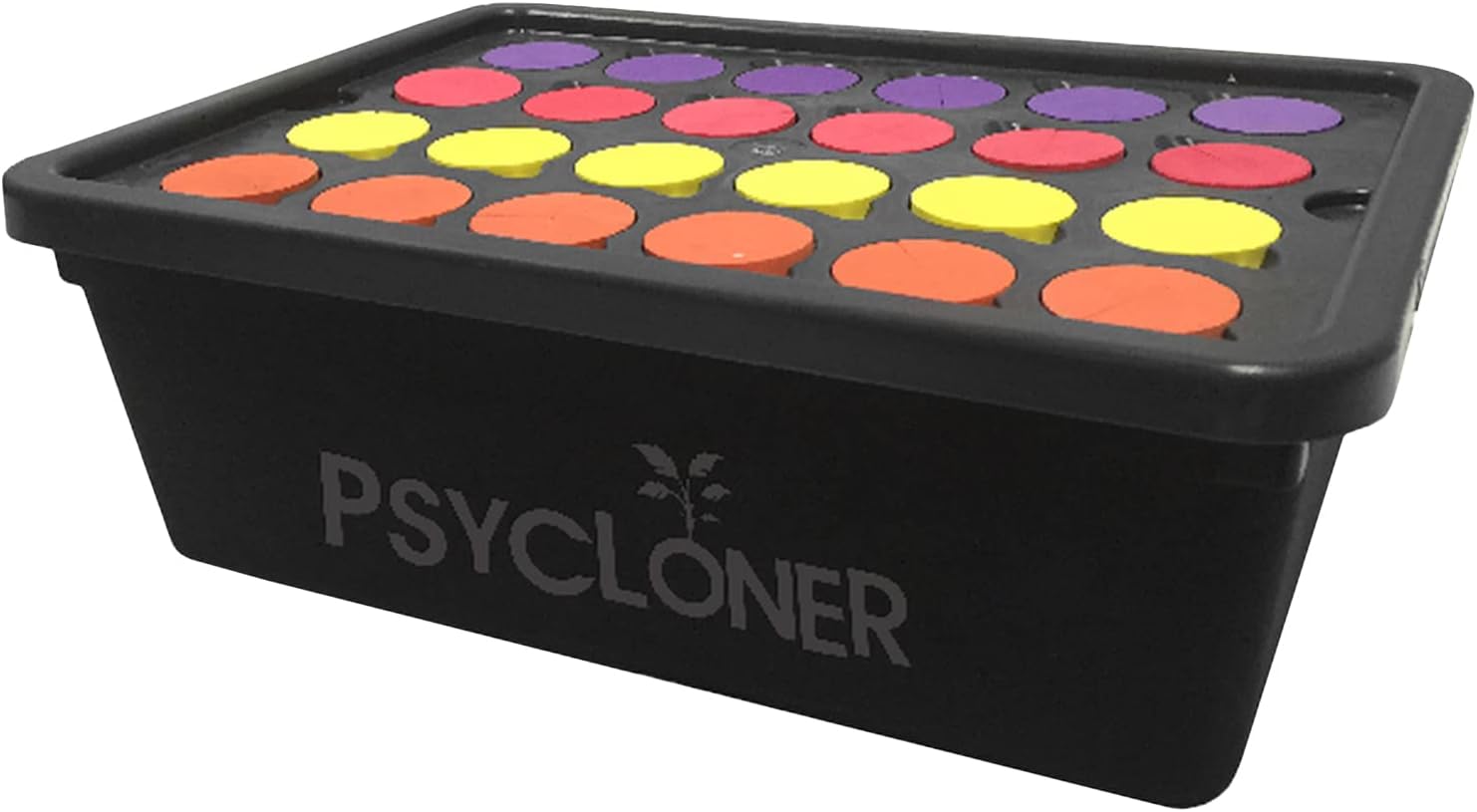
The Psycloner 24-Site Clone Machine offers a compact system for rooting herbs, vegetables, and ornamental plant cuttings. Its 24-site capacity is large enough for useful propagation runs but still manageable for beginners.
The machine can be assembled quickly, and its uncomplicated construction makes routine cleaning less intimidating. It is particularly suitable for growers who do not need the scale of a 48- or 70-site system.
Pros: Compact footprint, simple assembly, reusable collars, and beginner-friendly capacity.
Cons: Limited room for expanding propagation, and the construction is relatively basic.
Best for: First-time cloner users and gardeners with small indoor growing spaces.
Why we recommend it: It includes the essential aeroponic components in an approachable size for learning plant propagation.
10. EZ-CLONE Low Pro 16-Site Cloning System
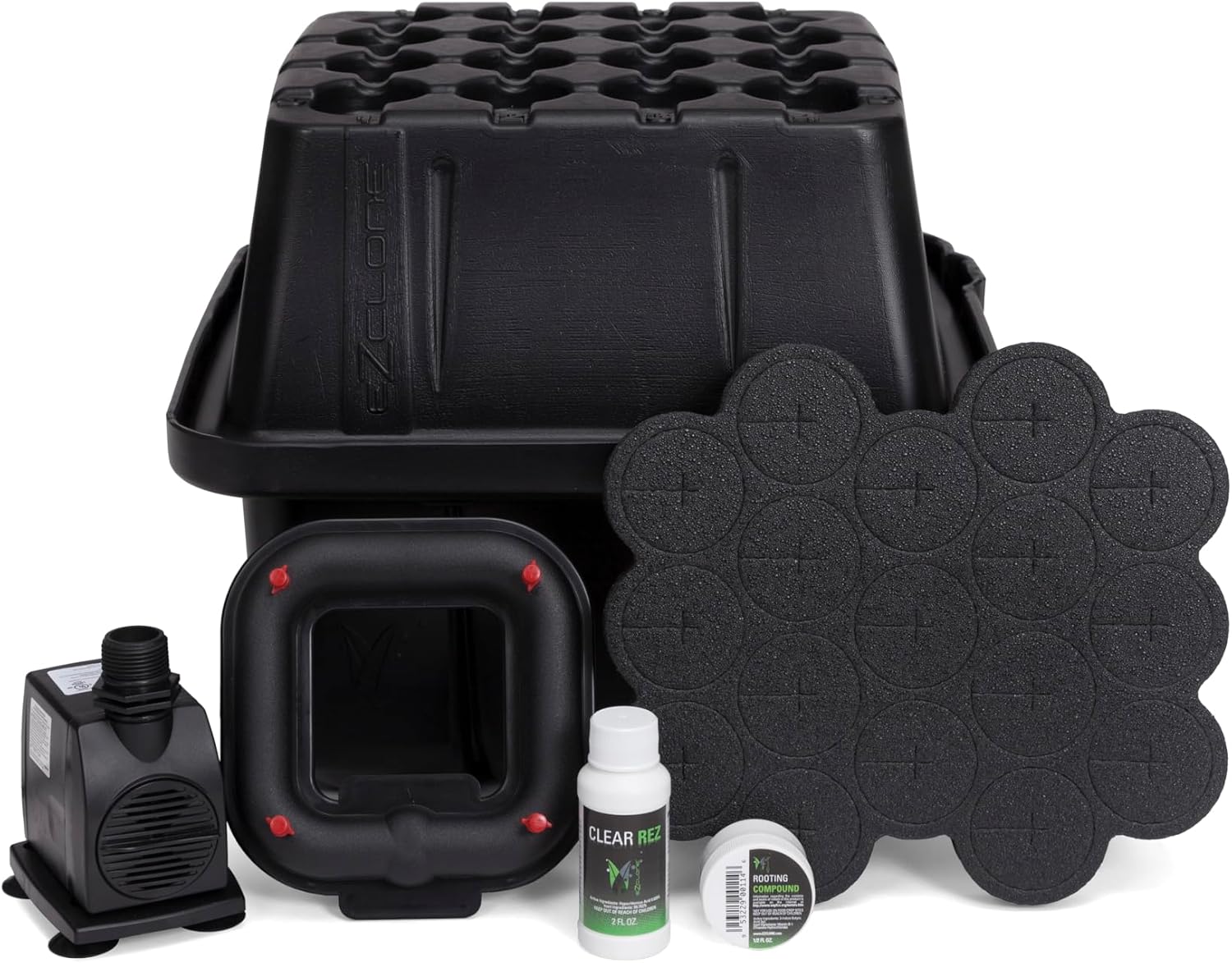
The EZ-CLONE Low Pro 16-Site Cloning System prioritizes durable construction and manageable spacing over maximum capacity. Its low-profile reservoir fits easily inside smaller grow tents and dedicated propagation areas.
With only 16 positions, growers can inspect each cutting without navigating an overcrowded canopy. The lower capacity also makes the reservoir and components quicker to clean after each cycle.
Pros: Durable construction, compact low-profile design, comfortable plant spacing, and easy maintenance.
Cons: Higher cost per site and insufficient capacity for large propagation runs.
Best for: Growers producing small, carefully monitored batches of plant cuttings.
Why we recommend it: Its durable, space-conscious design is well suited to growers who value reliability more than maximum output.
How to Choose the Best Cloning Machine
Choose capacity based on how many cuttings you will actually take, not the maximum number that might fit in your room. A partially filled 25-site cloner is easier to clean and monitor than an oversized 96-site system.
Pay attention to collar diameter, replacement-pump availability, manifold access, and reservoir depth. A removable manifold and filtered pump make routine maintenance much easier.
Water temperature matters too. Submersible pumps generate heat, and excessively warm water holds less oxygen. Keep the reservoir clean, monitor temperature, and inspect every mister before starting a batch.
If you prefer rooting cuttings in a solid medium, our guide to hydroponic grow pods and sponges for cuttings explains an accessible alternative to aeroponic cloning.
Final Thoughts
The best cloning machine is one that matches your real propagation volume and remains easy to sanitize. The CLONE KING 25-Site Cloner is the strongest all-around option for most home growers, while HORTIPOTS’ 70- and 96-site systems better suit frequent, larger batches. Whichever model you choose, consistent spray coverage, moderate water temperature, clean equipment, and healthy cuttings will matter more than chasing an unrealistic guaranteed success rate.
FAQs
What does a cloning machine do?
A plant cloning machine suspends cuttings in collars while misting their exposed stems with water. The moist, oxygen-rich environment encourages roots to develop without soil.
How long do cuttings take to root in a cloning machine?
Many healthy cuttings begin showing roots within 5–14 days. Plant species, temperature, humidity, sanitation, and cutting quality all influence rooting time.
Do I need a humidity dome over an aeroponic cloner?
Not always. A dome can help fresh cuttings in a dry room, but excessive humidity and poor airflow may encourage disease. Vent it gradually as cuttings stabilize.
What water temperature is best for cloning plants?
Aim for approximately 68–72°F in the reservoir. Water that becomes too warm holds less dissolved oxygen and can create conditions that favor harmful microorganisms.
How often should I clean a cloning machine?
Clean and sanitize the reservoir, pump, collars, manifold, and misters after every propagation cycle. Check nozzles during use and remove mineral deposits before they interrupt spray coverage.