Top 10 Hydroponic Reservoirs
We may earn a commission for purchases made using our links. Please see our disclosure for more details.
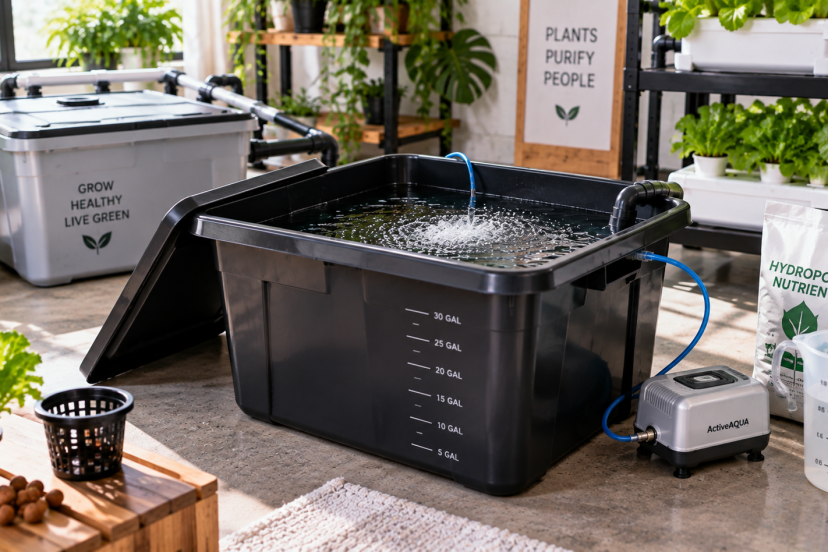
A reservoir might look like one of the simpler parts of a hydroponic setup, but choosing the wrong one can make everyday maintenance surprisingly frustrating. Capacity, access, light exposure, plumbing, and even the shape of the container all matter once your system is running. The best hydroponic reservoirs keep your nutrient solution protected while giving you enough room for pumps, air stones, fittings, and regular cleaning. Below, I’ve picked 10 options for everything from single-plant DWC grows to much larger recirculating systems.
Our Top Picks
| Product | Best For | Key Feature | Rating | Read More |
| RomoTech 30-Gallon Horizontal Tank | Best Overall | Built-in outlet and level markings | ★★★★⯪ | Read review |
| VIVOSUN 5-Gallon DWC Grow System | Beginner DWC | Complete bucket system | ★★★★⯪ | Read review |
| ePackageSupply Black 5-Gallon Buckets | DIY DWC | Opaque black construction | ★★★★⯪ | Read review |
| Rubbermaid Commercial BRUTE 20-Gallon | Budget Reservoir | Heavy-duty polyethylene | ★★★★⯪ | Read review |
| Reliance Aqua-Tainer 7-Gallon | Small Spaces | Compact rectangular design | ★★★★⯪ | Read review |
| Scepter 5-Gallon Water Container | Rugged Small Setup | Durable HDPE body | ★★★★★ | Read review |
| United Solutions Black 5-Gallon Buckets | Multi-Bucket Builds | Affordable three-pack | ★★★★⯪ | Read review |
| ePackageSupply Gamma Seal Buckets | Easy Access | Screw-on lids | ★★★★⯪ | Read review |
| RomoTech 125-Gallon Horizontal Tank | Large Grow Rooms | High-capacity design | ★★★★⯪ | Read review |
| RomoTech 550-Gallon Storage Tank | Commercial Growing | 550-gallon capacity | ★★★★⯪ | Read review |
How We Chose the Best Hydroponic Reservoirs
Reservoir size was important, but I didn’t simply choose the biggest containers available. A reservoir also needs to work with the system around it.
I looked for durable construction, practical access for cleaning, enough room for pumps and fittings, and designs that can be protected from light. I also included several sizes because a single DWC bucket and a large greenhouse obviously have very different needs.
If you’re building a recirculating system, matching reservoir capacity with suitable pump flow is just as important. This guide to choosing a hydroponic water pump can help you work out what your setup needs.
Top 10 Hydroponic Reservoirs
1. RomoTech 30-Gallon Horizontal Reservoir

The RomoTech 30-gallon tank is a practical choice for growers who have moved beyond basic buckets but don’t need a huge commercial reservoir. Its horizontal design sits low and provides enough capacity for a medium-size recirculating setup.
Molded gallon and liter markings make checking the remaining solution easier, while the large fill opening gives you better access during maintenance. Since the plastic is translucent, keeping the tank shielded from grow lights is important.
Key features: 30-gallon capacity, molded level markings, large fill opening, built-in outlet
Best for: Medium-size home hydroponic systems
Pros: Useful capacity; easy level monitoring; built-in plumbing outlet; sturdy construction
Cons: Translucent body requires light protection
Why I recommend it: It gives home growers a useful step up from buckets without taking up the space of an oversized commercial tank.
2. VIVOSUN 5-Gallon DWC Hydroponics Grow System

The VIVOSUN 5-gallon DWC system makes sense if you’re starting with deep water culture and would rather not source every piece individually. The reservoir bucket comes with the main equipment needed to keep one plant’s roots supplied with oxygenated nutrient solution.
Its included water-level indicator is especially handy because you don’t have to keep lifting the lid to see how much solution remains. Assembly takes a little care around the fittings, but once set up, it’s straightforward to manage.
Key features: Five-gallon bucket, eight-inch grow basket, air pump, air stone, top-drip kit, water-level indicator
Best for: Beginners growing one plant with DWC
Pros: Nearly complete setup; compact footprint; simple level monitoring; beginner-friendly
Cons: Fittings need careful installation to prevent leaks
Why I recommend it: It removes much of the guesswork from assembling a first DWC reservoir.
3. ePackageSupply Black 5-Gallon Buckets With Lids

These black 5-gallon buckets are a simple option, but that’s exactly what makes them useful. Their opaque walls help keep light away from the nutrient solution, which is something clear and translucent containers often struggle with under powerful grow lights.
You can drill the lids for net pots, add air tubing, or install bulkhead fittings if you’re building a recirculating system. They work particularly well for growers who enjoy putting together their own DWC or Kratky setups.
Key features: Three five-gallon buckets, matching lids, opaque black plastic
Best for: DIY DWC and Kratky systems
Pros: Good light blocking; easy to customize; affordable multi-pack; useful five-gallon size
Cons: Requires modification before use in most hydroponic systems
Why I recommend it: They’re inexpensive, versatile, and much better suited to hydroponics than clear household containers.
4. Rubbermaid Commercial BRUTE 20-Gallon Container

The Rubbermaid BRUTE wasn’t designed specifically for hydroponics, yet it works surprisingly well as a DIY reservoir. Its thick polyethylene construction feels much sturdier than the lightweight storage totes that sometimes bow outward when filled.
Twenty gallons is a useful size for a small recirculating system, and the wide top makes pumps and cleaning easy to access. You’ll need to add your own lid and fittings depending on the setup.
Key features: 20-gallon capacity, heavy-duty polyethylene, wide opening, reinforced construction
Best for: Budget-conscious growers needing a medium reservoir
Pros: Durable body; easy pump access; practical capacity; easy to clean
Cons: Hydroponic fittings and lid may need to be purchased separately
Why I recommend it: It’s a straightforward way to get a sturdy medium-size reservoir without paying for a specialized hydroponic tank.
5. Reliance Aqua-Tainer 7-Gallon Container

The Reliance Aqua-Tainer is a handy choice when space is tight. Its rectangular shape fits beside shelves and grow racks more neatly than a round bucket, while the seven-gallon capacity gives you a little more nutrient solution to work with.
A built-in spigot can also make draining or transferring water easier. The opening isn’t particularly large, though, so growers planning to place a bulky submersible pump inside should check dimensions first.
Key features: Seven-gallon capacity, rectangular design, molded handle, vent, built-in spigot
Best for: Compact hydroponic systems and tight spaces
Pros: Space-efficient; convenient spigot; easy to move when empty; more capacity than a standard bucket
Cons: Smaller opening limits access for larger pumps
Why I recommend it: Its shape and size work nicely when you need a reservoir that can tuck beside a small indoor garden.
6. Scepter 5-Gallon Water Container

The Scepter 5-gallon container is built for rougher use than an ordinary household jug. Its sturdy HDPE construction makes it a good option for growers who want a compact reservoir that won’t easily flex or crack when moved.
The narrow rectangular shape also saves floor space. That same narrow opening, however, means it works better with external plumbing or smaller equipment than with large pumps placed directly inside.
Key features: Five-gallon capacity, rugged HDPE construction, compact rectangular footprint
Best for: Small hydroponic systems where durability matters
Pros: Strong construction; compact shape; easy to position beside grow racks
Cons: Narrow opening makes internal pump access harder
Why I recommend it: It’s a tough little reservoir for situations where a regular bucket feels too bulky or exposed.
7. United Solutions Black 5-Gallon Buckets

The United Solutions three-pack is worth considering if you’re building several DWC plant sites at once. Each bucket provides the familiar five-gallon capacity, while the black plastic helps limit light reaching the nutrient solution.
Because these are basic buckets, you can customize them for net pots, tubing, air stones, or recirculating plumbing. Lids aren’t included with this version, so factor those into the total cost.
Key features: Three five-gallon buckets, opaque black plastic, reinforced handles
Best for: DIY multi-bucket DWC and RDWC systems
Pros: Affordable multi-pack; good light blocking; easy to drill and modify; useful for expansion
Cons: Lids must be purchased separately
Why I recommend it: It gives DIY growers an inexpensive foundation for building several hydroponic plant sites.
8. ePackageSupply 5-Gallon Gamma Seal Buckets

The biggest advantage of these ePackageSupply buckets is the Gamma-style screw lid. Instead of prying off a tight snap lid whenever you need access, you can simply unscrew the center section.
That makes checking, mixing, and topping up nutrient solution much more convenient. Because these buckets are white, I’d still shield them from direct grow-light exposure to reduce the amount of light reaching the reservoir.
Key features: Three five-gallon buckets, Gamma screw lids, reusable airtight design
Best for: Growers who frequently access or mix nutrient solution
Pros: Easy screw-top access; convenient for maintenance; reusable lids; useful multi-pack
Cons: White plastic may require extra light shielding
Why I recommend it: The screw-on lids make routine reservoir maintenance noticeably easier than traditional snap lids.
9. RomoTech 125-Gallon Horizontal Tank

The RomoTech 125-gallon tank is aimed at growers managing considerably more plants. Its larger capacity reduces the need for constant topping up and gives a shared hydroponic system more nutrient-solution volume to work with.
The horizontal shape keeps the tank relatively low, which can make placement easier than tall vertical tanks. Once filled, however, it becomes extremely heavy, so choose its final location before adding water.
Key features: 125-gallon capacity, polyethylene body, large fill opening, horizontal profile
Best for: Large indoor gardens and greenhouse hydroponic systems
Pros: Large nutrient reserve; fewer top-offs; good capacity for multiple grow zones; durable construction
Cons: Difficult to move once filled; requires substantial floor space
Why I recommend it: It provides serious reservoir capacity without jumping all the way to commercial bulk-storage sizes.
10. RomoTech 550-Gallon Poly Storage Tank

The RomoTech 550-gallon tank is built for operations where small reservoirs would require constant attention. Its huge capacity makes it much better suited to commercial growing, large greenhouses, or centralized water and nutrient storage.
A large outlet supports higher-flow plumbing, while the polyethylene construction is designed for demanding storage applications. For a normal home grow, though, this amount of capacity would be unnecessary.
Key features: 550-gallon capacity, polyethylene construction, large fill cap, two-inch outlet
Best for: Commercial hydroponic and greenhouse operations
Pros: Massive storage capacity; large plumbing outlet; suitable for centralized systems; heavy-duty design
Cons: Expensive; very heavy when filled; excessive for most home growers
Why I recommend it: It gives serious growers the bulk capacity needed to manage large systems without relying on multiple small reservoirs.
How to Choose the Right Hydroponic Reservoir
Start with your plant count and system type. A single DWC plant can often run comfortably in a five-gallon bucket, while a multi-plant recirculating system benefits from considerably more solution volume.
A little extra capacity is usually helpful because plants continually remove water and nutrients. Larger volumes tend to change more slowly, giving you more time to notice shifts in pH or nutrient concentration.
Pay Attention to Light
Light entering the nutrient solution encourages algae growth. Dark or opaque reservoirs have an advantage here, although translucent containers can still work when properly covered or positioned away from grow lights.
Think About Cleaning Access
A tiny opening may look tidy until you need to clean mineral deposits from inside the tank. Wide lids and large fill openings make regular maintenance much easier.
Leave Room for Equipment
Submersible pumps, air stones, tubing, float valves, and temperature probes all take up space. Don’t choose a reservoir based on water volume alone.
For flood-and-drain systems, reservoir capacity becomes particularly important because enough solution must remain available throughout each flood cycle. Our guide to ebb and flow hydroponic systems explains how the reservoir, pump, and grow tray work together.
Final Thoughts
Choosing between these hydroponic reservoirs mostly comes down to scale. The RomoTech 30-Gallon Horizontal Tank is my favorite all-around option for a medium home system because it offers useful capacity and easy plumbing without becoming enormous. For one-plant DWC, the VIVOSUN 5-Gallon system is easier to manage, while black five-gallon buckets remain one of the simplest choices for DIY growers. Whatever you choose, prioritize enough capacity, easy cleaning access, reliable construction, and good protection from light.
FAQs
What size reservoir should I use for hydroponics?
A five-gallon reservoir is often enough for one DWC plant. Medium multi-plant systems commonly use 20 to 30 gallons, while larger recirculating systems may need 50, 100, or more gallons.
Should a hydroponic reservoir be black?
It doesn’t have to be black, but it should block as much light as possible. Opaque reservoirs help reduce algae growth by keeping light away from the nutrient solution.
Can I use a regular plastic container as a hydroponic reservoir?
Yes. Many growers use heavy-duty buckets or commercial containers. Choose a clean, durable container that hasn’t stored harmful chemicals and make sure it can safely hold the weight of the water.
How often should I change the water in a hydroponic reservoir?
Many growers replace their nutrient solution every one to two weeks, though the exact timing depends on the crop, reservoir size, nutrient program, and water quality. Check pH and EC regularly instead of relying only on a fixed schedule.
Is a bigger reservoir better for hydroponics?
A larger reservoir generally gives you more stable water levels, nutrient concentration, and pH because changes happen more gradually. Bigger isn’t always better, though. The reservoir still needs to fit your available space and be practical to drain and clean.