Top 10 Hydroponics Nutrients
We may earn a commission for purchases made using our links. Please see our disclosure for more details.
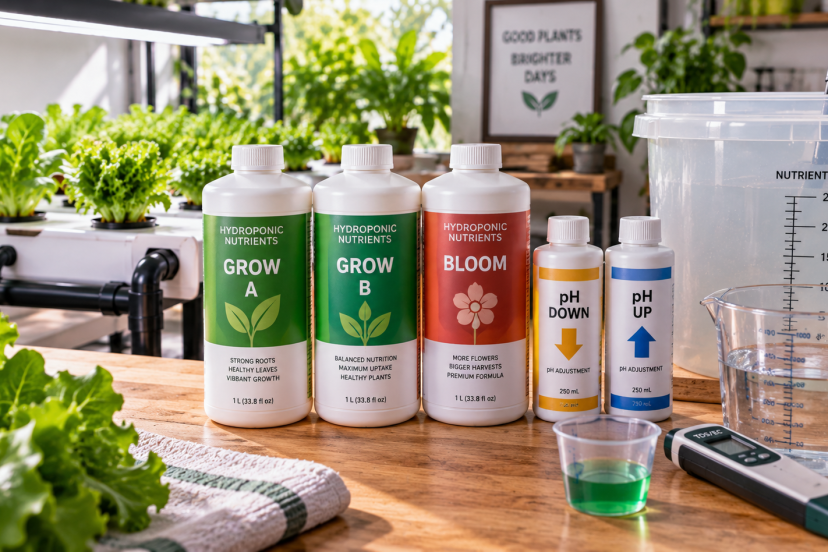
Choosing hydroponics nutrients gets confusing fast. Some products come in three separate bottles, others arrive as dry powders, and a few promise to make feeding almost automatic. The right choice really depends on what you’re growing and how hands-on you want to be. Lettuce in a countertop garden has very different needs from tomatoes in a large DWC reservoir. Below are 10 nutrient systems that stand out for different types of growers, from simple one-bottle formulas to more adjustable feeding programs.
Our Top Picks
| Product | Best For | Key Feature | Rating | Read More |
| General Hydroponics FloraSeries | Best Overall | Flexible three-part system | ★★★★★ | Read Review |
| MasterBlend 4-18-38 Kit | Best Value | Economical dry formula | ★★★★★ | Read Review |
| Advanced Nutrients pH Perfect | Easier pH Management | pH-focused nutrient system | ★★★★★ | Read Review |
| FoxFarm Hydroponic Trio | Fruiting Plants | Growth-to-bloom feeding | ★★★★★ | Read Review |
| AeroGarden Liquid Plant Food | Countertop Gardens | Easy liquid dosing | ★★★★★ | Read Review |
| TPS Nutrients Liquid Plant Food | Beginners | One-bottle feeding | ★★★★★ | Read Review |
| General Hydroponics MaxiGro | Leafy Greens | One-part dry nutrient | ★★★★★ | Read Review |
| Botanicare Pure Blend Pro Grow | Vegetative Growth | Concentrated liquid formula | ★★★★★ | Read Review |
| General Hydroponics FloraNova Grow | Simple Liquid Feeding | Highly concentrated formula | ★★★★★ | Read Review |
| Lotus Nutrients Grow Pro | Dry Nutrient Alternative | Chelated micronutrients | ★★★★★ | Read Review |
Top 10 Hydroponics Nutrients
1. General Hydroponics FloraSeries

General Hydroponics FloraSeries uses three separate nutrients—FloraMicro, FloraGro, and FloraBloom—so you can change the feeding mix as plants move through different growth stages. That flexibility makes it useful for everything from leafy herbs to tomatoes and peppers.
The extra measuring takes a little longer than using a single bottle, but it also gives you much more control. Once you get comfortable with the feeding chart, mixing a reservoir becomes pretty routine.
Key features: Three-part liquid formula, macro and micronutrients, adjustable feeding ratios, suitable for multiple hydroponic systems
Best for: Growers who want one flexible nutrient program for different crops
Pros: Highly adjustable; widely used; works from vegetative growth through flowering; suitable for many systems
Cons: Requires three bottles; more measuring than one-part nutrients
Why I recommend it: FloraSeries gives you enough control to grow with your setup instead of replacing your nutrient system every time you try a new crop.
2. MasterBlend 4-18-38 Complete Combo Kit

MasterBlend takes a more economical approach by using dry nutrients instead of shipping bottles filled mostly with water. The common kit combines MasterBlend 4-18-38 with calcium nitrate and magnesium sulfate.
You do need to weigh and mix the ingredients correctly, so it isn’t quite as effortless as a liquid formula. For bigger reservoirs, though, the lower cost per gallon is hard to ignore.
Key features: Dry 4-18-38 fertilizer, calcium nitrate, magnesium sulfate, concentrated three-part system
Best for: Growers running larger reservoirs or feeding fruiting vegetables
Pros: Excellent value; long shelf life; compact storage; popular for tomatoes and peppers
Cons: Requires accurate measuring; mixing order matters
Why I recommend it: It keeps feeding costs low without forcing you into a basic, one-size-fits-all fertilizer.
3. Advanced Nutrients pH Perfect Grow, Micro, Bloom

Advanced Nutrients pH Perfect Grow, Micro, Bloom is another three-part system, but its biggest selling point is pH management. The formula is designed to help keep nutrients available without constant adjustment after every reservoir change.
I still wouldn’t put the pH meter away completely. Water quality and plant uptake can shift things over time, but this system can reduce some of the day-to-day fiddling.
Key features: Three-part liquid system, pH-focused formulation, separate grow and bloom feeding, concentrated nutrients
Best for: Growers who want to spend less time correcting nutrient-solution pH
Pros: Convenient feeding program; flexible ratios; useful across growth stages; well-known indoor-growing brand
Cons: More expensive than many alternatives; pH should still be monitored
Why I recommend it: It removes some of the hassle from nutrient management without taking away the flexibility of a multi-part system.
4. FoxFarm Hydroponic Liquid Nutrient Trio

FoxFarm’s hydroponic trio combines Grow Big Hydro, Big Bloom, and Tiger Bloom to cover different stages of plant development. The setup makes more sense for fruiting and flowering crops than for someone growing nothing but lettuce.
There’s more measuring involved than with a one-bottle nutrient, and beginners can easily get heavy-handed. Starting below the maximum feeding rate is usually the safer move.
Key features: Three-bottle feeding program, vegetative and bloom nutrients, liquid concentrates, staged feeding approach
Best for: Tomatoes, peppers, flowering plants, and other fruiting crops
Pros: Clear growth-to-bloom progression; good for productive crops; established brand; easy-to-follow feeding approach
Cons: Three bottles increase cost; easy to overfeed if mixed too strong
Why I recommend it: It gives fruiting plants a more targeted feeding program instead of asking one formula to handle every stage.
5. AeroGarden Liquid Plant Food

AeroGarden Liquid Plant Food is aimed at the opposite end of the spectrum. Instead of managing several bottles and changing ratios, you measure a small amount and add it to your countertop garden.
That simplicity makes sense for herbs, lettuce, and small indoor plants. It costs more per prepared gallon than bulk dry nutrients, but most countertop growers use so little that the convenience can easily outweigh the difference.
Key features: Liquid plant food, simple dosing, compact bottle, made for small indoor hydroponic gardens
Best for: AeroGarden users and small countertop systems
Pros: Very easy to use; beginner-friendly; quick measuring; ideal for herbs and greens
Cons: Less economical for large reservoirs; little control over nutrient ratios
Why I recommend it: For a small kitchen garden, it gives plants what they need without turning feeding day into a chemistry project.
6. TPS Nutrients Liquid Plant Food

TPS Nutrients Liquid Plant Food is another easy one-bottle option for small indoor systems. It works well when you’re growing herbs and leafy greens and don’t need separate vegetative and flowering formulas.
The trade-off is control. You can’t fine-tune individual nutrient ratios the way you can with a three-part system, but that’s unlikely to bother someone who simply wants reliable growth from a compact garden.
Key features: One-bottle liquid nutrient, simple dosing, compact-garden compatibility, beginner-friendly formula
Best for: New growers using small indoor hydroponic systems
Pros: Easy measuring; minimal setup; no multiple bottles; useful for herbs and greens
Cons: Limited customization; not cost-effective for large systems
Why I recommend it: It keeps feeding straightforward, which is exactly what many first-time hydroponic growers need.
7. General Hydroponics MaxiGro

General Hydroponics MaxiGro is a dry, one-part nutrient designed mainly for vegetative growth. It works especially well with lettuce, basil, herbs, and other crops where leaves matter more than flowers or fruit.
Because it’s a powder, you get better storage efficiency than you would with bottled liquid. Just take a little extra time to make sure it dissolves fully before running the solution through pumps or narrow tubing.
Key features: Water-soluble powder, 10-5-14 formula, one-part feeding, designed for vegetative growth
Best for: Lettuce, herbs, seedlings, and leafy hydroponic crops
Pros: Good value; compact storage; simple one-part formula; ideal for green growth
Cons: Needs thorough mixing; less suitable as a complete program for heavy-fruiting crops
Why I recommend it: MaxiGro offers much of the economy of dry nutrients without making you weigh several separate ingredients.
8. Botanicare Pure Blend Pro Grow

Botanicare Pure Blend Pro Grow is a concentrated 3-2-4 liquid designed for vegetative growth. It can be used in hydroponics, coco, and other soilless setups, which is useful if you grow plants in more than one type of system.
It’s easy to measure, but it isn’t the cheapest nutrient here. It also makes more sense during leafy growth than as a complete standalone program for plants entering heavy flowering.
Key features: 3-2-4 liquid formula, concentrated nutrient, hydroponic and soilless compatibility, vegetative feeding
Best for: Growers using hydroponics alongside coco or other media
Pros: Versatile; easy liquid dosing; useful for leafy growth; established nutrient brand
Cons: Higher cost than some dry options; flowering plants may need additional feeding
Why I recommend it: It works well for growers who don’t want a completely separate nutrient shelf for every growing method they use.
9. General Hydroponics FloraNova Grow

FloraNova Grow gives you a concentrated liquid nutrient without the three-bottle routine of FloraSeries. Its 7-4-10 formula is intended mainly for vegetative growth in hydroponic and soilless gardens.
The concentrate is noticeably thick, so shaking the bottle before measuring isn’t optional. Once mixed properly, though, it gives you a simple feeding routine with fewer containers to manage.
Key features: One-part liquid concentrate, 7-4-10 formula, vegetative-growth focus, hydroponic and soilless use
Best for: Growers who want concentrated liquid nutrients with minimal measuring
Pros: One-bottle feeding; highly concentrated; easy storage; suitable for several growing methods
Cons: Thick formula requires shaking; less adjustable than three-part systems
Why I recommend it: FloraNova Grow is a practical middle ground between very basic plant food and a full multi-part nutrient program.
10. Lotus Nutrients Grow Pro Series

Lotus Nutrients Grow Pro Series is a powdered formula aimed at vegetative development. It combines major nutrients with chelated micronutrients and works in hydroponic and coco-based gardens.
It doesn’t have the same long track record as General Hydroponics or MasterBlend, so I’d put it behind those options for most first-time buyers. Still, growers who prefer dry nutrients and don’t want a multi-component mix may find it easier to live with.
Key features: Powdered nutrient, chelated micronutrients, vegetative-growth formula, hydroponic and coco compatibility
Best for: Growers who want a simple powdered alternative to liquid nutrients
Pros: Easy storage; concentrated formula; no heavy liquid bottles; useful across several growing methods
Cons: Smaller customer-feedback base; accurate measuring is important
Why I recommend it: It gives dry-nutrient fans a simpler alternative when a three-part powder system feels unnecessarily complicated.
How to Choose the Right Hydroponics Nutrients
Start with the crop rather than the fertilizer bottle.
Lettuce, basil, and most herbs spend their energy producing leaves, so a vegetative-focused nutrient such as MaxiGro may be all you need. Tomatoes, peppers, cucumbers, and strawberries eventually flower and fruit, so a staged feeding system usually gives you more room to adjust.
The next question is convenience.
One-part liquid formulas are easiest. Multi-part liquids give you more control. Dry nutrients generally offer the best value, particularly once you’re filling larger reservoirs.
If you’re still learning how hydroponics nutrients solutions fit into a complete setup, these beginner-friendly hydroponic growing projects explain the basics of reservoirs, plant feeding, and growing without soil in a simple way.
Don’t assume a stronger nutrient mix will make plants grow faster. Too much fertilizer can damage roots and cause tip burn just as easily as too little can slow growth.
Start conservatively, follow the manufacturer’s directions, and use pH plus EC or TDS readings to see what’s actually happening in the reservoir.
Final Thoughts
The best Hydroponics Nutrients are the ones that fit your crop and the amount of effort you actually want to put into feeding. General Hydroponics FloraSeries is the strongest all-around choice for growers who want flexibility, while MasterBlend is hard to beat when value matters more than convenience. For small countertop gardens, AeroGarden Liquid Plant Food keeps things pleasantly simple. Whatever you choose, measure carefully, monitor the reservoir, and let the plants tell you whether the feeding strength needs to move up or down.
FAQs
What hydroponic nutrients do hydroponic plants need?
Hydroponic plants need nitrogen, phosphorus, potassium, calcium, magnesium, sulfur, and a range of micronutrients such as iron, manganese, zinc, copper, boron, and molybdenum. A complete hydroponic fertilizer is designed to supply these nutrients in forms plants can use in water.
What are the best Hydroponics Nutrients for beginners?
Beginners usually do well with a simple liquid hydroponics nutrients that doesn’t require several measurements. AeroGarden Liquid Plant Food and TPS Nutrients are convenient for small systems, while General Hydroponics FloraSeries offers more flexibility if you want to learn a multi-part program.
Are liquid or dry hydroponic nutrients better?
Liquid nutrients are easier to measure and dissolve, making them convenient for small gardens. Dry nutrients generally cost less per prepared gallon and store well, which makes them attractive for larger systems.
How often should I add nutrients to a hydroponic system?
There is no single schedule that fits every setup. How quickly nutrient levels change depends on plant size, reservoir volume, crop type, temperature, and water use. Check your reservoir regularly and follow the feeding guidance for your chosen formula.
Can too much nutrient solution damage plants?
Yes. An overly concentrated solution can lead to nutrient burn, brown leaf tips, salt buildup, and poor water uptake. Start with moderate concentrations and increase only when your plants and meter readings suggest they need more.