Hydroponic Potatoes: Best Systems and Growing Tips
We may earn a commission for purchases made using our links. Please see our disclosure for more details.
Growing potatoes without soil sounds a little strange at first. After all, potatoes are usually associated with deep garden beds, loose soil, and plenty of hilling. But hydroponic potatoes are very much possible. In fact, controlled hydroponic and aeroponic systems are already used in seed-potato production because growers can manage water, nutrients, oxygen, and growing conditions more precisely.
The catch is that potatoes need a slightly different setup from lettuce, basil, and other common hydroponic crops. You need enough room for stolons and tubers to develop, a dark tuber zone, strong root aeration, and careful nutrient management.
Once you understand those needs, growing potatoes hydroponically becomes much less mysterious.
What Are Hydroponic Potatoes?
Hydroponic potatoes are potatoes grown without traditional garden soil. Instead, the plant receives water and dissolved nutrients directly through a soilless growing system.
Some setups suspend the roots in nutrient solution. Others use coco coir, perlite, expanded clay, sand, or another inert material while delivering nutrients through irrigation.
The potato plant still grows normally above the system. Beneath the canopy, underground stems called stolons develop and eventually swell into tubers.
That underground portion is where system design matters most.
A broad review of hydroponic potato and minituber production systems found that several soilless approaches can support potatoes, including nutrient-film systems, substrate culture, and aeroponics.
Best Hydroponic Systems for Potatoes
You can grow potatoes in several hydroponic systems, but some are much easier to manage at home than others.
Substrate-Based Drip Systems: Best for Home Growers
For most people experimenting with hydroponic potatoes, a large container filled with coco coir, perlite, or another airy soilless mix offers the easiest starting point.
A drip line supplies nutrient solution near the roots while excess water drains away. Meanwhile, the substrate gives developing potatoes room to expand without leaving them permanently submerged.
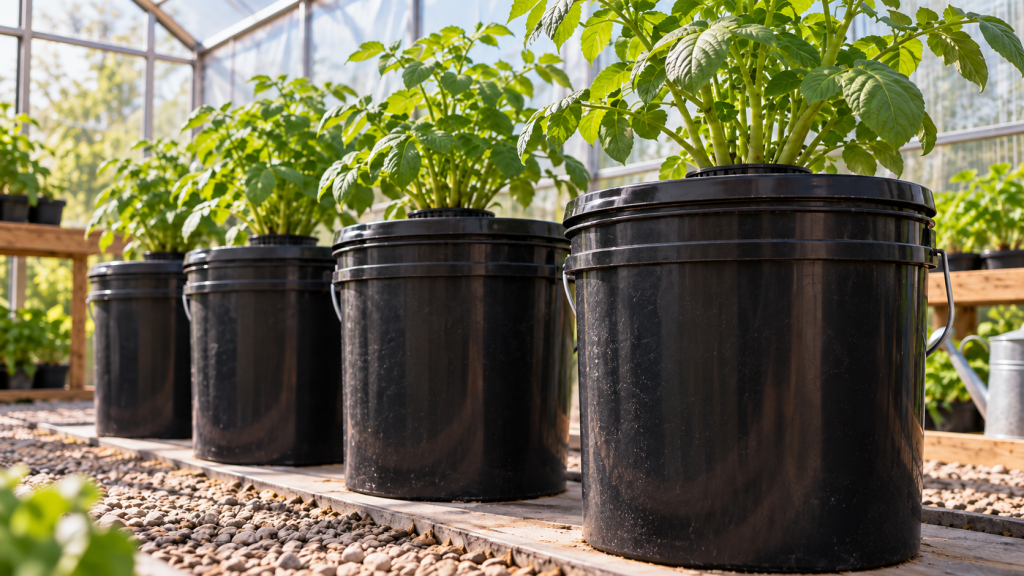
The container should be deep and wide enough for both roots and tubers. It also needs to block light.
If you’re comparing coco, clay pebbles, perlite, and other options, this guide to hydroponic growing media explains how each material handles moisture and aeration.
Aeroponics: Best for Maximum Control
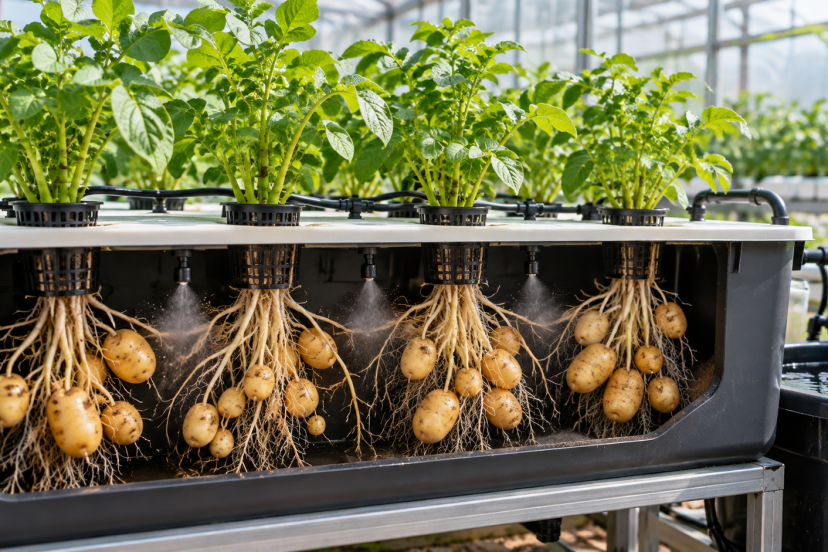
Aeroponics suspends roots and stolons inside a dark chamber while misting them with nutrient solution.
It is one of the most interesting systems for potatoes because developing tubers remain easy to inspect and harvest. Commercial and research programs often use aeroponics to produce seed-potato minitubers.
Research has shown that aeroponic potato plants can produce substantial numbers of minitubers when growers carefully control nutrition and environmental conditions.
The downside is complexity. Pumps, misting nozzles, timers, plumbing, and backup plans all matter. A clogged nozzle or failed pump can dry exposed roots surprisingly quickly.
For experienced hydroponic gardeners, however, aeroponics gives you excellent control.
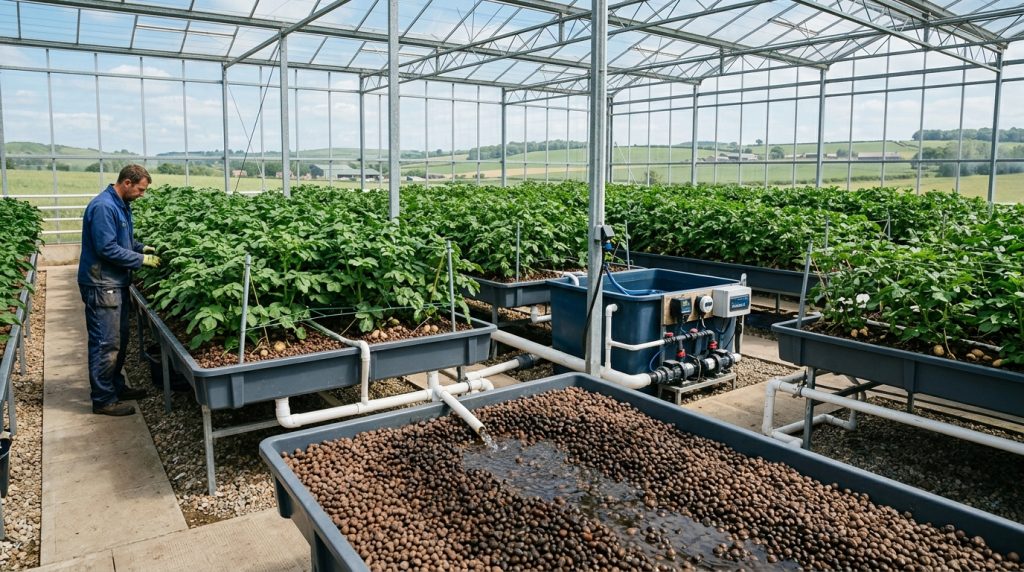
Ebb and Flow: A Good Middle Ground
Ebb-and-flow systems periodically flood a growing bed with nutrient solution and then drain it back into a reservoir.
This cycle provides moisture and nutrients while allowing fresh air to return to the root zone after each drainage period.
For potatoes, use a deep bed with a loose substrate and make sure the tuber zone stays dark. The system needs good drainage because constantly saturated media can reduce oxygen around developing tubers.
Deep Water Culture: Possible but Less Convenient
Deep water culture works brilliantly for many hydroponic vegetables, but potatoes present an extra challenge.
In DWC, roots remain suspended in an aerated nutrient solution. Potatoes, however, also need space above or around that wet root zone for stolons and tubers.
You can build a modified DWC system with a large, dark upper chamber and highly aerated reservoir below it. Still, it is usually more complicated than simply using a drip-fed substrate.
Standard NFT channels also tend to be awkward for table potatoes because growing tubers need far more physical space than lettuce or herbs.
How to Grow Hydroponic Potatoes
Start with healthy, certified seed potatoes rather than potatoes from the grocery store. Small whole seed potatoes are especially convenient because cutting creates additional surfaces where decay can begin.
If you use larger seed potatoes, divide them into pieces with at least one healthy eye and allow the cut surfaces to heal before planting.
Place the seed potato several inches into a moist, airy growing medium. Keep it damp but not waterlogged while shoots establish.
Once the plant starts growing strongly, begin regular nutrient irrigation.
Give each plant plenty of room. Potatoes produce a larger root and underground stem system than most herbs or salad greens, so squeezing several plants into a small reservoir usually creates unnecessary competition.
Most importantly, block light from the developing tubers.
Light exposure causes potato greening and can increase naturally occurring glycoalkaloids. Oregon State University advises keeping tubers protected from light during both growth and storage.
Use an opaque container, dark cover, or additional clean substrate to protect the tuber zone.
Nutrients, pH, and EC for Hydroponic Potatoes
Potatoes need the same essential macro- and micronutrients as other plants, but feeding them more aggressively does not automatically increase yield.
Nitrogen supports early foliage development, while potassium becomes especially important as the plant moves toward tuber development and bulking.
Choose a complete hydroponic fertilizer rather than ordinary garden fertilizer. If you need help comparing formulas, this guide to hydroponics nutrients covers several nutrient programs and explains the differences between liquid and dry options.
For pH, a mildly acidic nutrient solution around 5.5 to 6.0 makes a sensible starting range. Check it regularly because nutrient uptake and water additions can gradually shift reservoir chemistry.
EC also deserves attention.
One potato aeroponics experiment found better minituber production with a lower-salinity nutrient treatment than with a stronger alternative. The researchers reported poorer results when nutrient concentration pushed salinity too high.
That is a useful reminder not to chase growth by continually adding fertilizer.
Start conservatively, follow your fertilizer’s instructions, and watch both the plants and your meter readings.
Light and Temperature Requirements
Above the growing chamber, potatoes need strong light for photosynthesis.
Outdoors, give them a sunny location. Indoors, use a capable full-spectrum grow light and provide a regular dark period rather than leaving the lights running around the clock.
Temperature matters just as much.
Potatoes generally favor cooler conditions for tuber formation than many fruiting crops. Research into potato tuberization found that temperatures around 20°C (68°F) favor tuber development, while temperatures significantly above the optimum can reduce tuberization.
This can become a problem in indoor hydroponics because lights, pumps, and warm rooms can raise root-zone temperatures.
Keep reservoirs away from direct sunlight, ventilate the growing area, and avoid placing the system beside heat-producing equipment.
Common Hydroponic Potato Problems
Too Much Nitrogen
Heavy nitrogen feeding can produce an impressive canopy without giving you equally impressive potatoes.
Avoid continuously pushing vegetative growth once plants approach tuber formation.
Exposed Tubers
If light reaches developing potatoes, they may turn green. Make checking the tuber chamber or substrate level part of your regular maintenance routine.
Poor Aeration
Roots still need oxygen.
In reservoir systems, use adequate aeration. In substrate systems, choose media that drain well rather than staying constantly saturated.
Excessive Nutrient Strength
More nutrients can create salt stress instead of bigger potatoes. Monitor EC and dilute the reservoir if the concentration rises too far.
Warm Root Zones
High temperatures can interfere with tuber formation. This is one reason potatoes may perform better in a cool basement, greenhouse, or temperature-controlled grow room than in a hot indoor tent.
Recommended Products for Growing Hydroponic Potatoes
1. General Hydroponics FloraSeries
FloraSeries uses FloraMicro, FloraGro, and FloraBloom as a three-part nutrient program. The separate components give growers flexibility to adjust feeding as plants move from vegetative growth toward tuber production.
2. Apera Instruments PC60 5-in-1 Meter
The PC60 combines pH, conductivity, TDS, salinity, and temperature testing in one handheld meter. That combination is useful for potatoes because both nutrient strength and root-zone conditions deserve regular attention.
3. LECA Clay Pebbles Growing Media
Expanded clay provides structural support while leaving open spaces for air and nutrient flow. You can use it in net pots, DWC setups, flood-and-drain systems, or as part of a custom potato hydroponic build.
4. CZ Garden Supply 5-Inch Net Pots
Five-inch net pots provide more room for supporting media than the small cups commonly used for lettuce. They make more sense for potato experiments because the plants eventually become much larger and heavier.
5. VIVOSUN 317 GPH Air Pump
A strong air pump helps maintain oxygen around submerged roots in DWC and other reservoir-based systems. The VIVOSUN unit can support multiple aeration points, making it useful when you have more than one bucket or air stone.
Conclusion
Hydroponic potatoes take more planning than hydroponic lettuce, but that is part of what makes them interesting to grow. For beginners, a large substrate-based container with drip irrigation usually offers the easiest balance of root aeration, tuber space, and moisture control. Aeroponics offers greater control and impressive minituber production, but it also requires more equipment and attention.
Whichever system you choose, focus on the fundamentals: give the plant enough space, keep developing potatoes completely dark, maintain a mildly acidic nutrient solution, avoid excessive fertilizer, provide strong light above the plant, and keep the root zone reasonably cool. Get those conditions right, and growing potatoes without soil becomes much more practical than it first appears.
FAQs
Can potatoes really grow hydroponically?
Yes. Potatoes can grow in substrate-based hydroponics, aeroponics, ebb-and-flow systems, and specially designed reservoir systems. Aeroponics is particularly well established for commercial and research production of potato minitubers.
What is the best hydroponic system for potatoes?
For most home gardeners, a large substrate-based drip system is one of the easiest choices. It provides room for tubers while keeping moisture and nutrients manageable. Aeroponics offers more control but requires more equipment and maintenance.
What pH is best for hydroponic potatoes?
A mildly acidic range around 5.5 to 6.0 provides a practical starting point. Monitor pH regularly because plant uptake, fertilizer additions, and source water can cause it to change.
How long do hydroponic potatoes take to grow?
Timing varies with variety, planting material, environment, and whether you want small new potatoes or fully mature tubers. Many varieties require roughly two to four months, while minituber production systems may use repeated earlier harvests.
Do hydroponic potatoes need darkness?
The foliage needs plenty of light, but developing tubers should remain dark. Light exposure causes greening and may increase glycoalkaloid concentrations, so use an opaque container, covered substrate, or dark tuber chamber.