Top Clay Pebbles for Hydroponic Growing
We may earn a commission for purchases made using our links. Please see our disclosure for more details.
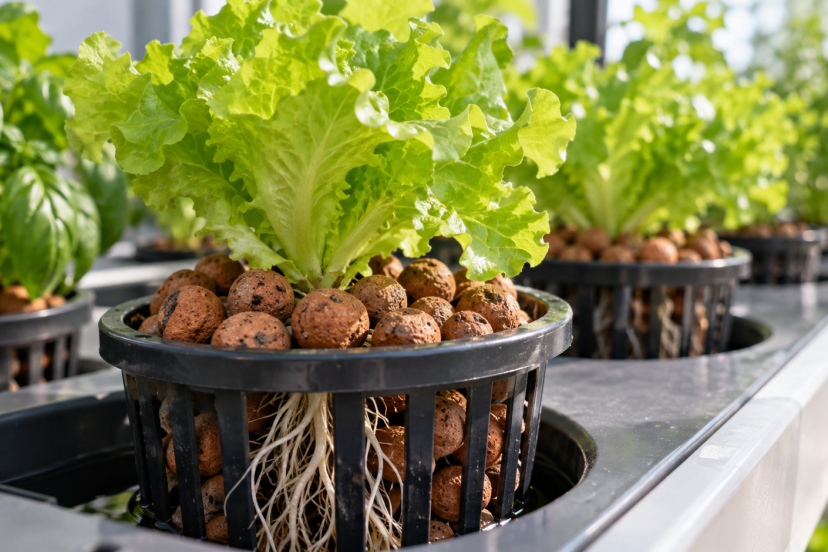
Clay pebbles look almost too simple to matter. Yet their size, dust level, volume, and consistency can affect how easily you set up and maintain a hydroponic system. Also called LECA, grow rocks, or expanded clay aggregate, these lightweight balls give roots physical support without packing tightly around them. They are especially useful when you want fast drainage and plenty of air in the root zone. This guide compares five popular Amazon options and explains what to check before choosing a bag.
What Are Clay Pebbles?
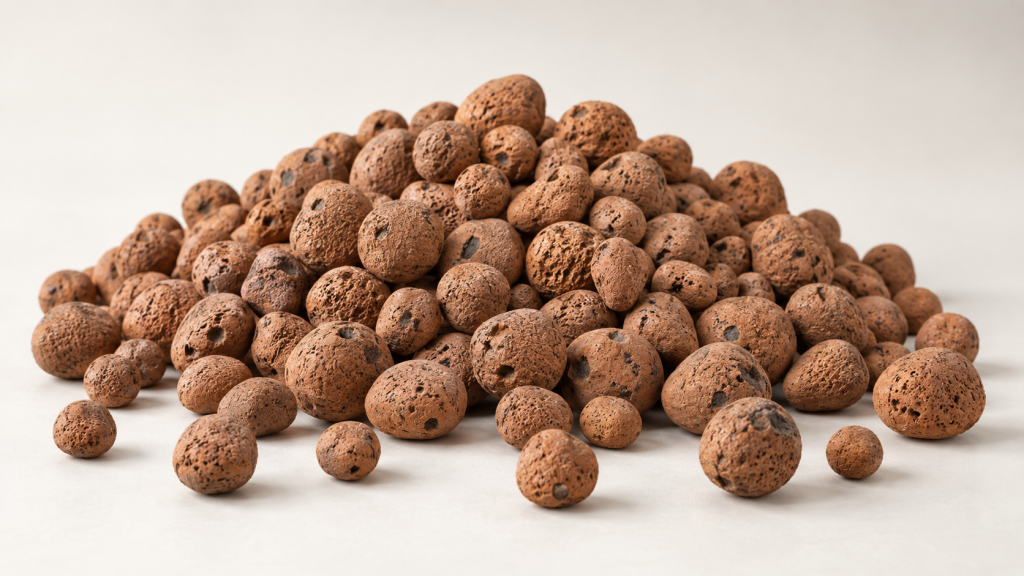
Manufacturers form clay into small pieces and fire it at high temperatures. The material expands as it heats, producing a hard outer surface and a porous interior. The finished pebbles contain no meaningful nutrition, so your plants still depend on a complete nutrient solution.
Their main job is structural. Spaces between the pieces allow water to drain while oxygen remains available around the roots. Oklahoma State University’s guide to soilless growing media notes that expanded clay offers plant support while its shape and porosity help balance water and oxygen.
For a comparison with coco coir, perlite, and rockwool, see this guide to hydroponic grow media options.
Why Growers Like Expanded Clay
Clay pebbles drain rapidly and resist compaction. They fit ebb-and-flow tables, drip systems, aquaponic beds, and net pots in deep water culture. Their weight also anchors plants better than perlite.
You can clean and reuse good pebbles, lowering their cost over several crops. They also resist decomposition and create little mess.
There is a tradeoff, however. Expanded clay holds less plant-available water than moisture-hungry media, so irrigation timing matters. Research on the physical and hydraulic properties of baked ceramic aggregates also shows that particle size changes water movement and hydraulic conductivity. Bigger is not automatically better; the right grade depends on your container, root size, and watering method.
Quick Comparison of the Top Clay Pebbles
| Product | Best for | Notable feature |
| Mother Earth Hydroton Original | Most hydroponic systems | Established, versatile option |
| Hydrofarm GROW!T Clay Pebbles | Ebb-and-flow and drip setups | Irregular surfaces stabilize roots |
| Legigo Organic Expanded Clay Pebbles | Large or repeated fills | Commonly sold in larger bags |
| Halatool LECA Expanded Clay Pebbles | Small indoor systems | Manageable pack sizes |
| Riare Organic Expanded Clay Pebbles | Hydroponics and houseplants | Broad size and pack choices |
Five Recommended Clay Pebbles on Amazon
1. Mother Earth Hydroton Original Clay Pebbles
Mother Earth Hydroton is a reliable option for a wide range of hydroponic growing systems. It works well in net pots, flood tables, and recirculating drip systems. Varied shapes leave air gaps and give roots surfaces to grip.
Expect some dust. Rinse the material outside the system until the runoff clears. This option suits growers who value broad compatibility.
Best for: An all-purpose hydroponic setup.
2. Hydrofarm GROW!T Clay Pebbles
GROW!T pebbles have a rougher, less uniform form. The pieces interlock slightly for firm plant support while gaps preserve drainage and airflow.
They suit flood-and-drain trays, drip irrigation, and larger net pots. Bag measurements may appear in liters, which helps estimate how many pots the product will fill.
Best for: Firm root support in active systems.
3. Legigo Organic Expanded Clay Pebbles
Legigo offers quantities suited to several net pots or larger containers. Any leftovers can serve semi-hydroponic houseplants.
Mixed sizes fit many standard baskets, though small fragments may escape through wide openings. Block them with larger pieces and wash everything before use.
Best for: Multiple containers and growers who want a larger supply.
4. Halatool LECA Expanded Clay Pebbles
Halatool suits countertop gardens, propagation, and small DWC builds. Smaller packages let beginners test LECA without storing a bulky sack.
Compare the particle range with your basket slots. Fine pieces may fall through, while oversized ones make delicate seedlings harder to position.
Best for: Hobby systems and first-time LECA users.
5. Riare Organic Expanded Clay Pebbles
Riare is a flexible choice for hydroponics, orchids, and semi-hydro houseplants. Its package range can serve one planter or several net pots.
Read the selected variation closely because one listing may combine several diameters and quantities. Medium pieces suit general hydroponics; finer grades fit small containers.
Best for: Growers who want flexible sizing for hydroponic and indoor-plant use.
How to Choose the Right Product
Start with the space you must fill. Liters describe volume; pounds describe weight, so they are not interchangeable. Measure your pots and allow a little extra for settling.
Next, match particle size to the plant and container. Medium pebbles are the easiest general-purpose choice. Smaller pieces make better contact with young roots but may restrict large air channels or escape through a net cup. Large pieces drain very quickly and suit mature roots, though they provide less contact around tiny starter plugs.
Choose hydroponic media over decorative balls with unclear coatings. Treat “prewashed” as a head start, not permission to pour the product directly into a pump-fed system.
Match the Pebbles to Your Hydroponic System
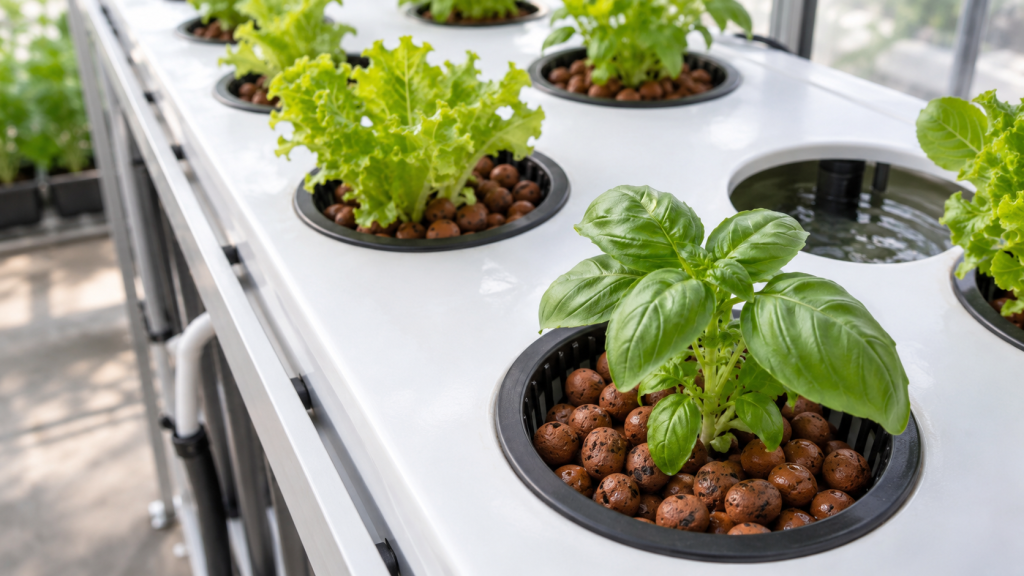
In deep water culture, clay pebbles support the crown while roots grow through the basket into the aerated solution. Keep the initial water level high enough to moisten the starter plug, but do not submerge the plant’s stem.
Ebb-and-flow systems play to LECA’s strengths. A flood wets the porous material, and the drain cycle pulls fresh air back into the root zone. Drip systems also work well, although emitters must deliver water evenly. Clay pebbles alone are less forgiving in passive wick systems because they do not hold moisture as long as coco coir or vermiculite.
If you want a full preparation walkthrough, the hydroponic clay pebbles guide covers rinsing, soaking, system use, and ongoing care.
How to Prepare and Reuse Clay Pebbles
Rinse new pebbles in a bucket, colander, or mesh bag until the water runs mostly clear. Avoid sending clay dust down a small indoor drain. Then soak the medium in pH-adjusted water for several hours or overnight. Check the soak water afterward and adjust your reservoir as necessary.
After harvest, pull out old roots by hand. Wash away debris and mineral deposits, then sanitize the pebbles with a horticulture-safe method suited to your system. Follow the sanitizer label exactly and rinse thoroughly. Replace pieces that crumble easily, carry stubborn root matter, or show deposits you cannot remove.
Do not reuse media from a crop with suspected root disease unless you can disinfect it reliably. Saving part of a bag is not worth carrying a pathogen into the next run.
Conclusion
The best clay pebbles are cleanable, structurally sound, appropriately sized, and sold in a quantity that fits your system. Mother Earth Hydroton is the strongest general-purpose pick, while Hydrofarm GROW!T offers solid root support in active setups. Legigo works well for bigger fills, and the Halatool and Riare options suit smaller or mixed indoor-growing projects.
Whichever product you choose, preparation matters as much as branding. Rinse it well, condition it before planting, protect the medium from light, and tune irrigation to its fast-draining nature. Those simple habits give roots the airy, stable environment that makes expanded clay so useful.
FAQs
Are clay pebbles the same as LECA?
Usually, yes. LECA means lightweight expanded clay aggregate. Growers also use names such as expanded clay, grow rocks, and clay balls. Hydroton began as a brand name but is often used informally for the product category.
Do clay pebbles change nutrient-solution pH?
Quality hydroponic pebbles are generally considered inert, but dust and manufacturing residue may cause an initial shift. Rinse and soak them first, then monitor the reservoir rather than assuming the pH will remain fixed.
Can I place a seed directly in clay pebbles?
You can, but germination is easier in a small starter plug because LECA does not keep a tiny seed evenly moist. Once roots emerge from the plug, transfer it into the pebbles and gently fill around it.
How often can expanded clay be reused?
There is no universal cycle limit. Reuse it while the pieces remain firm and you can remove roots, salts, algae, and pathogens. Careful cleaning extends its life, while crumbling or contaminated media should be discarded.
Should the pebbles touch the reservoir water in DWC?
During early growth, the lower layer can touch or sit just above the bubbling solution so moisture reaches the starter plug. Once roots reach the reservoir, leave an air gap beneath the basket and keep the plant crown dry.