Top Hydroponic Fruits You Can Grow At Home
We may earn a commission for purchases made using our links. Please see our disclosure for more details.
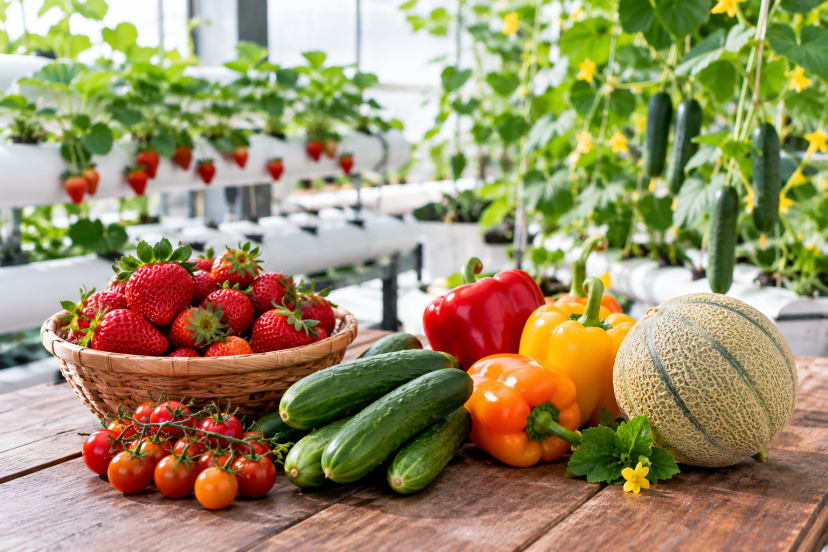
Growing fresh fruit doesn’t have to involve a backyard, raised garden beds, or bags of soil. With the right hydroponic setup, you can harvest juicy strawberries, sweet cherry tomatoes, and even melons from your own home. Hydroponic fruits offer an exciting opportunity to grow beyond the usual leafy greens and herbs. Although fruit-bearing plants need more attention, particularly when it comes to lighting, nutrients, and pollination, they can be incredibly rewarding to grow. Whether you’re working with a small indoor garden or a spacious greenhouse, here are some of the best fruits to grow hydroponically and how to help them thrive.
Can You Grow Fruits Hydroponically?
Yes, many fruit-bearing plants grow successfully in hydroponic systems. Instead of drawing nutrients from soil, their roots absorb essential minerals from a carefully balanced nutrient solution.
However, growing fruits is slightly more demanding than growing lettuce or basil. Plants need enough energy to develop healthy foliage, produce flowers, and support fruit development.
While strawberries and compact tomatoes are excellent starting points, larger crops such as watermelons require more space, stronger lighting, and additional structural support.
7 Best Hydroponic Fruits To Grow At Home
Some of the following crops are commonly considered vegetables in the kitchen, but botanically, they are fruits. Each offers something different depending on your experience, available space, and growing system.
1. Strawberries
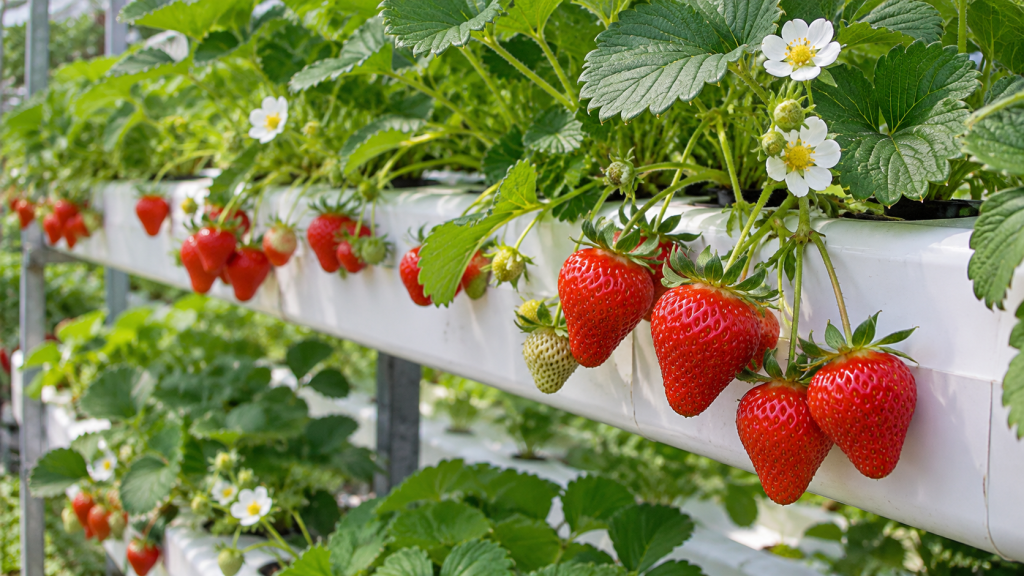
Strawberries are among the most practical fruits for indoor hydroponic gardens. Their compact growth makes them suitable for vertical systems, growing channels, and drip irrigation setups.
Day-neutral varieties such as Albion and Seascape are worth considering because they can produce fruit over an extended period under suitable conditions.
- Recommended system: NFT or drip irrigation
- Difficulty: Easy to moderate
- Growing tip: Keep the plant’s crown above the growing medium to prevent rot.
2. Cherry Tomatoes
Cherry tomatoes are productive, flavorful, and relatively manageable compared with larger tomato varieties. Dwarf varieties such as Tiny Tim and Micro Tom are particularly suitable for smaller indoor gardens.
Larger varieties benefit from stakes or trellises as their branches become heavier with fruit.
- Recommended system: Dutch bucket or deep water culture
- Difficulty: Easy to moderate
- Growing tip: Gently vibrate flower clusters to encourage pollination indoors.
3. Cucumbers
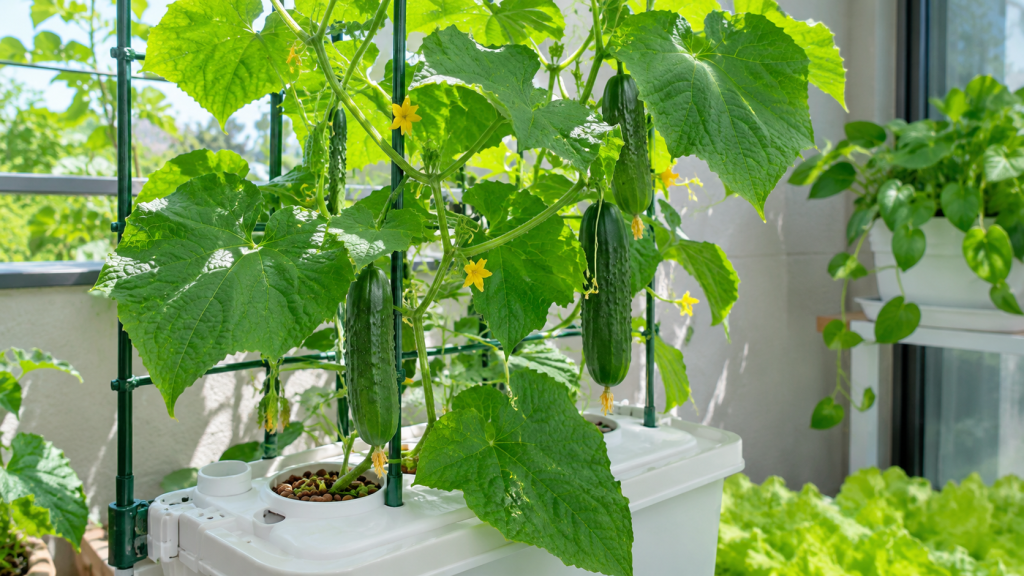
Hydroponic cucumbers grow vigorously under favorable conditions and can provide regular harvests throughout their productive period.
Their climbing habit makes vertical growing particularly useful. Choose parthenocarpic greenhouse varieties if you want plants that develop fruit without pollination.
- Recommended system: Dutch bucket or drip irrigation
- Difficulty: Moderate
- Growing tip: Train vines upward to improve airflow and light exposure.
4. Bell Peppers
Bell peppers add color and variety to a hydroponic garden. They grow well in warm, brightly lit environments and generally require less vertical space than climbing crops.
You can harvest them while they’re green or allow them to ripen further for a sweeter flavor.
- Recommended system: Dutch bucket or ebb and flow
- Difficulty: Moderate
- Growing tip: Support branches before developing peppers become too heavy.
5. Cantaloupes
Cantaloupes are an interesting choice for gardeners ready to experiment with larger hydroponic fruits. They require generous root space, consistent feeding, and plenty of light.
Smaller melon varieties are generally easier to manage in home growing environments.
- Recommended system: Drip irrigation
- Difficulty: Advanced
- Growing tip: Use supportive fruit slings when growing melons vertically.
6. Watermelons
Growing watermelons without soil is possible, although they aren’t ideal for small countertop systems. Compact, seeded varieties are more manageable for home growers.
A scientific study on hydroponic watermelon production examined how nutrient solution strength influences watermelon yield and fruit quality under greenhouse conditions. It highlights the importance of careful nutrient management when growing larger fruits.
- Recommended system: Dutch bucket or drip irrigation
- Difficulty: Advanced
- Growing tip: Hand-pollinate female flowers when natural pollinators are unavailable.
7. Eggplants
Eggplants adapt well to hydroponic environments when they receive sufficient warmth, light, and nutrition. Compact varieties such as Fairy Tale are especially practical for home gardens.
Their productive branches may need additional support once fruits begin developing.
- Recommended system: Dutch bucket or drip irrigation
- Difficulty: Moderate
- Growing tip: Maintain good airflow around the foliage and flowers.
Best Hydroponic Systems for Growing Fruits
Choosing a system that accommodates mature plants makes maintenance easier and reduces the likelihood of overcrowding.
| Hydroponic System | Best Fruits | Main Advantage |
| Nutrient Film Technique (NFT) | Strawberries | Space-efficient design |
| Deep Water Culture (DWC) | Compact tomatoes, peppers | Continuous nutrient access |
| Dutch Bucket System | Tomatoes, cucumbers, eggplants | Generous root space |
| Drip Irrigation | Melons, strawberries, peppers | Controlled nutrient delivery |
| Ebb and Flow | Strawberries, peppers | Good root aeration |
An ebb and flow hydroponic system is a versatile option if you want to experiment with different fruiting crops without building separate setups for each plant.
Essential Growing Conditions for Hydroponic Fruits
Fruit production depends on maintaining a suitable growing environment throughout the plant’s life cycle.
Lighting
Most indoor fruiting crops benefit from approximately 12–16 hours of artificial light daily. Full-spectrum LED grow lights work well, provided they deliver sufficient intensity across the plant canopy.
Nutrients and pH Levels
Fruiting plants need balanced nutrition, including nitrogen, phosphorus, potassium, calcium, magnesium, and micronutrients.
According to Oklahoma State University’s hydroponic pH and electrical conductivity guide, appropriate nutrient concentrations and pH levels vary between crops.
A pH of around 5.5–6.5 works for many fruiting plants, but always check crop-specific recommendations. Check the strength of your nutrient solution regularly with an electrical conductivity (EC) meter.
Temperature and Airflow
Strawberries generally prefer cooler conditions than heat-loving crops such as peppers and melons. Avoid sudden temperature changes and maintain gentle air circulation to reduce excess humidity around the leaves.
Pollination
Indoor gardens often lack insects that naturally transfer pollen between flowers. Depending on the crop, you can use a soft brush, gently vibrate flowers, or select varieties that produce fruit without pollination.
How To Grow Hydroponic Fruits at Home
You don’t need an elaborate greenhouse to get started. A simple setup designed around one or two crops can produce satisfying results.
- Choose suitable varieties. Select compact plants that fit your available growing space.
- Prepare your hydroponic system. Set up the reservoir, growing containers, lighting, and necessary pumps.
- Start your plants. Germinate seeds in hydroponic starter plugs or use healthy, suitable transplants.
- Prepare the nutrient solution. Follow the fertilizer manufacturer’s feeding instructions and adjust the pH as needed.
- Monitor plant development. Check root health, water levels, nutrient strength, and foliage regularly.
- Support flowering and fruiting. Provide suitable pollination, nutrition, and structural support.
- Harvest when ready. Pick fruits according to their variety and preferred stage of ripeness.
Keep a simple growing journal to track nutrient adjustments, flowering dates, and harvests. It can help you identify which conditions produce the best results.
Common Mistakes To Avoid
Even healthy-looking plants can struggle to produce fruit when their growing conditions aren’t quite right.
- Insufficient lighting: Weak light can limit flowering and fruit development.
- Excessive nitrogen: Too much nitrogen may encourage leafy growth at the expense of fruit production.
- Overcrowding: Closely spaced plants compete for light and restrict airflow.
- Poor pollination: Flowers may drop or develop poorly without adequate pollen transfer.
- Ignoring root health: Inadequate oxygen and excessively warm nutrient solutions can contribute to root problems.
- Mixing incompatible crops: Plants with different feeding requirements may struggle when sharing the same reservoir.
Start with fewer plants and expand once you feel comfortable managing their needs.
Recommended Products for Growing Hydroponic Fruits
The following tools can help you maintain healthier plants and manage your hydroponic garden more efficiently.
- General Hydroponics FloraSeries 3-Part Nutrient Set – A customizable liquid nutrient system that supports plant growth, flowering, and fruit development.
- Apera Instruments PH20 pH Tester Kit – A digital tester for monitoring the acidity of your nutrient solution.
- Bluelab Truncheon Nutrient Meter – Helps measure nutrient concentration and identify when your solution needs adjusting.
- Spider Farmer SF1000 LED Grow Light – A full-spectrum grow light suitable for small indoor growing spaces.
- Mother Earth Hydroton Expanded Clay Pebbles – A reusable growing medium that provides root support, drainage, and aeration.
Conclusion
Growing hydroponic fruits is a rewarding way to diversify your home garden and enjoy fresh produce without relying on soil. The key is choosing varieties that suit your available space, equipment, and experience. Start with strawberries or compact cherry tomatoes before moving on to more demanding crops like melons. With consistent care, balanced nutrition, and sufficient lighting, you can gradually turn a simple hydroponic garden into a productive source of homegrown fruit.
FAQs
Which fruits are best for beginner hydroponic gardeners?
Strawberries and compact cherry tomatoes are excellent beginner choices because they’re relatively manageable and adapt well to several hydroponic systems.
Can hydroponic fruits grow all year round?
Yes. Indoor hydroponic gardens can produce fruit throughout the year when you maintain suitable lighting, temperature, nutrition, and pollination conditions.
Do hydroponic fruits taste different from soil-grown fruits?
Not necessarily. Flavor depends on the variety, growing conditions, nutrient balance, and harvest maturity rather than the growing method alone.
Can you grow blueberries hydroponically?
Yes, but blueberries require acidic root-zone conditions and specialized nutrient management. Substrate-based systems are generally more practical than conventional water-based setups.
Why are my hydroponic plants flowering but not producing fruit?
Common causes include inadequate pollination, insufficient light, temperature stress, and nutrient imbalances. Check these conditions before increasing fertilizer strength.