How to Use Hydroponic Net Pots Effectively in Any System
We may earn a commission for purchases made using our links. Please see our disclosure for more details.
Hydroponic net pots may be a simple-looking vessel but they’re crucial in creating an environment where plants can thrive. They keep the plant upright, keep the growing medium from spilling everywhere, and at the same time give the roots access to the water, nutrients and oxygen they need. You’ll find them used in all sorts of hydroponic systems – deep water culture (DWC), NFT, Kratky set-ups, drip systems, aeroponics, aquaponics and vertical hydroponic gardens. Getting the size right, making sure the water level is just right and keeping the pots clean & free from any algae can really make a huge difference to how well your plants do.
What Are Hydroponic Net Pots?
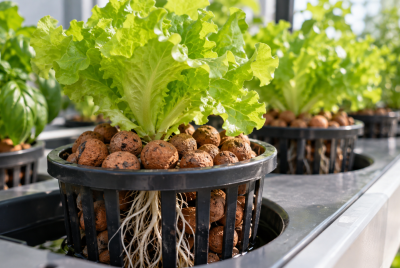
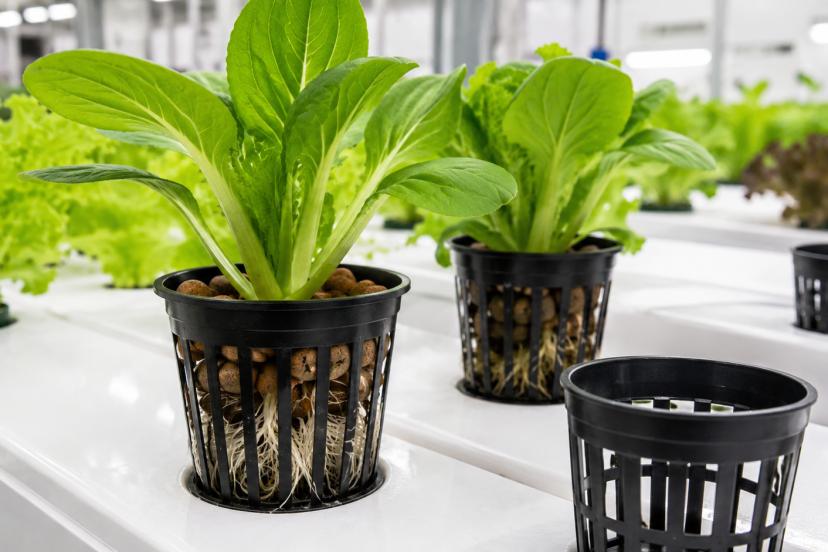
Hydroponic net pots (also known as net cups) are fairly different from regular plant pots. Instead of solid sides & a bottom like your average pot, they’ve got slotted gaps all the way around and at the bottom which kinda resembles a basket. It’s these gaps that let the roots just grow freely out into the nutrient rich water, a flowing nutrient film or a misting chamber. It really depends on what hydroponic system you’re using.
The wide rim at the top helps secure the pot in bucket lids, floating rafts, NFT channels, or vertical growing towers. Inside the net pot, growers typically use media such as clay pebbles, rockwool, or starter plugs to support young seedlings until their roots are large enough to reach the nutrient solution.
According to the University of Minnesota’s small-scale hydroponics guide, the open design of net pots allows water and nutrients to reach the roots while giving them space to grow into the reservoir. However, the net pot itself is only a support structure. Healthy plant growth still depends on providing balanced nutrients, maintaining the correct water level, ensuring adequate oxygen, and supplying enough light.
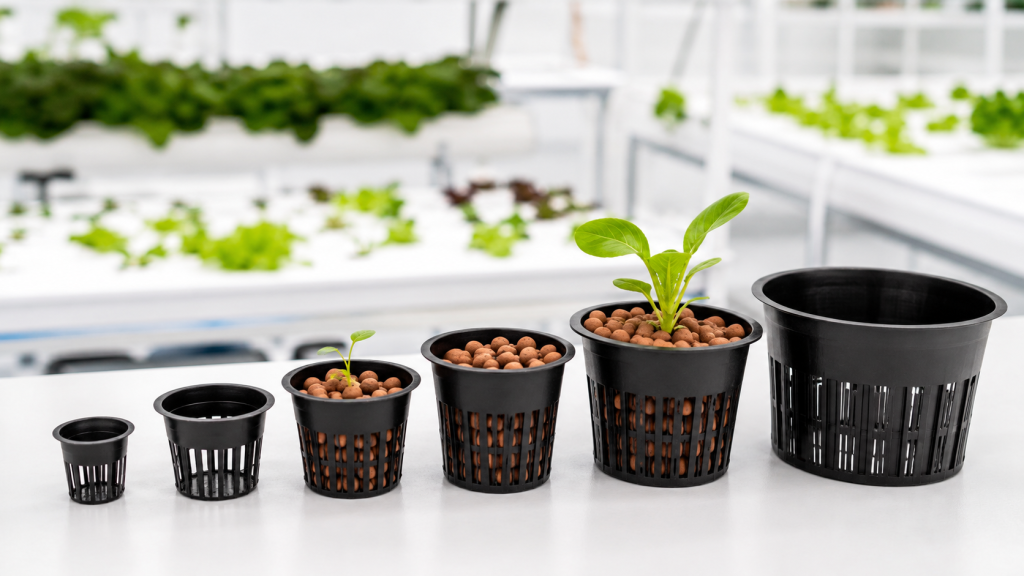
Choose the Right Net Pot Size
Two-inch net pots suit lettuce, basil, cilantro, seedlings, and many compact towers. Three-inch cups provide more room for media and a steadier base for larger herbs and leafy greens.
For peppers, cucumbers, tomatoes, or eggplants, consider a 3- to 6-inch pot plus separate plant support. A larger cup improves stability, but it cannot replace a trellis, cage, or support string.
Measure the mounting hole before ordering. A product’s stated size may not match its rim or basket diameter exactly.
Match the Growing Medium to Your System
The growing medium should hold the plant steady without filling every gap in the net pot. Roots still need space to spread, breathe, and reach the nutrient solution.
Clay Pebbles
Expanded clay pebbles drain quickly and leave plenty of air space around the roots. They work especially well in DWC buckets, drip systems, hydroponic towers, and larger net pots.
Rinse them before use to remove dust that could cloud the reservoir or collect inside the pump.
Rockwool and Starter Plugs
Rockwool cubes and starter plugs make transplanting easier because the young roots remain protected. Place the cube in the center of the net pot and add a few clay pebbles around it if the plant feels unsteady.
Do not pack the pebbles tightly. A loose fit gives roots room to grow through the openings.
Coco Coir and Perlite
Coco coir holds more moisture than clay pebbles, so it can work well in drip-fed and wick systems. Perlite improves drainage and keeps the mixture lighter.
However, small particles may fall through wide net-pot slots and enter the reservoir. A mesh liner, starter plug, or coarser mix can help keep the system cleaner.
Avoid garden soil. It compacts easily, carries debris into the water, and limits the airflow that hydroponic roots need.
Transplant Seedlings Carefully
Move seedlings once they have a sturdy stem and roots growing around or through the starter plug. Lift the plant by the plug rather than pulling on the stem.
Position the crown above the wettest part of the cup. If the stem sits too deeply, it may remain damp and become more vulnerable to rot.
Add only enough growing medium to keep the plant upright. For bare-root seedlings, rinse away the soil gently, guide the roots through the lower slots, and support the stem with clean clay pebbles.
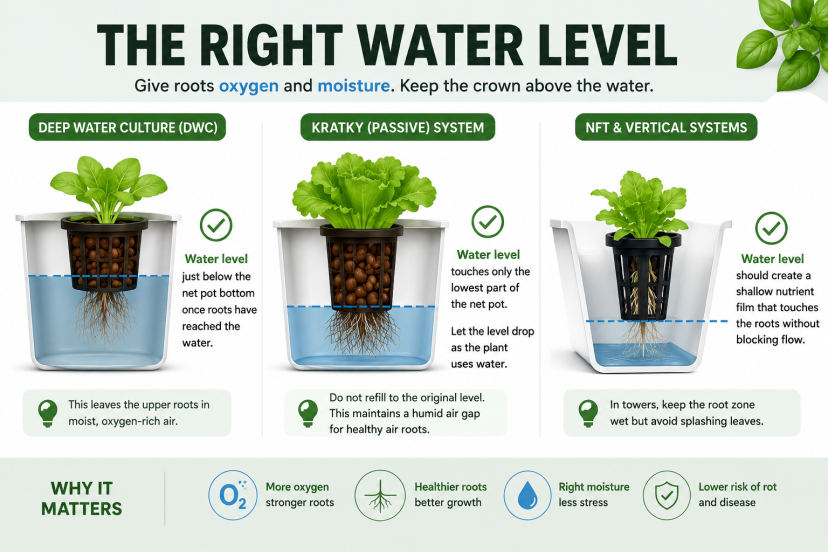
Set the Right Water Level
The ideal water level depends on the hydroponic system and the plant’s stage of growth.
Deep Water Culture
Before the roots reach the reservoir, keep the nutrient solution close enough for bubbles or moisture to reach the starter plug.
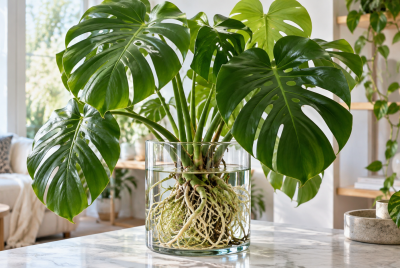
Once the roots grow into the water, leave a small gap beneath the net pot. This gives the upper roots access to moist, oxygen-rich air.
Kratky Systems
When placing a seedling in a Kratky container, allow only the lowest part of the net pot to meet the nutrient solution. As the plant drinks, the water level falls and creates a humid space around the upper roots.
The suspended net-pot hydroponic method for lettuce recommends beginning with about half an inch of the cup in the solution.
Avoid topping the reservoir back up to its starting level. Doing so may cover the air roots and reduce their access to oxygen.
NFT Systems and Vertical Towers
In an NFT system, the roots should reach the thin stream of nutrient solution without forming a thick mass that blocks water flow.
In a tower, the solution should wet the root zone without constantly splashing the leaves. The Oklahoma State University guide to building a vertical hydroponic tower recommends placing clay pebbles around the plants and correcting any splashing that keeps the foliage wet.
This helps support the seedlings while reducing the damp conditions that can encourage plant disease.
Keep Light Away From the Roots
Light entering a reservoir or channel encourages algae, which coats equipment and complicates maintenance.
Use opaque pots, lids, collars, or covers around unused openings. Cover exposed starter cubes with clay pebbles or a fitted disk, but leave space around the stem.
Green film on top of a plug usually means too much light and moisture are meeting in one spot. Block the light instead of repeatedly scraping the surface.
Support Tall and Fruiting Plants
A net pot anchors the root crown, but a mature fruiting plant can become top-heavy. Install trellis strings, stakes, cages, clips, or overhead wires early.
Attach support to the frame rather than asking a small plastic cup to hold the entire plant. Also check that the rim sits flat. Replace cracked or warped cups before they fall into the reservoir.
Clean and Reuse Net Pots
Remove roots and media soon after harvest, before they dry into the slots. A small brush or strong spray of water clears most debris.
Wash the pots, then sanitize them with a product labeled for horticultural equipment. Follow the directions and let them dry before storage.
After suspected root disease, clean the reservoir, lid, tools, air lines, and nearby surfaces too. Washing one cup while ignoring the rest of the system will not solve much.
Top Hydroponic Net Pots
The right net pot can make planting, root development, and routine maintenance much easier. These options suit several hydroponic setups, including compact towers, NFT channels, DWC buckets, and Kratky containers.
VIVOSUN Rockwool Cubes and 2-Inch Net Pots Set
This starter bundle works well for seedlings, herbs, leafy greens, and vertical gardens. The matching rockwool cubes and net pots help remove the guesswork from sizing.
AC Infinity 3-Inch Heavy-Duty Net Cups
These sturdy net cups feature a wide rim that sits securely in DWC buckets and floating rafts. Their slotted design works with clay pebbles, pumice, rockwool, and other common growing media.
Hydrofarm 3-Inch Net Cups, 12-Pack
This practical pack suits small home hydroponic systems. The wide upper lip makes each plant easier to lift when checking roots, cleaning the system, or replacing nutrient solution.
Cz Garden Supply 4-Inch Heavy-Duty Net Pots
These larger net pots provide extra room for coarse growing media and bigger transplants. They work well for heavier crops, although mature plants may still need a stake, cage, or trellis.
Hydrofarm 5-Inch Net Pots
These spacious baskets suit plants with larger root crowns, custom DWC lids, and systems that use coarse media. Check the package quantity and measurements before ordering to ensure they fit your setup.
Conclusion
Hydroponic net pots work best when they fit the system, support the plant without crowding the roots, and allow access to both moisture and oxygen. Choose the right pot size, use a suitable growing medium, keep the crown above the waterline, and clean each cup between crops. It also helps to monitor nutrient strength, since overly concentrated solution can lead to nutrient burn in hydroponic plants. With the right setup, net pots can support healthy root growth in DWC, NFT, Kratky, drip, and vertical hydroponic systems.
FAQs
Do Hydroponic Net Pots Need Growing Media?
Usually. A starter plug, clay pebbles, or another clean medium supports the plant until roots grow through the cup. Established plants may also work with specialized collars.
Which Net Pot Size Works Best for Growing Lettuce?
Two-inch cups suit most lettuce in rafts, NFT channels, and towers. Three-inch cups offer extra stability for larger heads or wider openings.
Should the Net Pot Touch the Water?
It depends on the system and growth stage. Young DWC and Kratky plants need moisture to reach the plug. After roots enter the solution, the cup usually should not remain deeply submerged.
Can I Reuse Hydroponic Net Pots?
Yes. Remove roots, wash away residue, sanitize the pots properly, and let them dry. Replace brittle, cracked, or warped cups.
Can Roots Become Trapped in a Net Pot?
Roots naturally weave through the slots, which is usually harmless. At harvest, cut away thick root masses instead of pulling hard enough to break the cup.