Top Hydroponic Leafy Greens Beyond Lettuce
We may earn a commission for purchases made using our links. Please see our disclosure for more details.
Lettuce gets most of the attention in home hydroponics, but it is far from your only option. Once you understand the basics, you can fill your system with hydroponic leafy greens that offer stronger flavors, different textures, interesting colors, and more variety in the kitchen.
Kale, bok choy, Swiss chard, arugula, spinach, mustard greens, and mizuna can all work in soilless systems. The trick is choosing crops that match your available space, temperature, lighting, and hydroponic setup.
Why Grow Hydroponic Leafy Greens Beyond Lettuce?
Leafy vegetables are generally practical hydroponic crops because you harvest their vegetative growth rather than waiting for flowers and fruit. Penn State Extension specifically identifies crops such as lettuce, kale, and non-woody herbs as good candidates for simple passive hydroponics.
University of Minnesota Extension also lists arugula, collards, kale, mustard greens, spinach, and Swiss chard among crops suitable for hydroponic production.
Growing several types also makes your garden more useful. Instead of producing bowl after bowl of lettuce, you can harvest peppery greens for sandwiches, kale for smoothies, bok choy for stir-fries, and chard for cooked dishes.
If you are planning a cool-season setup, this guide to hydroponic crops for a winter food garden covers several leafy vegetables that pair well in an indoor system.
Kale: Productive and Reliable
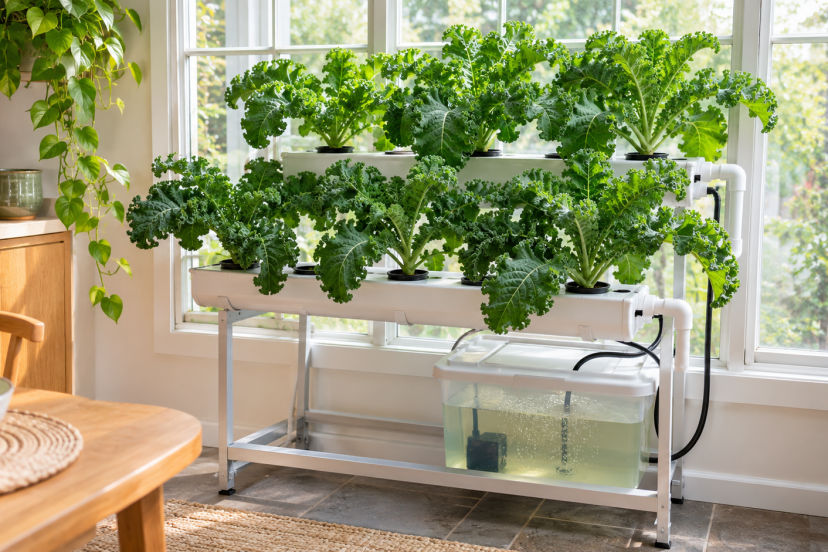
Kale is one of the easiest places to branch out from lettuce. Its compact varieties work well indoors, while repeated harvesting lets you take mature outer leaves without immediately removing the entire plant.
Penn State includes kale among crops suitable for passive hydroponics, making it useful for growers who want to keep their equipment simple.
Baby and dwarf kale varieties are particularly convenient where vertical clearance is limited. Full-size plants need more spacing, so avoid packing them as tightly as small lettuce varieties.
System design can also influence how well kale performs. A 2026 Scientific Reports study on hydroponic kale compared curly kale grown in two hydroponic configurations and found significant differences in biomass, leaf characteristics, and nutrient uptake between the systems. The results suggest that crop performance depends not only on nutrients and light but also on how the hydroponic setup manages root space and plant architecture.
Bok Choy: Compact and Fast-Growing
Bok choy gives you something lettuce cannot: crisp stems and substantial leaves from the same plant.
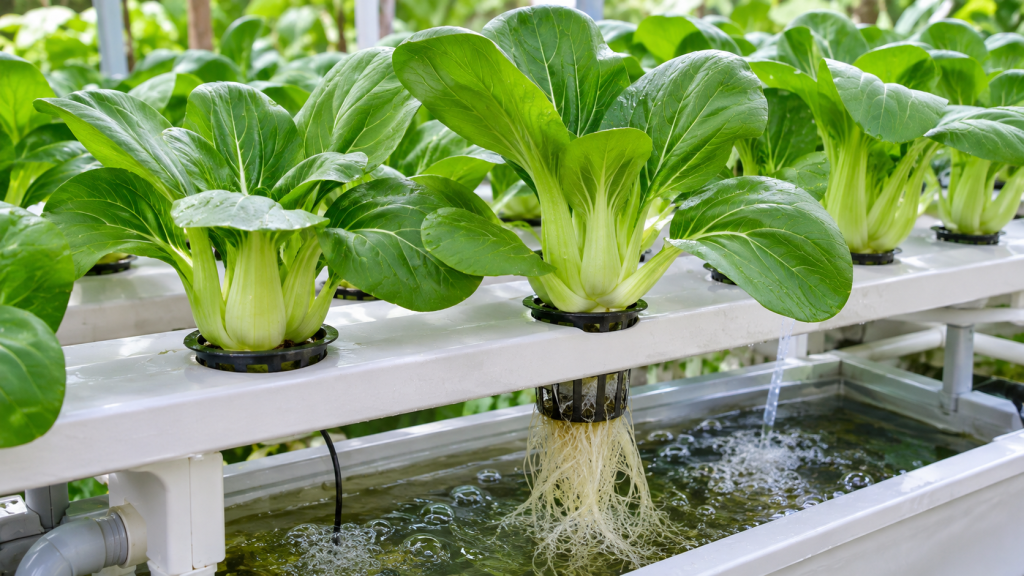
Baby bok choy is especially attractive for countertop gardens, NFT channels, and other compact systems. Harvesting smaller plants also helps prevent mature heads from crowding neighboring greens.
University of Florida guidance identifies Asian brassica greens as suitable for many hydroponic production systems, making bok choy a practical choice for growers who want something compact but more substantial than salad lettuce.
Give plants enough space for their leaves to spread. Crowding reduces airflow and creates shaded areas where leaves may remain damp.
Swiss Chard: Colorful and Long-Producing
Swiss chard earns its place in a hydroponic garden through longevity. Instead of harvesting the entire plant at once, you can remove larger outer leaves and allow younger growth to continue developing.
The colorful stems of varieties such as Bright Lights also make chard an attractive choice for visible indoor systems.
Its main drawback is size. Mature chard can become considerably larger than lettuce, so allow more root and canopy space. University of Florida guidance specifically notes that Swiss chard grows well in many hydroponic systems.
For a smaller setup, harvesting baby chard can make better use of limited space.
Arugula: Quick Growth With Bold Flavor
Arugula is worth growing when you want a crop with personality. Its peppery leaves can transform salads, pizza, sandwiches, and pasta without requiring a large harvest.
It also suits hydroponics well. University of Minnesota Extension includes arugula among leafy crops that have performed well in nutrient film technique systems.
Arugula is best harvested while the leaves are tender. Keeping plants under consistent lighting and harvesting regularly helps prevent an overcrowded canopy.
Because its flavor is much stronger than lettuce, you may find that a few plants provide plenty for a household.
Spinach: Rewarding but More Demanding
Spinach is a popular choice, but beginners should know that it can require more attention than kale or bok choy.
University extension guidance includes spinach among crops suitable for hydroponic production, although it can be more sensitive to disease and environmental stress than some other leafy vegetables.
Spinach is particularly useful if you enjoy harvesting young leaves for salads or smoothies. Rather than waiting for oversized mature plants, regular baby-leaf harvests can keep the crop manageable in an indoor garden.
Mustard Greens and Mizuna: Fast, Flavorful Alternatives
If lettuce tastes a little too predictable, try mustard greens or mizuna.
Mustard greens bring a sharper flavor that can range from mildly peppery to quite spicy depending on the variety and growing conditions. Mizuna produces narrow, deeply cut leaves with a lighter mustard-like bite.
Both can add diversity without forcing you to redesign a system built around smaller leafy crops. University of Florida specifically identifies mustard greens and mizuna as strong cool-season choices for hydroponic gardens.
They are excellent candidates for baby-leaf harvesting, which keeps plants compact and encourages frequent kitchen use.
How to Choose Greens for Your Hydroponic System
Start with your equipment rather than choosing plants solely from a seed catalog.
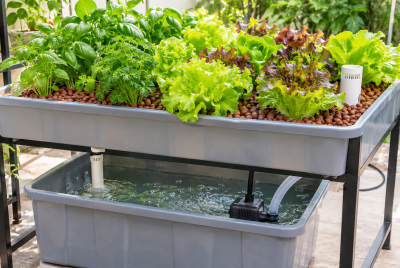
NFT systems are particularly well suited to many leafy vegetables because they continuously move a shallow layer of nutrient solution past the roots. Deep water culture can also support leafy greens effectively when the root zone receives sufficient oxygen.
Passive systems such as Kratky setups are simpler, but crop selection becomes more important. Penn State recommends plants that can complete their harvest relatively quickly rather than long-lived or fruiting crops with changing nutrient demands.
Consider mature plant size too. Arugula and baby bok choy fit tighter spaces, while mature kale and Swiss chard need more room.
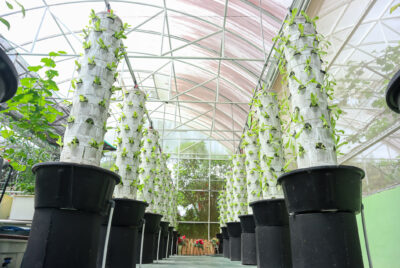
Research on hydroponic kale also reinforces the importance of matching crops to system design. In the 2026 Scientific Reports study mentioned earlier, the tested horizontal system produced stronger vegetative performance than the vertical tower configuration, showing that the physical setup itself can affect growth.
Essential Growing Tips for Better Harvests
A good crop list cannot compensate for an unstable growing environment. Keep these basics consistent:
- Monitor pH rather than adjusting nutrient solution by guesswork.
- Follow the nutrient manufacturer’s dilution instructions instead of assuming every leafy crop needs the same concentration.
- Provide uniform light across the canopy.
- Give larger plants enough spacing to prevent heavy shading.
- Keep reservoirs, channels, pumps, and tools clean.
- Provide sufficient root-zone oxygen in active water-culture systems.
- Check plants regularly for discoloration, root problems, pests, or unusually slow growth.
Root oxygen deserves particular attention. The study on aeration across eight hydroponic leafy vegetables found that aeration influenced fresh weight and nitrate dynamics, although the response differed among species.
That makes a strong case for observing each crop rather than treating every leafy green exactly like lettuce.
Best Products for Growing Hydroponic Leafy Greens
1. Apera Instruments Waterproof pH Tester Kit
A digital pH meter makes routine reservoir monitoring much easier than relying on visual symptoms from plants. This model includes automatic temperature compensation and calibration functions.
2. General Hydroponics FloraSeries Trio
The FloraSeries includes FloraMicro, FloraGro, and FloraBloom, providing a three-part nutrient system that can be adjusted according to plant growth stage.
3. Mother Earth Hydroton Original Clay Pebbles
Expanded clay pebbles support plants while leaving room for air and water around the roots. They can also be reused when cleaned thoroughly between crops.
4. General Hydroponics Rapid Rooter Replacement Plugs
Starter plugs help support young seedlings before they are moved into a larger hydroponic system. They are useful when starting several leafy greens at the same time.
5. AeroGarden Grow Anything Seed Pod Kit
This kit lets countertop growers use their own seeds rather than relying only on preselected pod varieties. That makes it easier to experiment with greens such as kale, arugula, bok choy, or mizuna.
Conclusion
Lettuce may be the classic starting point, but a hydroponic garden becomes much more useful when you diversify it. Kale offers repeat harvests, bok choy provides crisp stems and leaves, Swiss chard produces for an extended period, arugula adds peppery flavor, and mustard greens or mizuna bring even more variety.
Start with two or three hydroponic leafy greens that fit your available space. Keep lighting, nutrients, water quality, airflow, and root oxygen consistent, then expand once you see how each crop responds.
A well-managed hydroponic system does not have to be a lettuce factory. With the right crop choices, it can become a varied and productive kitchen garden.
FAQs
What leafy greens grow best hydroponically?
Kale, bok choy, arugula, Swiss chard, mustard greens, mizuna, lettuce, and spinach can all be grown hydroponically. The best choice depends on your system, available space, temperature, and experience level.
Is spinach easy to grow hydroponically?
Spinach can grow successfully in hydroponics, but it may be more challenging than crops such as kale or lettuce. Pay close attention to airflow, cleanliness, temperature, and root-zone oxygen.
Is kale a good choice for hydroponic growing?
Yes. Kale can grow in passive and active hydroponic systems. Compact or baby-leaf varieties are particularly convenient indoors because mature kale can take up considerable space.
Can different leafy greens grow in the same hydroponic system?
Yes, provided their environmental and nutrient requirements are reasonably compatible. Avoid combining plants with dramatically different mature sizes or growth rates if they will compete heavily for light and space.
Which hydroponic leafy green is best for a small indoor garden?
Baby bok choy, arugula, mizuna, and baby kale are strong choices because you can harvest them relatively young and keep the canopy compact. Larger Swiss chard and full-size kale usually need more room.