How To Train Hydroponic Vines
We may earn a commission for purchases made using our links. Please see our disclosure for more details.
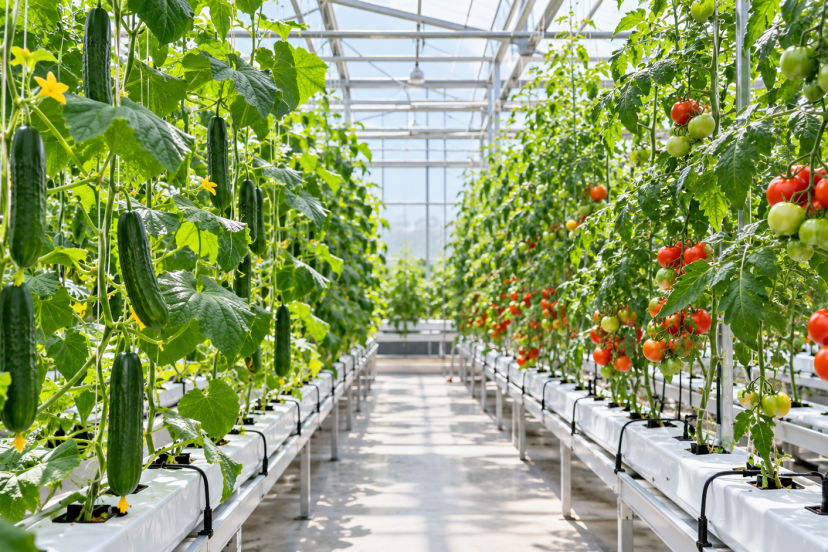
If you’ve grown cucumbers or tomatoes hydroponically, you know how fast things get crowded. Tendrils grab anything nearby, stems lean every direction, and soon you’re pushing leaves aside just to check your plants. Training your hydroponic vines solves this. A trellis, some string, and a little pruning give each plant room to grow without taking over your setup. The key is starting early, while stems are still young and flexible. In this post, I’ll cover how to train your vines, choose the right supports, and keep everything tangle-free.
Why Should You Train Hydroponic Vines?
Left alone, climbing plants tend to grow wherever they find room. In a hydroponic setup, that can quickly become a problem.
Unlike plants growing in garden soil, hydroponic plants often have less natural anchorage around their roots. Once heavy fruits develop, the stems need extra support.
Training helps you:
- Save growing space: Guide vines upward instead of letting them spread across your setup.
- Improve airflow: Keep leaves from becoming too crowded.
- Give leaves more light: Reduce shading between neighboring plants.
- Protect developing fruits: Prevent heavy branches from bending or breaking.
- Make harvesting easier: Keep fruits visible and within reach.
There’s another practical benefit. An organized plant is simply easier to inspect. You can spot damaged leaves, pests, or struggling stems without digging through a thick wall of greenery.
Which Hydroponic Vines Need Training?
Not every climbing plant grows the same way. Some naturally grab onto nearby supports, while others need help staying upright.
Tomatoes
Indeterminate tomatoes keep growing taller and producing new stems throughout the season.
They’re excellent candidates for vertical training, especially when you use hanging strings.
If you’re just starting with tomatoes, this guide to growing hydroponic tomatoes covers the basics of getting them established.
Cucumbers
Cucumbers are enthusiastic climbers. Their small, curling tendrils naturally grab nearby strings and netting.
Still, they need occasional guidance to stop their vines from wandering into other plants.
Peas and Pole Beans
Peas and pole beans can climb netting or narrow supports with relatively little help.
Guide young shoots toward the trellis, then allow them to climb naturally.
Melons
Smaller melon varieties can grow vertically, but fruit weight makes support especially important.
A strong trellis holds the vines, while individual fruit slings help support developing melons.
Choosing the Right Support for Hydroponic Vines
You don’t need an elaborate greenhouse structure to train a few plants. What matters is choosing something sturdy enough for their mature size.
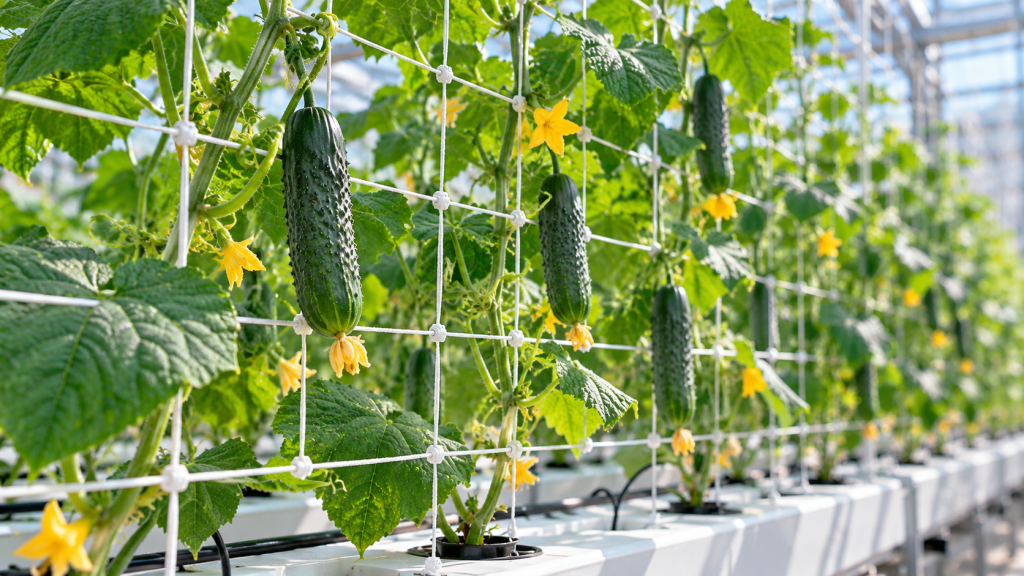
Trellis netting works well for cucumbers, peas, and beans. The open mesh gives climbing stems plenty of places to attach.
Vertical strings are useful for tall tomatoes and greenhouse cucumbers. Each plant follows its own line, making growth easier to control.
Plant cages can support compact or bushy varieties, although they offer less flexibility for long vines.
Whatever you choose, attach it to a sturdy frame.
Don’t expect a small net pot to carry the weight of a mature tomato plant loaded with fruit. You can learn more about proper plant support in this guide to using hydroponic net pots.
How to Train Hydroponic Vines Step by Step
The earlier you begin training, the easier it gets. Young stems are flexible, while older ones can snap when you try to bend them.
Step 1: Set Up Your Support Early
Install your trellis or vertical strings while your plants are still young.
For taller crops, position the overhead support high enough to allow several feet of growth. A frame around 6–8 feet tall can work in some home setups, although the ideal height depends on your space and training method.
Check that everything feels secure before the vines become heavy.
Step 2: Find the Main Growing Stem
Look for the strongest stem growing upward from the plant’s base.
For single-leader tomatoes, this is the stem you’ll keep guiding upward while removing unwanted side shoots.
Cucumbers can follow a similar pattern, although their pruning needs differ.
Don’t remove the growing tip by accident. Cutting it changes how the plant develops.
Step 3: Gently Attach the Vine
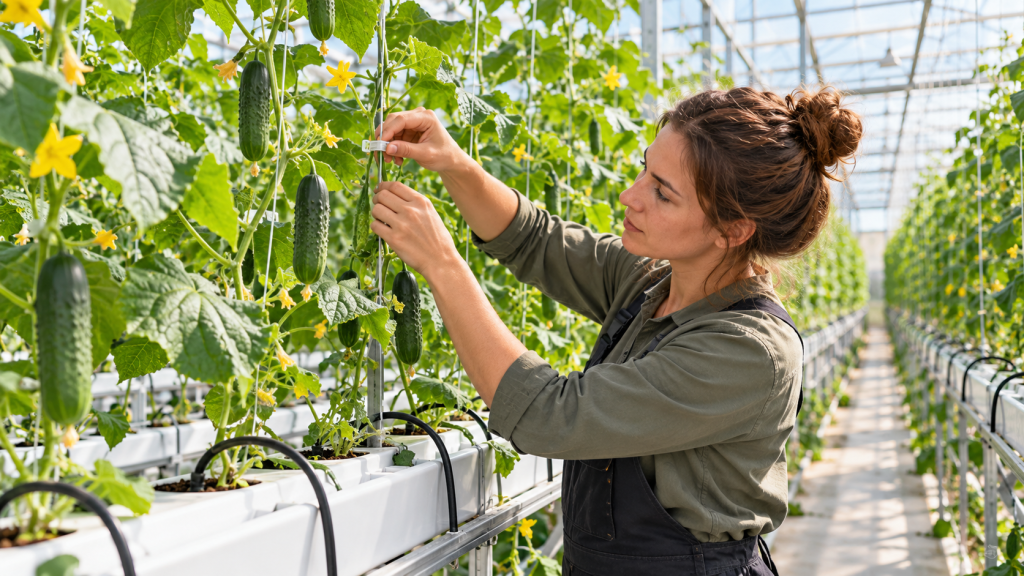
Guide the stem toward your trellis or hanging string.
Use soft plant ties or plastic clips to hold it in place.
Here’s a useful rule: Never pull a stem tightly against its support.
Stems grow thicker over time. A tie that fits today might become restrictive several weeks later.
If you’re using string, gently guide the plant around it without twisting the stem into an uncomfortable position.
Step 4: Keep Up With New Growth
Check your plants every few days.
You’ll probably notice fresh shoots reaching away from the support, particularly when temperatures and lighting encourage rapid growth.
Guide these stems back into position while they’re still flexible.
There’s no need to force every branch into a perfectly straight line. The goal is healthy, manageable growth.
Step 5: Adjust the Support as Plants Grow
Eventually, taller vines may reach the top of the trellis.
For long-season indeterminate tomatoes, growers sometimes use a technique called lower and lean.
They gradually release extra string and move the vine sideways, allowing the productive upper stem to continue growing.
Move the plant slowly and support its weight. Sharp bends can damage older stems.
How to Prune Hydroponic Vines Properly
Training controls where your plant grows. Pruning controls which parts of it continue growing.
And here’s something worth remembering: more pruning doesn’t automatically mean more fruit.
Pruning Tomato Vines
Indeterminate tomatoes produce small side shoots called suckers. They appear where leaves meet the main stem.
When growing a single-leader plant, remove these shoots while they’re small.
Oklahoma State University’s hydroponic crop pruning guide recommends regular sucker removal to manage plant growth and support fruit production.
It also advises against removing too much foliage at once.
Pruning Cucumber Vines
Cucumbers need a slightly different approach.
A 2024 Penn State experiment on hydroponic cucumber training compared high-wire and modified-umbrella systems.
Under the study conditions, plants trained with the modified-umbrella method produced about 30.5 marketable cucumbers per plant, compared with 16.6 using the high-wire method.
However, high-wire training provided a more consistent weekly harvest.
So, how can you apply this to your own growing setup?
You don’t necessarily need to remove every cucumber side shoot. The right pruning method depends on the variety, available space, and how you want to harvest.
Leave plenty of healthy foliage so the plant can continue producing strong, well-developed fruits.
Common Hydroponic Vine Training Mistakes
Most vine training problems come from small mistakes that become harder to fix as plants grow.
Here are a few to watch out for:
- Waiting too long: Older stems resist bending and may break when repositioned.
- Tying stems too tightly: Tight ties can damage growing tissue.
- Removing too many leaves: Plants need healthy foliage to produce energy.
- Using weak supports: Heavy fruit clusters can pull unstable trellises down.
- Growing plants too close together: Crowded vines compete for light and restrict airflow.
One mistake that’s easy to overlook is forgetting about access to your equipment.
Leave enough room to check the reservoir, adjust nutrient lines, and clean around your plants without pushing vines aside.
Keeping Your Hydroponic Vines Healthy
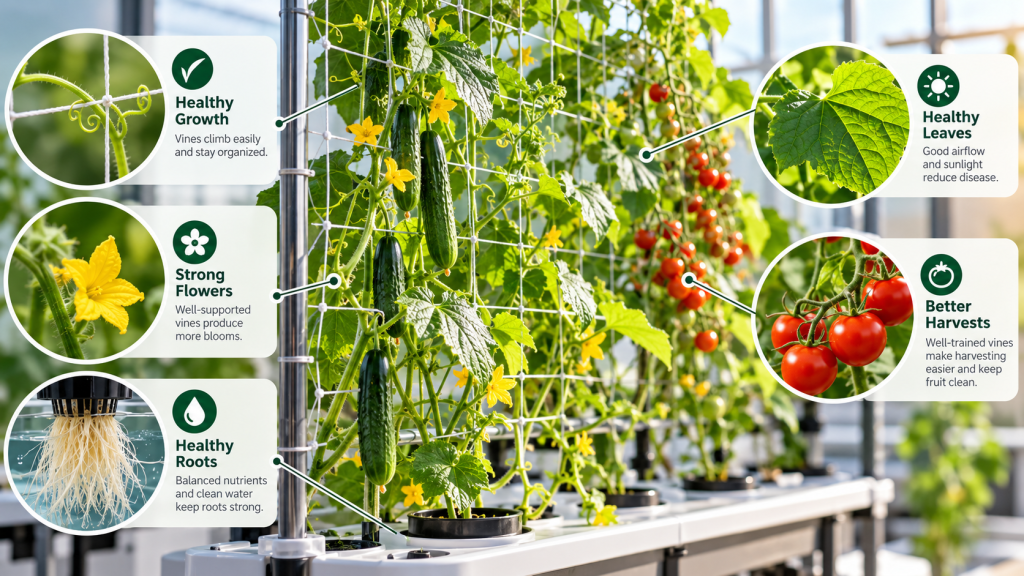
Once your vines are climbing, regular maintenance matters more than constant pruning.
A quick inspection every few days usually tells you what needs attention.
Look for loose clips, crowded branches, damaged leaves, and fruits that may need support.
Also keep an eye on your nutrient solution. Check water levels, pH, and electrical conductivity according to your crop’s needs.
Training won’t fix poor root health or inadequate lighting.
If you’re growing indoors, make sure your lights reach the lower leaves too. Tall plants can easily shade their own growth.
Recommended Products
A few simple tools can make training easier, especially when you’re managing several plants.
1. VIVOSUN Elastic Trellis Netting
This flexible 2 × 4-foot netting provides a climbing surface for smaller hydroponic setups. Its open mesh allows you to guide stems and reach developing fruits.
Best for: Cucumbers, peas, and compact climbing plants.
2. OJYUDD Plant Support Garden Clips
Plant support clips help hold growing stems against strings or trellises without repeatedly tying knots.
Best for: Supporting tomato and cucumber stems.
3. Garden Twist Tie
Coated garden wire is useful for securing lightweight supports and organizing your trellis setup. Keep it loose if you use it near living stems.
Best for: Securing netting and smaller support structures.
4. Tomato Trellis Roller Hooks
Roller hooks allow you to adjust hanging support strings as tall vines continue growing. They’re especially useful for lower-and-lean training.
Best for: Indeterminate tomatoes and greenhouse cucumbers.
5. Fiskars Micro-Tip Pruning Snips
These small pruning snips make it easier to reach unwanted shoots without accidentally cutting nearby stems.
Best for: Precise pruning around dense foliage.
Conclusion
Training hydroponic vines doesn’t have to be complicated. A sturdy trellis, a few soft clips, and regular attention can make a noticeable difference in how manageable your plants become. Start guiding the stems while they’re young, prune according to the crop, and give developing fruits the support they need. Keep checking your vines as they grow. Small adjustments made throughout the week are much easier than untangling a plant that’s been left alone for a month.
FAQs
When Should I Start Training Hydroponic Vines?
Start once your plant has developed a healthy main stem and begins reaching toward its support. Install the trellis earlier so it’s ready when the plant needs it. Young stems are easier to guide, and early training helps prevent tangled growth.
Can Hydroponic Vines Grow Without a Trellis?
Some compact and trailing varieties can grow without vertical support. However, vigorous tomatoes, cucumbers, and melons usually benefit from trellising. Their stems can become heavy, especially once fruit develops. A suitable support also makes harvesting and routine maintenance easier.
How Often Should I Prune Hydroponic Vines?
It depends on the crop and how quickly it’s growing. Indeterminate tomatoes may need weekly sucker removal, while cucumbers require pruning based on their training system. Check your plants every few days, but avoid cutting healthy foliage simply because the plant looks full.
What’s the Best Way to Support Heavy Hydroponic Fruits?
Use a sturdy trellis or overhead frame to support the vine. For heavier fruits such as melons, add individual slings made from soft, breathable material. This helps reduce pressure on the fruit stem as it grows.
Does Training Hydroponic Vines Increase Yields?
It can, depending on the crop, growing conditions, and training method. Better light distribution and careful pruning may support healthier fruit development. However, excessive pruning can reduce production. Choose a method that suits your plant rather than assuming more trimming will always produce a bigger harvest.