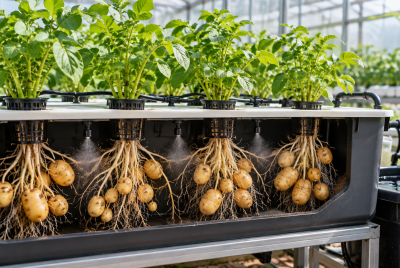
Can You Grow Hydroponic Aloe Vera?
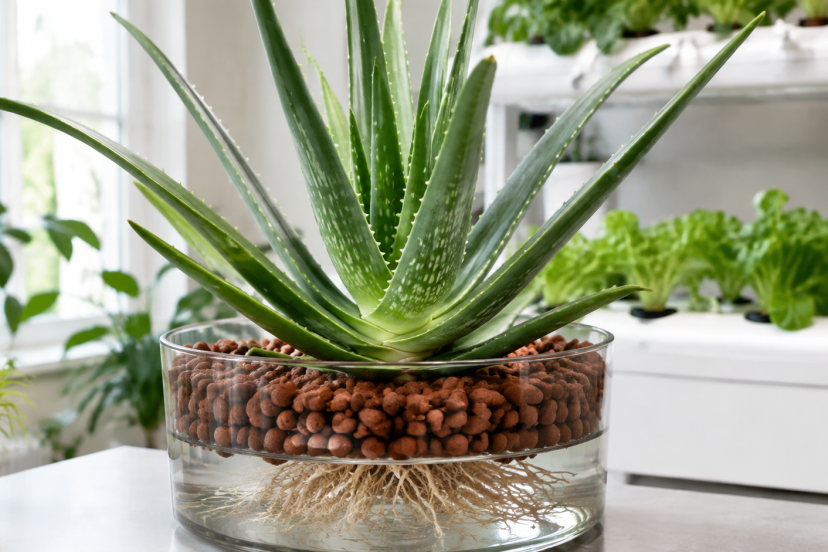
We may earn a commission for purchases made using our links. Please see our disclosure for more details.
Aloe vera usually grows in dry, gritty soil, so placing it in a hydroponic system may sound like a recipe for root rot. Surprisingly, hydroponic aloe vera can grow successfully when its roots receive enough oxygen and its crown remains dry.
The key is to treat aloe differently from thirsty hydroponic crops such as lettuce or basil. Aloe stores water in its thick leaves and dislikes constantly saturated roots. Therefore, it needs a highly aerated medium, mild nutrients, and careful control of the water level.
Hydroponics will not necessarily make aloe grow dramatically faster. However, it can provide a clean, attractive way to cultivate the plant indoors while giving you greater control over nutrition and root health.
Can Aloe Vera Really Grow Without Soil?
Yes. Aloe does not require soil itself. Like other plants, it needs water, oxygen, light, physical support, and essential mineral nutrients. Soil normally supplies or holds these resources, but a hydroponic system can do the same job.
Scientific evidence supports growing aloe in soilless conditions. A study on the optimization of nitrogen and potassium for aloe vera evaluated plants in nutrient solutions with different nitrogen forms and potassium levels. The results showed that nutrient composition influenced aloe growth, confirming that the plant can develop in a properly managed soilless system.
However, aloe remains a succulent. Its roots need more air and less continuous moisture than most conventional hydroponic vegetables. A setup designed around those needs offers the best chance of success.
Benefits of Growing Hydroponic Aloe Vera
Growing aloe without soil gives you direct control over its root environment. You can adjust the nutrient concentration, inspect the roots, and avoid many soil-dwelling pests.
Other possible benefits include:
- Less mess inside the home
- No compacted or poorly draining soil
- Easier detection of unhealthy roots
- Reusable growing media
- More precise nutrient management
- An attractive semi-hydroponic display
The method also has limitations. Waterborne pathogens can spread quickly, and one incorrect water-level adjustment may leave the roots starved of oxygen. Mineral buildup is another concern, especially when you use hard tap water or mix the nutrient solution too strongly.
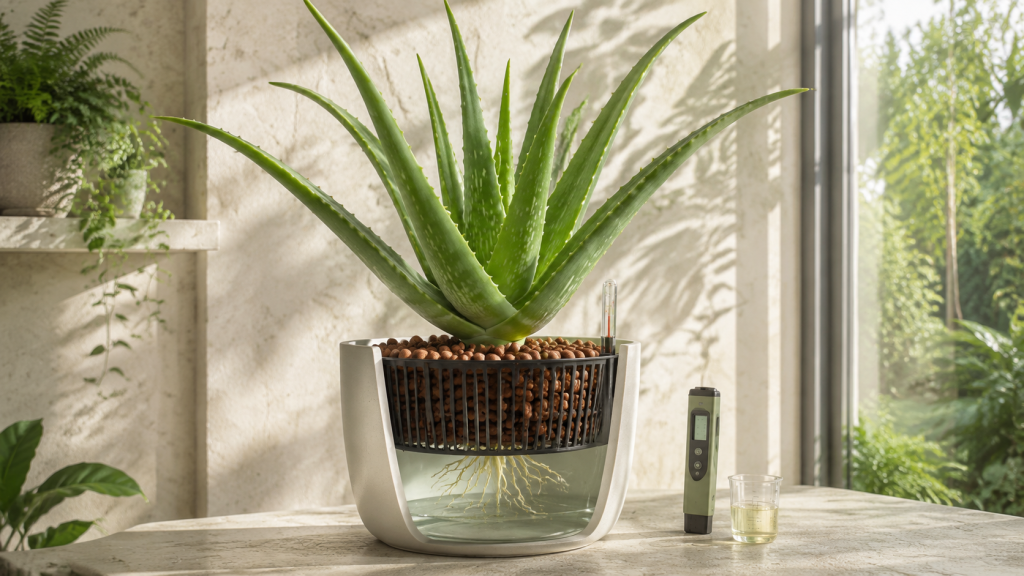
What Is the Best Hydroponic System for Aloe Vera?
A semi-hydroponic setup with expanded clay pebbles, commonly called LECA, is the safest option for most home growers. LECA supports the plant while leaving open spaces around the roots for air.
Place the aloe in a slotted inner pot filled with rinsed clay pebbles. Set that pot inside an outer reservoir. Keep the nutrient solution below the plant’s crown and initially below most of the root mass. Moisture will move upward through the pebbles without submerging the entire root system.
Our guide to hydroponic growing media explains why LECA works well in systems where strong root aeration matters.
A carefully managed ebb-and-flow system can also work. It briefly floods the root zone before draining away, allowing fresh oxygen to return. Traditional deep water culture presents more risk because aloe roots remain continuously exposed to water. NFT channels are also poorly suited to the plant’s size, weight, and low moisture demand.
Conditions Aloe Needs to Thrive
Light
Give your aloe approximately 12 to 14 hours of bright light each day when growing it indoors. A full-spectrum LED grow light works well if a sunny window does not provide enough illumination.
Start the lamp farther away and watch the leaves. Pale, stretched growth often signals insufficient light. Brown or bleached patches may mean that the light is too intense or too close.
Temperature and Airflow
Maintain a warm environment, ideally from 65°F to 80°F (18°C to 27°C). Keep the plant away from cold drafts and avoid extended exposure below 50°F (10°C).
Gentle air movement helps moisture evaporate from around the crown. It may also discourage fungal growth. You do not need a powerful fan; mild circulation is enough.
Nutrient Strength and pH
Begin with a complete hydroponic fertilizer at one-quarter of the manufacturer’s standard vegetative dose. Aloe grows slowly and can suffer when salts accumulate around its roots.
A practical starting pH range is 5.8 to 6.5. Keep electrical conductivity around 0.8 to 1.2 mS/cm until you know how your plant responds. These figures are starting points rather than rigid rules because water quality, temperature, and fertilizer composition affect nutrient availability.
Research also suggests that excessive salinity can suppress aloe growth. In a peer-reviewed study of fertilization and salinity in Aloe species, increasing salinity reduced plant height and the production of leaves and shoots. This is a good reason to feed lightly and refresh the reservoir regularly.
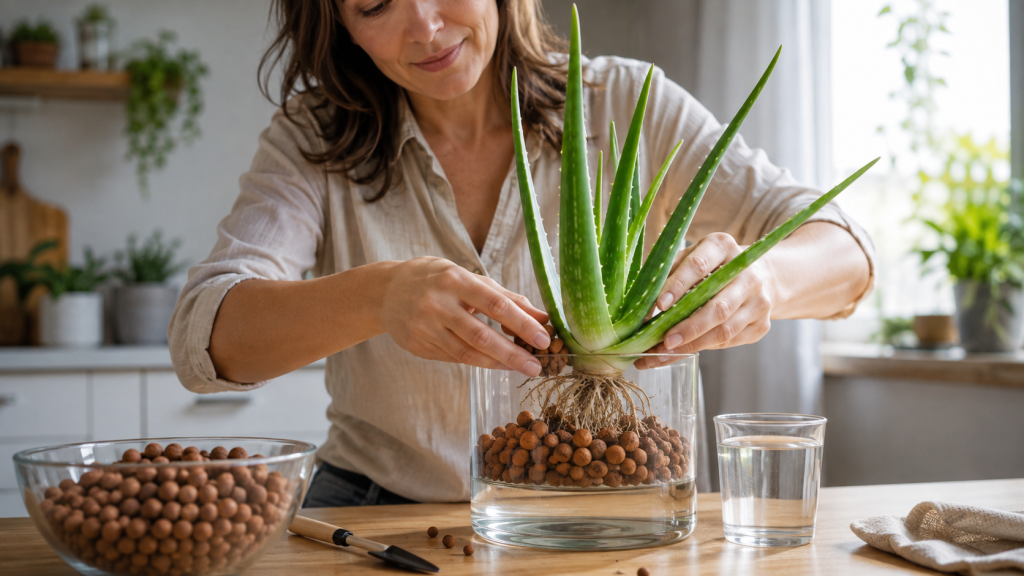
How to Transfer Aloe Vera to Hydroponics
Choose a healthy young plant with firm leaves and no signs of rot. Smaller offsets usually adapt more easily than large, mature specimens.
1. Remove the soil
Slide the aloe from its pot and loosen the soil with your fingers. Submerge the root ball in room-temperature water, then carefully work away the loosened dirt with your fingers. Trapped organic material can decay inside a hydroponic reservoir.
2. Inspect and trim the roots
Use sterilized scissors to remove black, mushy, hollow, or foul-smelling roots. Keep firm roots that appear cream, tan, or light brown.
Allow any fresh cuts to dry for several hours. This short drying period helps callus the damaged tissue before it enters a moist environment.
3. Prepare the medium
Rinse LECA thoroughly to remove clay dust. Soak it in pH-adjusted water for several hours before use. For more help choosing and preparing a medium, see this detailed guide to using rockwool cubes and other hydroponic media.
4. Position the plant
Add a base layer of LECA, hold the aloe upright, and fill around its roots. Keep the crown completely above the pebbles. Burying the leaf base can trap moisture and encourage rot.
5. Introduce water gradually
For the first week, use plain pH-adjusted water and keep the reservoir low. Once new root growth appears, introduce a weak nutrient solution. Avoid filling the container high enough to soak all the roots.
Caring for Aloe in a Hydroponic Setup
Check the reservoir every few days, but do not automatically top it up. Let the level fall and allow an air gap to develop before adding more solution. This wet-and-dry rhythm better matches aloe’s natural preferences.
Drain and prepare a fresh nutrient mixture approximately every two to three weeks. Rinse the reservoir, remove salt deposits, and refill it with a freshly mixed solution. Never strengthen an old solution by repeatedly adding fertilizer.
Inspect the roots during each change. Healthy hydroponic roots should feel firm and smell neutral. Brown color alone does not always indicate disease because nutrients and clay can stain roots. A soft texture and unpleasant odor provide clearer warnings.
Aloe also produces offsets around its base. Remove them when they have several leaves and their own roots. Growing too many plants in one container restricts airflow and makes reservoir care difficult.
Common Problems and Practical Fixes
Soft, translucent leaves: The roots may be receiving too much water. Lower the reservoir, improve airflow, and inspect for rot.
Brown leaf tips: Nutrient salts may have accumulated. Flush the medium and restart with a weaker solution.
Thin or leaning growth: Increase light gradually and rotate the container every week.
Red or bronze leaves: The plant may be reacting to intense light, heat, or nutrient stress. Move the light farther away and check the solution strength.
Black roots or a loose crown: Remove damaged tissue immediately. Sterilize the container, replace the medium if necessary, and restart with a lower water level.
Recommended Products for Hydroponic Aloe Vera
As an Amazon Associate, the website may earn from qualifying purchases.
- Legigo Organic LECA Clay Pebbles – These porous clay balls provide firm support without packing tightly around aloe roots. They are washable and reusable.
- General Hydroponics Flora Series Bundle – This three-part nutrient system lets you prepare a mild, complete formula. Start well below the regular label strength for aloe.
- Apera Instruments GroStar GS4 Meter – This meter checks pH, EC, TDS, and temperature, helping you avoid nutrient and acidity problems.
- Barrina T5 Full-Spectrum Grow Lights – These slim LED fixtures suit shelves and compact indoor growing areas. Adjustable mounting height makes gradual light acclimation easier.
- General Hydroponics pH Control Kit – The kit provides a straightforward way to test and adjust solution pH when a digital meter is not available.
Always confirm the current listing details, dimensions, and seller before ordering.
Conclusion
Hydroponic aloe vera is entirely possible, but success depends on respecting the plant’s dry-growing nature. Use an airy medium such as LECA, keep the crown dry, maintain a low reservoir, and apply nutrients at a mild concentration. Semi-hydroponics offers the simplest starting point because it supports the plant without continuously drowning its roots. With bright light, warm conditions, routine reservoir changes, and careful observation, your aloe can adapt to life without soil and remain healthy for years.
Frequently Asked Questions
Is soil necessary for long-term aloe vera growth?
Aloe can grow without soil, but keeping every root submerged raises the risk of oxygen deprivation and rot. Semi-hydroponics works better because it combines moisture with a generous air space.
Can I propagate an aloe leaf in a hydroponic system?
Leaf cuttings often rot before producing viable roots. Separating a healthy offset with existing roots offers a much more reliable propagation method.
When should the old nutrient mixture be replaced?
Replace it every two to three weeks, or sooner if it becomes cloudy, smells unpleasant, or develops an unstable pH. Clean the reservoir during each change.
Does hydroponic aloe vera need an air pump?
Not always. A low reservoir and airy LECA can supply adequate oxygen. An air pump may help in deeper or more water-intensive systems, but it cannot correct a buried crown or excessively high water level.
Can I harvest leaves from hydroponically grown aloe?
You can harvest mature outer leaves from a healthy plant. However, avoid consuming homemade aloe preparations unless you understand proper processing, since aloe latex beneath the leaf skin can cause harmful digestive effects.