How to Grow Crisp Hydroponic Bok Choy
We may earn a commission for purchases made using our links. Please see our disclosure for more details.
Hydroponic bok choy is one of the most rewarding crops for a small indoor garden. It grows quickly, stays compact, and gives you crisp stalks and tender leaves without needing a backyard bed. Bok choy also works in several simple systems, including deep water culture, Kratky containers, and nutrient film technique channels.
You do not need complicated equipment. Start with a healthy seedling, steady light, clean water, balanced nutrients, and enough room for the leaves to open. With those basics in place, you can often harvest baby bok choy within four to six weeks of sowing.
Why Bok Choy Works Well in Hydroponics
Bok choy, also called pak choi, is a leafy brassica with a short growth cycle and compact root system. Since you harvest the stems and leaves, the plant can focus most of its energy on fast vegetative growth.
Hydroponics also gives you direct control over moisture and nutrition. Instead of waiting for roots to search through soil, you deliver water and essential minerals directly to them.
Its upright shape makes bok choy especially useful in small gardens. Baby varieties fit neatly on shelves, inside countertop systems, or in rows of net cups.
Choose the Best Hydroponic System
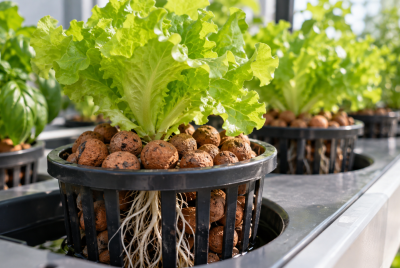
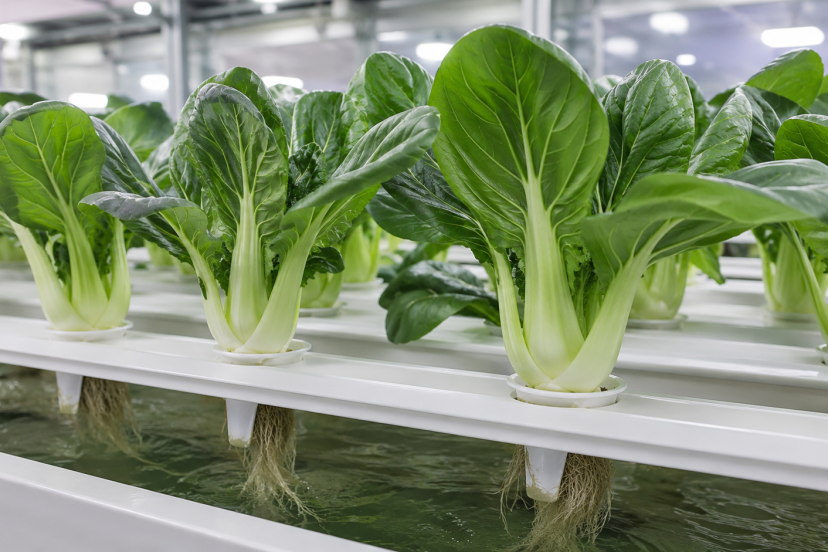
Deep water culture, or DWC, is an easy starting point for beginners. The roots hang in an aerated reservoir while a net cup supports the plant. The setup is simple to inspect and works particularly well for leafy greens.
Our deep water culture guide explains the equipment, aeration, reservoir, and maintenance requirements in more detail.
A Kratky container uses a similar reservoir but does not need a pump. As the water level drops, an air gap forms around part of the root system. This method is quiet and inexpensive, although you need a container large enough to support the crop through harvest.
NFT works well when you want to grow several plants in rows. However, it needs reliable water flow and regular channel cleaning. For your first crop, DWC or Kratky usually brings fewer surprises.
Gather Your Growing Supplies
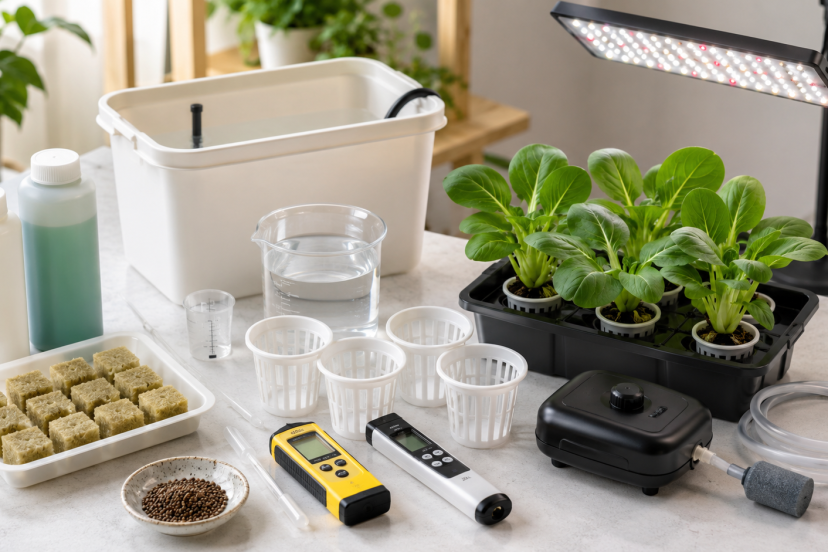
You will need bok choy seeds, starter plugs, two- or three-inch net cups, an opaque reservoir, complete hydroponic nutrients, pH and EC meters, and a grow light if you plan to garden indoors. Add an air pump and air stone when using DWC.
Choose a compact or baby bok choy variety when shelf space is limited. These varieties mature quickly and require less distance between plants.
The net cup should hold the starter plug securely while letting the roots reach water and oxygen. This guide to choosing net pots for hydroponics can help you compare cup sizes, rim designs, and slot spacing.
Start Seeds and Transplant Them
Place one or two seeds in a moist starter plug. Keep the plug damp rather than waterlogged. After both seeds sprout, keep the stronger seedling and snip the weaker one at its base.
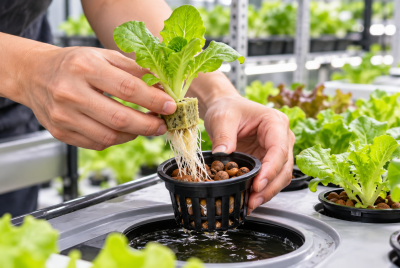
Move the seedling into your hydroponic system when it has two or three true leaves and visible roots. During the first few days, let the bottom of the plug wick moisture from the reservoir.
Keep the crown and stem above the water. Constant moisture around the stem can encourage rot and weaken the young plant.
Space baby varieties about six inches apart. Give larger bok choy eight to twelve inches, depending on the cultivar. Crowded plants may save space initially, but overlapping leaves reduce airflow and create damp pockets.
Set the Light, Temperature, and Airflow
Indoors, provide 14 to 16 hours of light followed by a proper dark period. Start with the grow-light manufacturer’s hanging-height recommendation, then observe how the plants respond.
Long, leaning stems usually suggest weak light. Bleached patches, dry edges, or upward-curling leaves may indicate excessive intensity or heat.
Bok choy prefers mild conditions. Aim for an air temperature near 60–75°F. A recent controlled study of LED lighting for baby bok choy used a 16-hour photoperiod at approximately 77°F, showing that slightly warmer conditions can work when lighting, water, and nutrition remain stable.
Place a small fan near the garden for gentle airflow. Avoid pointing a strong stream directly at young seedlings.
Manage Nutrients, pH, and EC
Use a complete hydroponic nutrient formulated for leafy or vegetative growth. Bok choy needs nitrogen for foliage, but it also depends on calcium, magnesium, sulfur, and trace minerals.
Regular garden fertilizer may not provide the correct balance for a water-based system. Always follow the hydroponic nutrient label rather than guessing how much concentrate to add.
Keep the pH around 5.8–6.5 as a practical home-growing target. Check it daily at first because small reservoirs can change quickly. Make small adjustments, mix the solution thoroughly, and test again before adding more pH solution.
Aim for an EC near 1.5–2.0 mS/cm once the plants become established. Oklahoma State University lists this EC range for pak choi in its hydroponic EC and pH guide.
Start seedlings with roughly one-quarter to one-half of the label’s mature-plant strength. Increase the concentration gradually after transplanting. If leaf tips turn brown while EC rises, dilute the reservoir with plain water.
Refresh the reservoir with a new nutrient mix every one to two weeks. Change it sooner if it smells unpleasant, becomes cloudy, or grows difficult to balance. Top up the reservoir with water between changes and test EC before adding more concentrate.
Keep the Roots Healthy
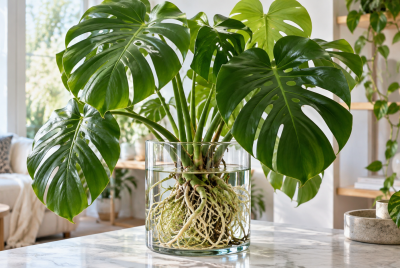
Healthy bok choy roots usually look pale and smell fresh. Brown, slimy roots often point to warm water, poor oxygen, light entering the reservoir, or dirty equipment.
Keep the reservoir opaque to discourage algae. Run the air pump continuously in a DWC system, rinse the reservoir between crops, and remove dead leaves before they fall into the water.
When leaves turn yellow, check the pH before adding fertilizer. Pale new growth may mean iron has become unavailable because the pH is too high.
Brown leaf tips can result from excessive nutrient strength, heat, low airflow, or uneven calcium movement. Correct one likely cause at a time rather than changing several conditions at once.
Inspect the undersides of leaves for aphids and caterpillars. In a small garden, early hand removal and a firm water rinse can stop a minor pest problem from spreading.
Harvest Bok Choy for Crisp Stems
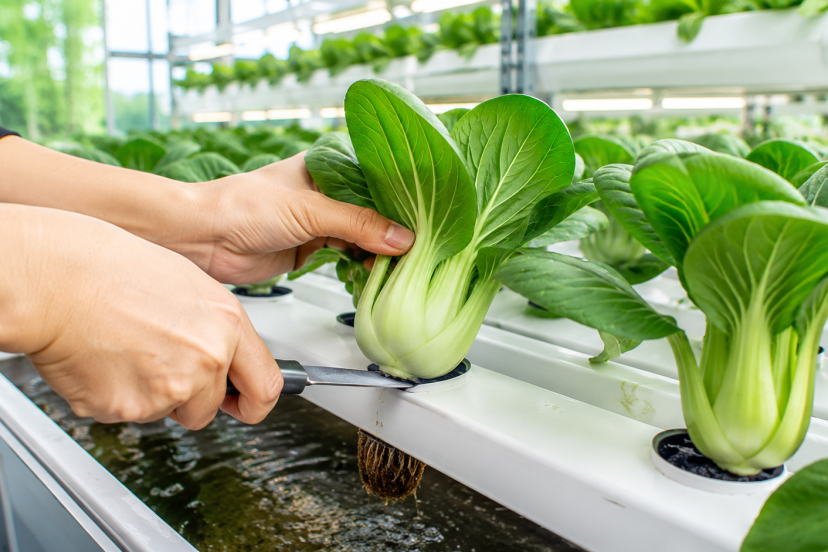
Harvest baby bok choy after it forms a compact cluster of tender stems and leaves. For a whole-head harvest, cut across the base with a clean knife just above the root crown.
You can also pick a few outer leaves while leaving the center intact. This method stretches the harvest, although the plant may not form the same neat head you would get from harvesting it all at once.
Harvest in the morning or shortly after the dark period, when the leaves feel firm and hydrated. Rinse and dry the plant, then refrigerate it promptly.
Do not wait for the largest possible head. Younger bok choy usually provides better crunch, thinner stems, and a milder flavor than an oversized plant.
Helpful Tools for Growing Hydroponic Bok Choy
The right equipment can make nutrient mixing, pH testing, lighting, and plant support much easier. The products below suit small hydroponic bok choy setups, but check the latest sizes, features, and compatibility before purchasing.
1. General Hydroponics MaxiGro
This single-part dry nutrient supports leafy, vegetative growth. It is a convenient choice for growers who want a simple feeding routine without mixing several separate formulas.
2. Apera Instruments PH20 pH Meter
This compact meter provides fast pH readings for hydroponic reservoirs. It works well for routine nutrient-solution checks and general water testing.
3. Bluelab Conductivity Pen
This handheld tester measures electrical conductivity and solution temperature. Regular readings can help you spot nutrient buildup before visible plant damage appears.
4. AC Infinity 3-Inch Net Cups
These three-inch cups provide enough space for starter plugs and developing roots. Their wide rims also make plants easier to lift when inspecting the root zone.
5. Barrina T5 Grow Lights
These two-foot light strips fit compact shelving and small indoor growing spaces. Their linkable design helps create more even coverage across a row of bok choy.
Conclusion
Growing hydroponic bok choy depends more on steady conditions than constant tinkering. Choose a compact variety, leave enough space between plants, keep the water clean and oxygenated, and monitor pH and EC before symptoms appear.
Once you establish a routine, sow a small batch every one or two weeks. Staggered planting can give you a regular supply of crisp bok choy instead of several mature heads arriving at the same time.
FAQs
How long does hydroponic bok choy take to grow?
Baby bok choy often takes four to six weeks from seed. Larger varieties may need six to eight weeks, depending on the cultivar, lighting, temperature, and plant spacing.
What pH is best for hydroponic bok choy?
Use 5.8–6.5 as a practical target. Check the reservoir regularly and make gradual corrections instead of adding a large amount of pH adjuster at once.
What EC should I use for bok choy?
Aim for approximately 1.5–2.0 mS/cm after the plants become established. Use a weaker nutrient solution for seedlings and increase the concentration gradually.
Can bok choy grow in a Kratky system?
Yes. Use an opaque container with enough nutrient solution to support the crop. Preserve the air gap that forms as the water drops rather than repeatedly filling the reservoir to the top.
Why is my hydroponic bok choy bolting?
Heat, prolonged stress, root problems, sudden environmental changes, and variety traits can trigger early flowering. Keep conditions mild, avoid major nutrient swings, and harvest once the plant reaches a useful size.