Sizing Hydroponics Water Pump: What You Need To Know
We may earn a commission for purchases made using our links. Please see our disclosure for more details.
If you’ve ever stared at a shelf of pumps and thought, “Which one do I actually need?” you’re not alone. A hydroponics water pump seems like a small part of the system, but it quietly does a lot of the heavy lifting. It moves nutrients, keeps water from sitting still, and helps roots get the oxygen they need. In this guide, we’ll walk through how to size a hydroponics water pump in a way that actually makes sense. No guesswork, no overkill. Just the basics, so you can pick a pump that fits and move on with your grow.
What Is a Hydroponics Water Pump and Why It Matters
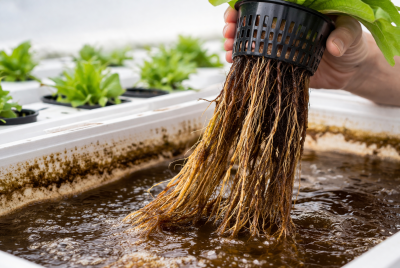
A hydroponic water pump circulates nutrient-rich water from the reservoir to your plants. Since hydroponics skips soil entirely, the pump becomes the delivery system for food, oxygen, and stability.
Without proper circulation:
- Nutrients settle instead of mixing
- Oxygen levels drop
- Roots sit in stagnant water
That’s why pumps are essential in systems like NFT, DWC, drip irrigation, and aeroponics. They keep the system alive, not just running.
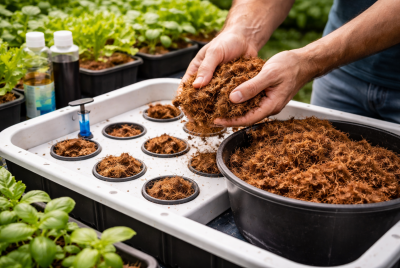
If you’re still dialing in other components, your choice of grow media also affects pump requirements. Different media resist flow differently, which is why this guide pairs well with a deeper look at hydroponic grow media.
Does Hydroponics Need a Water Pump?
Short answer: most systems do.
Some passive methods, like the Kratky technique, can function without pumps. However, once you scale up or want consistency, pumps become necessary.
You need a pump if your system:
- Circulates nutrients
- Uses drip emitters
- Relies on flowing water (NFT)
- Needs mixing and oxygenation
Even in deep water culture, water movement helps prevent nutrient layering and root stress.
Types of Hydroponic Water Pumps
Before sizing anything, you need to know which pump style fits your system.
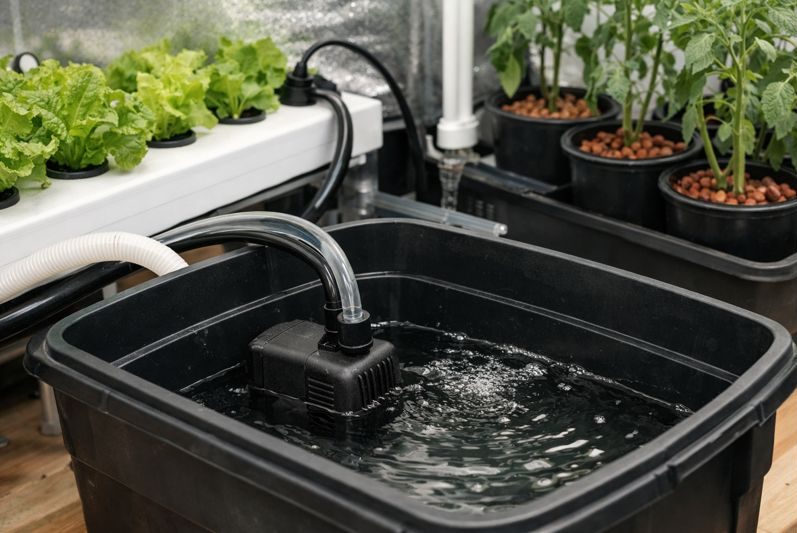
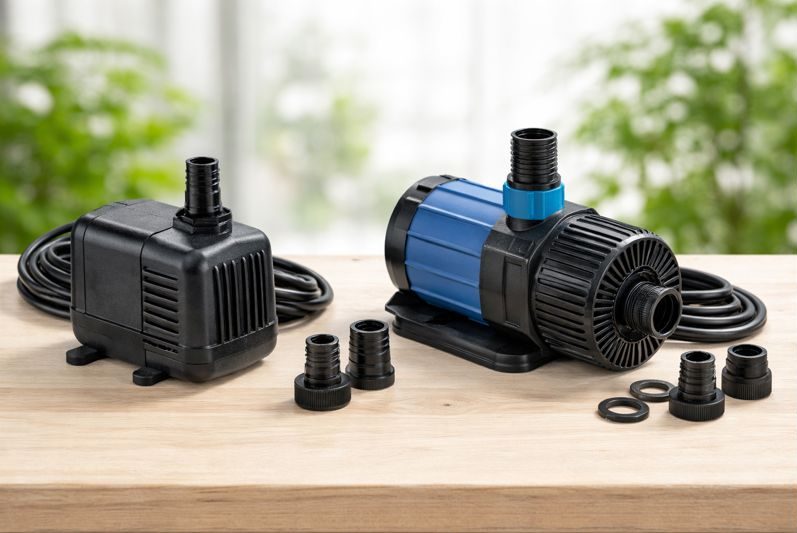
Submersible Pumps
Submersible pumps sit directly inside the nutrient reservoir. They stay water-cooled, which keeps noise low and installation simple.
They work best for:
- Small to medium systems
- Indoor grows
- Hobby setups
Most beginners start here—and for good reason.
Inline Pumps
Inline pumps stay outside the reservoir and push water through plumbing lines. They’re air-cooled and usually stronger.
They’re ideal for:
- Larger systems
- Commercial setups
- Long tubing runs
They cost more, but they offer control and durability.
Sump Pumps
Sump pumps move water between tanks, often in recirculating systems. They shine when you collect runoff or manage multiple reservoirs.
They also help mix nutrients evenly, which improves consistency across the system.
How a Hydroponic Water Pump Works
A hydroponics water pump pulls nutrient solution from the reservoir and pushes it toward your plants through tubing, channels, or sprayers.
Most growers run pumps on timers. A common schedule looks like:
- 15 minutes ON
- 45 minutes OFF
- 14–18 hours per day
Timing depends on plant size, temperature, and system type. Warmer environments often require shorter off-cycles to maintain oxygen levels.
How to Size a Hydroponics Water Pump Correctly
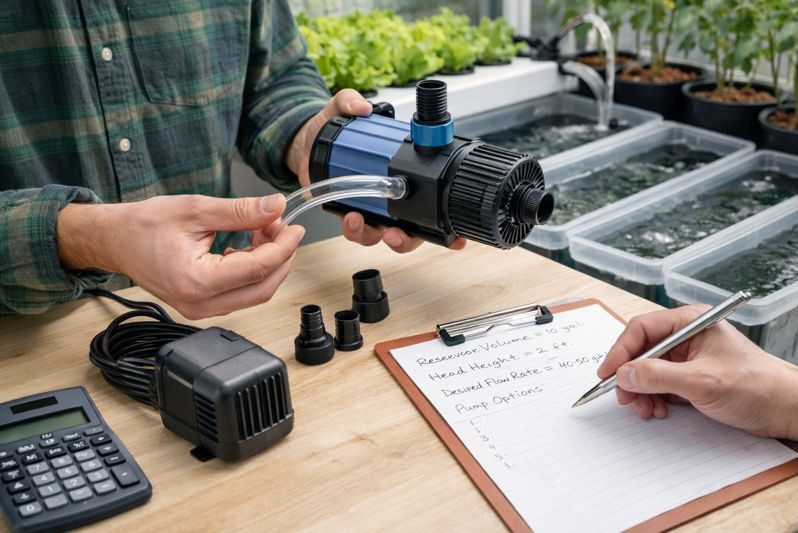
Sizing a pump isn’t guesswork. It comes down to three practical factors.
Flow Rate (GPH)
Flow rate measures how much water moves per hour, usually in gallons per hour (GPH).
A safe rule:
- Turn over your reservoir 1–2 times per hour
If you have a 20-gallon reservoir, look for a pump rated between 200–400 GPH.
Head Height
Head height refers to how far the pump has to push water upward, from where it sits to the highest point in your system.
Here’s the catch: The higher the lift, the lower the actual flow.
Always check the pump’s head height chart. If your grow tray sits 4 feet above the reservoir, your pump must still deliver enough flow at that height.
System Type Considerations
Different systems need different flow behavior:
- NFT prefers steady, gentle flow
- Drip systems need consistent pressure
- Aeroponics demands precise delivery
Match the pump not just to size—but to function.
Pump Sizing by Hydroponic System Type
Here’s a practical breakdown:
- NFT systems: Moderate flow, low head height
- DWC systems: Lower flow, steady circulation
- Drip systems: Higher pressure, adjustable flow
- Aeroponics: Precise timing, consistent pressure
Overpowering small systems often causes more problems than it solves.
Recommended Hydroponics Water Pumps
These pumps are widely used, well-reviewed, and suitable for different system sizes:
- EcoPlus Submersible Water Pump (396 GPH) – Reliable, quiet, great for beginners
- VIVOSUN Submersible Pump Series – Budget-friendly with solid flow options
- Active Aqua Submersible Pump – Durable choice for mid-size systems
- Hydrofarm Active Aqua Inline Pump – Strong performance for large setups
- GROWNEER Hydroponic Pump – Trusted for long-term commercial use
Choose based on actual system needs, not just ratings.
Why Steady Water Circulation Makes or Breaks a Hydroponic System
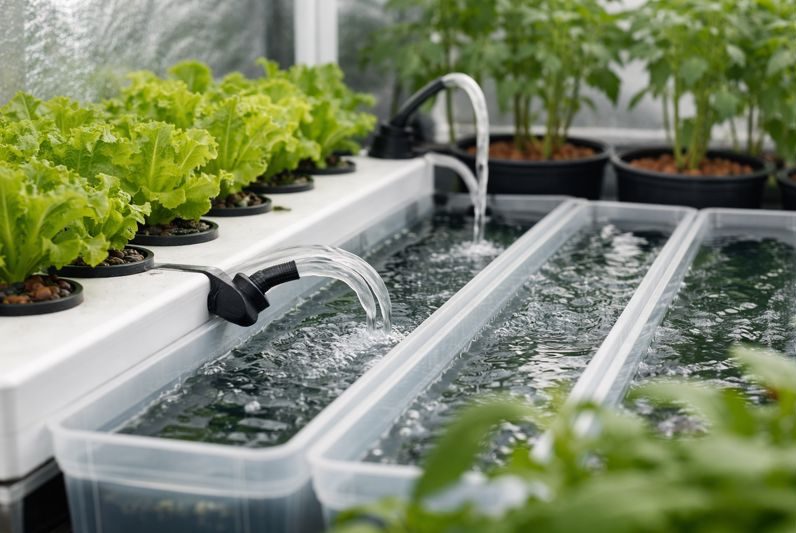
When a hydroponic system starts acting up, it’s rarely the nutrients or the lights. More often, it’s how the water moves through the system.
NASA has spent years testing hydroponic setups in controlled environments. One thing shows up again and again: plants grow better when nutrient water flows in a steady, reliable way. When water keeps moving, nutrients don’t settle at the bottom, oxygen stays available to the roots, and the system stays stable instead of slowly drifting off balance.
A more recent study published in the journal Sustainability looked at what happens when nutrient solution doesn’t circulate enough. In systems with weak water movement, plant growth dropped. Roots struggled, and overall plant health declined. When the solution circulated more consistently, plants grew stronger and responded better. Better flow meant better oxygen and more even nutrient delivery to the roots.
For growers, your hydroponics water pump doesn’t need to be oversized or running full speed all day. It just needs to move water often enough to keep nutrients mixed and roots supplied with oxygen. When circulation stays steady, plants grow better and the system is much easier to manage.
Common Mistakes When Choosing a Hydroponic Pump
Even experienced growers make these mistakes:
- Buying oversized pumps “just in case”
- Ignoring head height losses
- Skipping flow control valves
- Running pumps continuously without timers
Each mistake adds stress to plants or systems over time.
Final Thoughts
At the end of the day, sizing a hydroponics water pump isn’t about chasing the biggest or most powerful option. It’s about matching the pump to your system so water keeps moving, nutrients stay mixed, and roots stay healthy. Once you know your reservoir size, how high the water needs to travel, and the type of system you’re running, the choice gets a lot easier. A properly sized pump runs quieter, wastes less energy, and makes the whole setup easier to manage. Get that part right, and the rest of your hydroponic system tends to fall into place.
FAQs
Which type of pump works best for a hydroponic system?
Most home systems use submersible pumps. Larger or commercial systems often benefit from inline pumps for stronger, controlled flow.
Does hydroponics need a water pump?
Yes, unless you’re using a passive method. Pumps ensure nutrient delivery, oxygenation, and system stability.
What are 5 disadvantages of hydroponics?
Initial setup cost, dependence on electricity, system monitoring, water temperature control, and technical learning curve.
How long does it take to run a hydroponic pump?
Most systems run pumps 14–18 hours per day on timers, depending on temperature and plant needs.
Is tap water ok in hydroponics?
Yes, but it’s best to let it sit for 24 hours or filter it to remove chlorine and balance pH.