Save Space In Your Home With A Hydroponic Tower Garden
We may earn a commission for purchases made using our links. Please see our disclosure for more details.
Finding space to grow fresh food at home is a real challenge, especially in apartments or small houses where traditional gardening isn’t an option. That lack of space often leads people to give up on growing their own produce altogether. A hydroponic tower garden solves this problem by growing plants vertically using nutrient-rich water instead of soil, allowing you to harvest fresh herbs and vegetables in a compact footprint. In this guide, you’ll learn how hydroponic tower gardens work, their benefits and drawbacks, and whether they’re the right solution for your space-saving food goals.
What Is a Hydroponic Tower Garden?
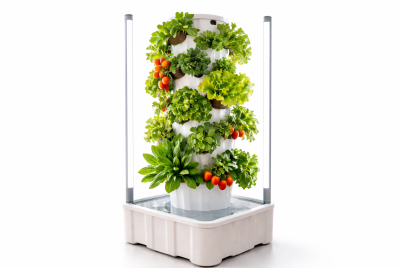
A hydroponic tower garden grows plants vertically using nutrient-rich water instead of soil. Instead of dirt, plants receive nutrients through water that circulates from the top of the tower down to each planting pocket.
Roots stay moist, oxygenated, and well-fed. Because gravity does most of the work, tower gardens use water efficiently and consistently deliver nutrients to every plant.
Think of it as stacking your garden upward instead of spreading it outward.
Why Hydroponic Tower Gardens Are Perfect for Small Spaces
Traditional gardens need horizontal space. Tower gardens don’t.
That’s the game-changer.
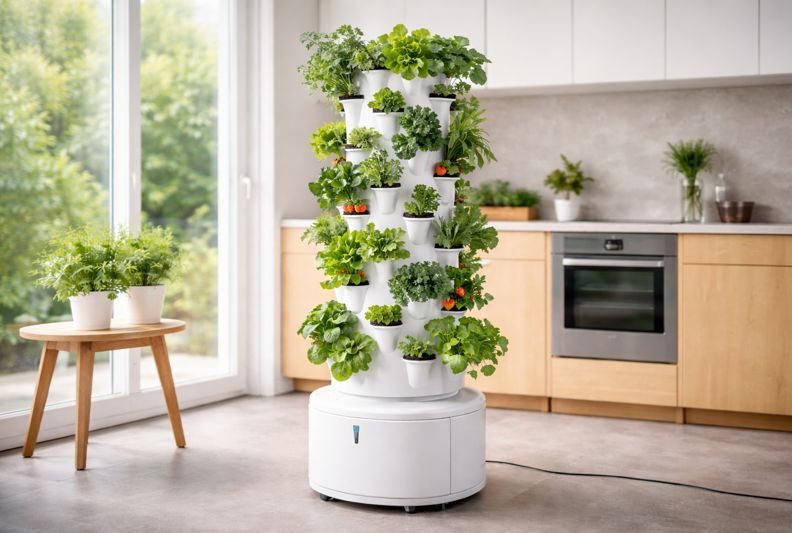
A single hydroponic tower can replace multiple raised beds while taking up about the same space as a floor lamp. This makes it ideal for:
- Apartments and condos
- Balconies and patios
- Kitchens and laundry rooms
- Garages and spare rooms
Because everything grows vertically, you maximize production without clutter. For anyone short on space but big on fresh food, it’s an easy win.
How a Hydroponic Tower Garden Works
Most hydroponic tower systems follow the same basic process:
- Water mixed with nutrients sits in a base reservoir
- A small pump pushes water to the top of the tower
- Water trickles down through each plant site
- Roots absorb nutrients and oxygen
- Excess water drains back into the reservoir
This continuous loop keeps plants hydrated without overwatering. Plus, because nutrients are delivered directly to the roots, plants grow faster than in soil.
Key Benefits of Growing With a Hydroponic Tower
Hydroponic tower gardens aren’t just space-saving—they’re efficient, productive, and surprisingly low-maintenance.
Faster Growth
Because nutrients are supplied directly, plants spend less effort searching and more time developing.
Less Water Waste
Water efficiency is one of hydroponics’ biggest advantages, as most of the water is reused rather than wasted.
No Soil, No Mess
No mud, no bugs hiding in dirt, and no more weeds to pull.
Year-Round Growing
With indoor lighting, you can grow fresh food regardless of season.
Cleaner Produce
Fewer pests and no soil means less washing and fewer contaminants.
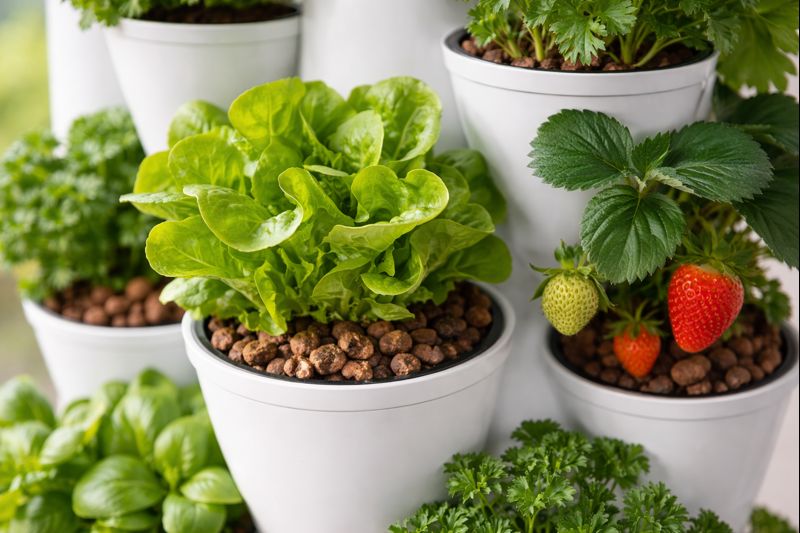
The Role of Growing Media in Tower Systems
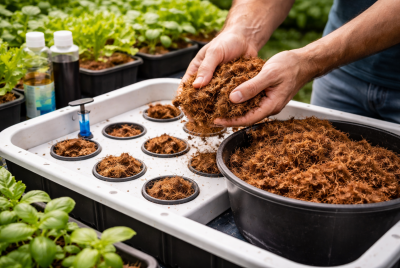
Even though hydroponics doesn’t use soil, plants still need something to anchor their roots. That’s where growing media comes in.
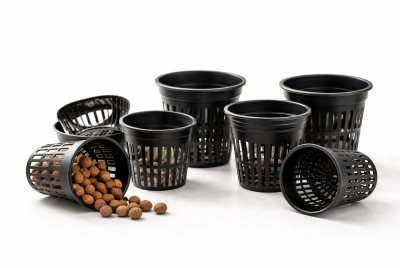
Many tower gardeners use expanded clay pebbles, which are lightweight, reusable, and excellent for root oxygenation. If you’re curious how these work in detail, this guide on hydroponic clay balls explains why they’re one of the most reliable media choices for vertical systems.
Choosing the right growing medium improves drainage, prevents root rot, and supports healthier plant growth overall.
Top 5 Tower Garden Systems
Here’s a curated list of popular and beginner-friendly hydroponic tower garden options commonly available on Amazon:
- Gardyn Home Vertical Hydroponics Growing System – Best for indoor growing with smart monitoring, built-in LED lighting, and a clean, modern design ideal for small living spaces.
- Vertical Hydroponics Growing System (Indoor/Outdoor) – A flexible, no-frills option that works well indoors or outdoors and suits growers who want simplicity and space efficiency.
- ALTO GARDEN Hydroponic Tower System – Great for small households looking for a modular, customizable system with efficient water circulation and solid plant spacing.
- Hydroponics Vertical Growing System for Lettuce and Greens – Ideal for beginners focused on leafy greens and herbs, with a lightweight design that fits easily in compact areas.
- 10-Liter Large-Capacity Hydroponic Tower System – Best for growers who want a larger water reservoir for fewer refills and more stable nutrient circulation.
Each system has different capacities, heights, and lighting needs, so the best choice depends on your space and growing goals.
Hydroponic Towers and the Shift to Compact Food Growing
When researchers look at how we’ll grow food in tighter spaces, hydroponics and vertical systems consistently rise to the top. A comprehensive 2022 review on hydroponics for medium- and small-scale operations explains that soil-free growing methods are especially valuable in urban and home settings where space and water are limited.
The study highlights how modern hydroponic setups can deliver reliable harvests while using fewer resources than traditional gardening.
At the same time, a widely cited 2017 review on vertical farming and controlled-environment agriculture takes a broader view, showing how stacking plants vertically can dramatically increase food production per square foot. The authors also acknowledge real-world challenges, such as energy use and startup costs, but still position vertical hydroponic systems as a practical answer to shrinking growing space and rising food demand.
These studies reinforce what many home growers already experience firsthand: hydroponic tower gardens aren’t just convenient—they’re part of a smarter, more efficient way to grow food in modern living spaces.
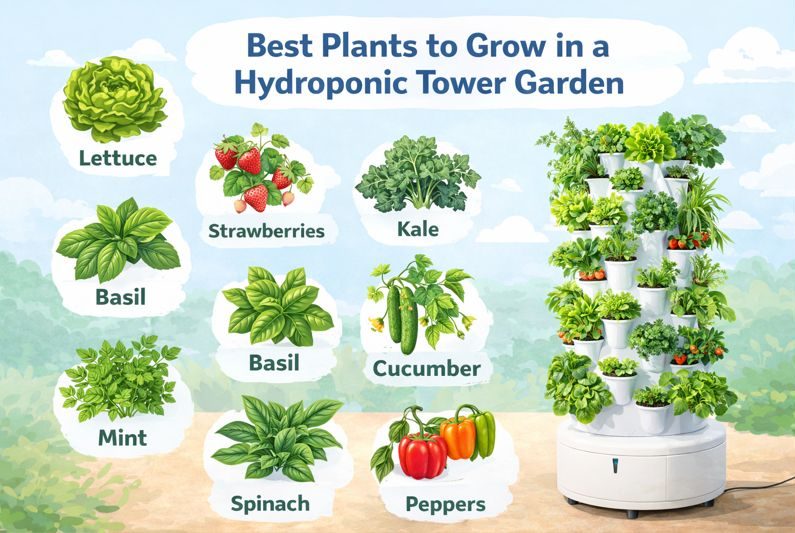
Best Plants to Grow in a Hydroponic Tower Garden
Some plants absolutely love tower systems.
Top performers include:
- Lettuce and leafy greens
- Basil, mint, parsley, and cilantro
- Spinach and arugula
- Strawberries
- Cherry tomatoes
- Peppers
These plants have compact root systems and grow well in vertical arrangements.
Plants That Don’t Thrive in Hydroponic Towers
Certain crops simply aren’t suited for tower gardening.
Avoid planting:
- Root vegetables (carrots, potatoes, beets)
- Large squash or pumpkins
- Corn
- Deep-rooted fruit trees
These plants need more space, weight support, or soil depth than towers can provide.
Water Quality: Is Tap Water Safe for Hydroponics?
Yes—tap water is usually fine for hydroponic tower gardens.
However, there are a few things to watch for:
- High chlorine levels may need time to off-gas
- Hard water can affect nutrient balance
- pH may require adjustment
Many growers let tap water sit for 12–24 hours before use or use simple filtration for peace of mind.
Maintenance Tips for Long-Term Success
Keeping your hydroponic tower healthy doesn’t have to be complicated.
- Check nutrient levels weekly
- Monitor pH regularly
- Clean pumps monthly
- Trim roots when needed
- Rotate plants for even light exposure
A little consistency goes a long way.
Final Thoughts
A hydroponic tower garden isn’t just a trend—it’s a practical way to grow fresh food in modern living spaces. Whether you’re short on space, new to gardening, or simply want cleaner produce, tower systems deliver impressive results. If you’re ready to rethink how food grows in your home, a hydroponic tower might be the smartest upgrade you make this year.
FAQs
What are the disadvantages of hydroponic towers?
Higher upfront costs, reliance on electricity, and the need to monitor nutrients regularly are the main drawbacks.
What is a hydroponic Tower Garden?
It’s a vertical system that grows plants without soil by circulating nutrient-rich water through stacked planting sites.
Are hydroponic towers good?
Yes. They save space, use less water, and often grow plants faster than soil gardens.
Which plants cannot be grown hydroponically?
Root vegetables, large fruiting plants, and deep-rooted crops don’t perform well in tower systems.
Is tap water ok in hydroponics?
In most cases, yes. Letting it sit or filtering it can improve results.