The Best Hydroponic LED Grow Lights
We may earn a commission for purchases made using our links. Please see our disclosure for more details.
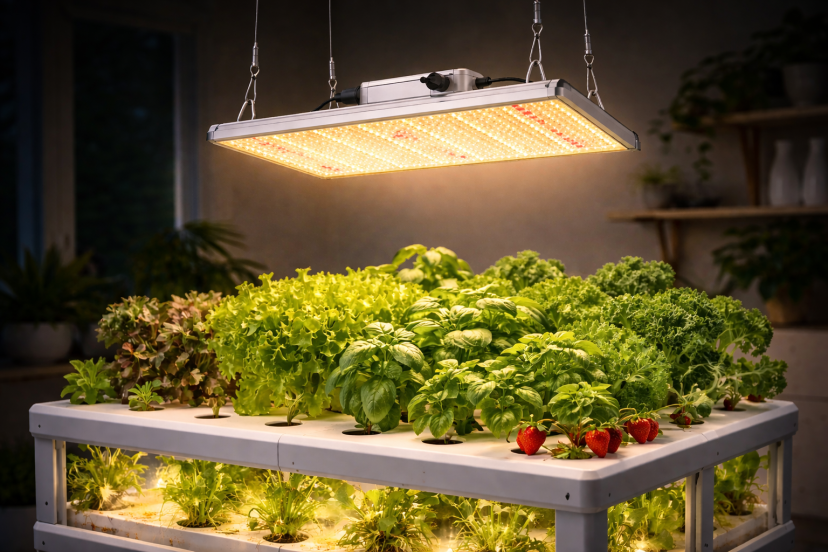
Hydroponic LED grow lights are essential for successful indoor growing. They provide the exact spectrum plants need for strong vegetative growth and high yields. Even the most advanced hydroponic setup will struggle to deliver strong results if the lighting isn’t adequate. Choosing the right LED grow light directly impacts plant health, growth speed, and overall harvest quality.
Why Hydroponic LED Grow Lights Matter
Plants do not just need “bright light.” They need the right spectrum of light. Sunlight contains a wide range of wavelengths, but indoors, you control everything.
Hydroponic LED grow lights are designed to deliver the specific red and blue wavelengths plants use most efficiently during photosynthesis. Blue wavelengths promote strong vegetative growth and healthy leaf formation. Red wavelengths stimulate blooming and support strong fruit production.
According to research published in Frontiers in Plant Science, optimizing LED light spectrum significantly increases plant biomass and improves photosynthetic performance in controlled environments. That means better growth with less wasted energy.
In addition, LED technology offers several major benefits:
- Lower electricity consumption
- Minimal heat output
- Longer lifespan (often 50,000+ hours)
- Precise control over intensity
Unlike traditional HID or fluorescent systems, modern hydroponic LED grow lights give you more control while reducing operational costs.
That’s a win for both hobbyists and serious growers.
How to Choose the Right Hydroponic LED Grow Lights
Not all grow lights are equal. Marketing can be misleading. Instead of chasing wattage claims, focus on performance factors that actually matter.
1. Full Spectrum Output
Look for lights that cover approximately 380nm to 780nm. A balanced full spectrum supports plants from seedling to harvest.
Some cheaper lights only emphasize red and blue diodes. While those can work, full spectrum lighting produces more natural growth patterns and better overall plant health.
2. PPFD and PAR Maps
PPFD (Photosynthetic Photon Flux Density) tells you how much usable light reaches your plant canopy. Reputable brands provide PAR maps to show coverage.
If a manufacturer does not share these details, consider it a warning sign.
3. Coverage Area
Match the light footprint to your grow space. A 2×2 tent needs a different intensity than a 4×4 setup. Vertical systems require even more planning because light must reach multiple levels.
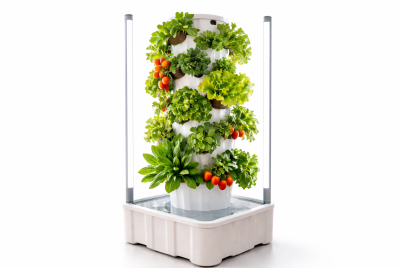
If you’re building a stacked or vertical grow system, proper light positioning becomes critical—especially in compact builds like a DIY hydroponic tower. In that case, spacing and strip lighting often work better than a single overhead panel.
4. Dimming Control
Seedlings need lower intensity than flowering plants. A dimmer allows you to adjust output without changing fixture height constantly.
5. Energy Efficiency
Modern LEDs measure efficiency in µmol/J. A higher rating indicates greater light efficiency per watt of energy used. That translates to better yields for less electricity.
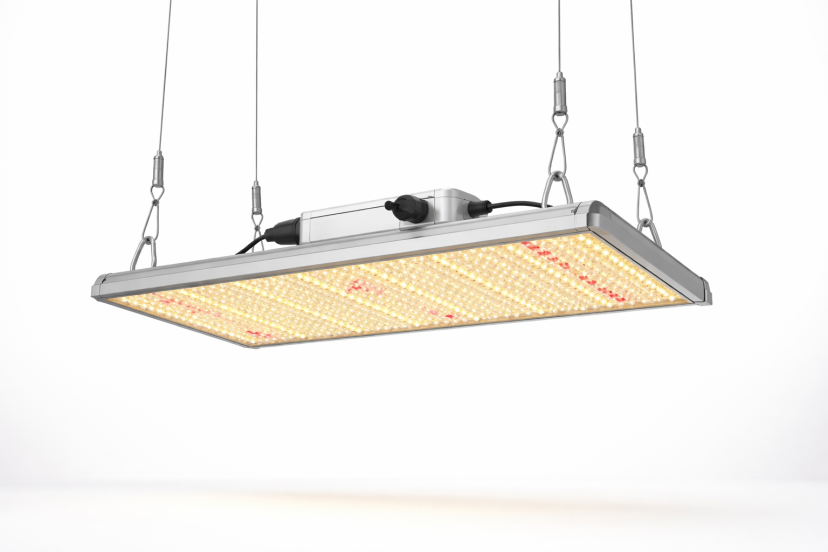
The Best Hydroponic LED Grow Lights
Below are carefully selected options for different budgets and grow setups.
1. MARS HYDRO TS600 100W LED Grow Light
Compact but powerful, the TS600 delivers full-spectrum lighting ideal for small grow tents and hydroponic systems. It provides strong canopy penetration with low heat output.
Best for: 2×2 grow spaces
Strength: Energy-efficient and reliable
Ideal for: Leafy greens and compact fruiting plants
2. VIPARSPECTRA P1000 LED Grow Light
This upgraded model offers adjustable brightness and balanced spectrum output for all growth stages.
Best for: Seedling to flowering transitions
Strength: Dimmable control + daisy chain capability
Ideal for: Indoor hydroponic growers who want flexibility
3. KingLED KP1000 LED Grow Light
Designed with strong red and blue output, this model supports healthy vegetative growth and flowering.
Best for: Budget-conscious growers
Strength: Strong spectrum balance
Ideal for: Herbs, greens, and small fruiting crops
4. GooingTop LED Grow Light
A clamp-style grow light with built-in timer and adjustable brightness levels.
Best for: Small indoor plants and countertop herbs
Strength: Flexible gooseneck design
Ideal for: Supplemental lighting
5. RWNTAO LED Grow Light Strips
Strip-style lighting that works well for shelving and vertical hydroponic setups.
Best for: Multi-tier systems
Strength: Easy mounting and adjustable intensity
Ideal for: Seedlings and microgreens
6. Barrina 4FT 5000K Full Spectrum LED Grow Lights (6-Pack)
Daylight-equivalent strip lights designed for even distribution across shelves or racks.
Best for: Large shelving systems
Strength: Wide coverage area
Ideal for: Vertical hydroponics and propagation
7. Uallhome 2-Pack 200W LED Grow Light Panel
Panel-style grow light offering strong output for medium-sized grow spaces.
Best for: Grow tents and greenhouse setups
Strength: Balanced full spectrum
Ideal for: Vegetative and flowering stages
8. LBW LED Grow Light with Stand
Freestanding design with adjustable brightness and height.
Best for: Living room plants and open grow areas
Strength: Adjustable positioning
Ideal for: Decorative and taller plants
9. Barrina T5 LED Grow Lights
Compact magnetic grow lights that install quickly and reposition easily.
Best for: Modular hydroponic systems
Strength: Magnetic mounting + simple installation
Ideal for: Small racks and enclosed grow boxes
10. VIVOSUN VS1000 LED Grow Light
A high-efficiency 100W grow light featuring Samsung LM301 diodes and a reliable driver for stable output. Designed to deliver even canopy coverage with strong vegetative and flowering performance.
Best for: 2×2 grow tents and compact hydroponic systems
Strength: High light efficiency with dimming control
Ideal for: Growers seeking premium diode performance in a compact fixture
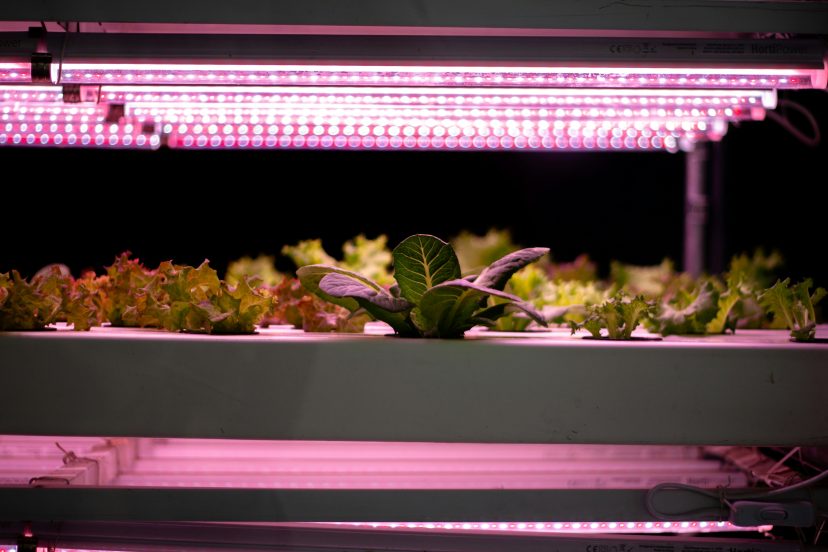
Why Spectrum and Light Quality Directly Impact Plant Growth
Hydroponic LED grow lights do more than provide brightness. Spectrum directly influences plant structure, chlorophyll production, and overall productivity.
The study LED Lighting in Horticulture by R.C. Morrow (2008) explains how precise wavelength control affects plant morphology. LEDs allow growers to adjust light quality to encourage vegetative growth or stimulate flowering. This level of control improves internode spacing, leaf development, and canopy density.
Another key study, Plant Productivity in Response to LED Lighting by Massa et al. (2008), demonstrated that red light alone limits plant development. When researchers added blue wavelengths, chlorophyll production improved and overall plant growth increased significantly. Balanced spectrum consistently outperformed narrow-spectrum setups.
These findings confirm a practical takeaway: full-spectrum hydroponic LED grow lights produce stronger vegetative growth, better flowering response, and more consistent results than basic red/blue-only systems.
In addition, both studies highlight a major advantage of LEDs—reduced heat output. Lower radiant heat allows closer canopy placement, improving light efficiency without stressing plants.
Spectrum is not optional. It determines how effectively your plants convert light into growth.
Common Mistakes Growers Make
Even great equipment can fail if used incorrectly.
Here are mistakes to avoid:
Hanging lights too close – This causes bleaching or leaf curl.
Ignoring light cycles – Plants need dark periods.
Skipping timers – Consistency matters.
Choosing cheap, unverified brands – Quality pays long-term.
Overpowering seedlings – Young plants need gentler intensity.
Adjust your light height gradually. Monitor plant response. Healthy leaves tell you everything.
How to Position Your Hydroponic LED Grow Lights
Distance depends on wattage and growth stage.
General guideline:
- Seedlings: 24–30 inches away
- Vegetative: 18–24 inches
- Flowering: 12–18 inches
Watch for signs of stress. If leaves curl upward or fade, raise the light slightly.
Meanwhile, ensure proper airflow. Even LEDs produce some heat. Good ventilation improves performance and plant health.
Are Hydroponic LED Grow Lights Worth the Investment?
Short answer: Yes.
Although high-quality units cost more upfront, they save money long term. Lower electricity bills and higher yields quickly offset the initial investment.
Moreover, LEDs last years. Traditional bulbs require frequent replacement.
If you plan to grow consistently, upgrading your lighting is one of the smartest decisions you can make.
Final Thoughts
Hydroponic LED grow lights are not just accessories—they are foundational tools for indoor gardening success. Choose full spectrum. Check PPFD data. Match the light to your grow space. Use dimmers wisely. Monitor plant response. When you invest in the right lighting, your plants reward you with stronger growth, richer color, and heavier harvests. If you’re serious about maximizing your hydroponic system, upgrading your lighting is the next logical step. Your plants are ready. Are you?
FAQs
1. How long should hydroponic LED grow lights run each day?
Most plants need 14–18 hours of light during vegetative growth and 12 hours during flowering.
2. Can LED grow lights replace sunlight completely?
Yes. High-quality full-spectrum LEDs provide all necessary wavelengths for indoor growth.
3. Do hydroponic LED grow lights increase electricity bills?
They consume significantly less energy than HID systems, making them more cost-efficient.
4. What happens if grow lights are too close?
Leaves may bleach, curl, or show light burn symptoms. Adjust height immediately.
5. Are expensive grow lights really better?
Generally, yes. Higher-end models provide better efficiency, spectrum balance, and durability.