Top Hydroponic Grow Media Options for Home Growers
We may earn a commission for purchases made using our links. Please see our disclosure for more details.
Choosing the right hydroponic grow media can completely change your growing success. When you’re working without soil, you need a medium that supports roots, holds moisture, and delivers nutrients efficiently. The right choice boosts plant health, prevents common issues like root rot, and supports higher yields. Whether you’re running a compact indoor garden or a full hydroponic rack system, understanding your media options will help you grow with confidence.
Understanding Hydroponic Grow Media
In hydroponics, grow media replace soil by giving plant roots something to hold onto. While they don’t provide nutrients themselves, they control moisture retention, aeration, and root spacing. That balance is crucial.
Some media hold moisture longer, which helps seedlings. Others drain fast, making them ideal for mature plants. Because hydroponics relies on precision, the media you choose has to match your system and plants.
Why the Right Growing Medium Is Important
Your grow medium affects almost everything—nutrient delivery, water distribution, oxygenation, and even how fast your plants mature. A well-chosen medium:
- Supports consistent moisture levels
- Improves oxygen access to roots
- Reduces risk of fungal issues
- Helps stabilize pH
- Boosts nutrient absorption
When your medium performs well, your plants stay happier and your system becomes easier to manage.
Top Hydroponic Grow Media Options
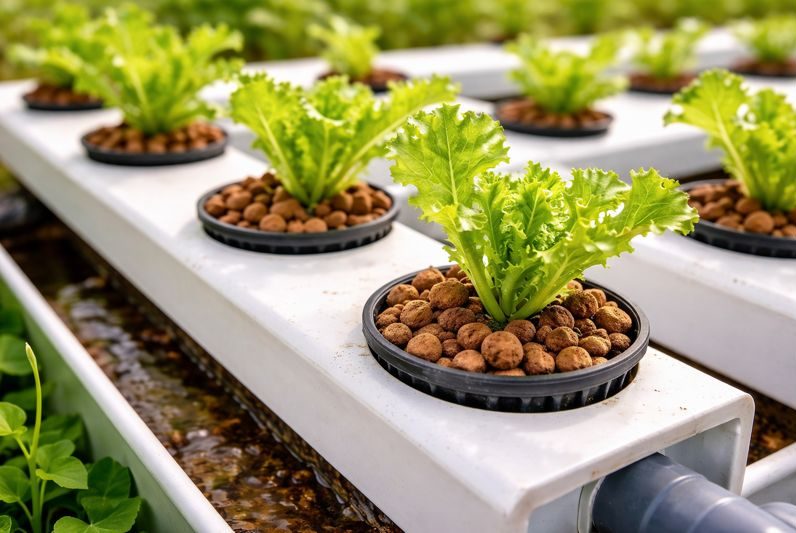
Expanded Clay Pebbles (LECA)
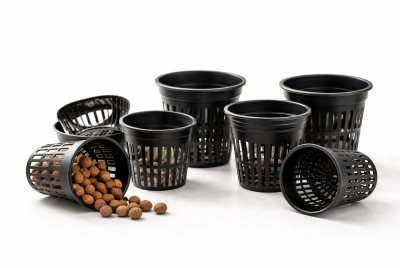
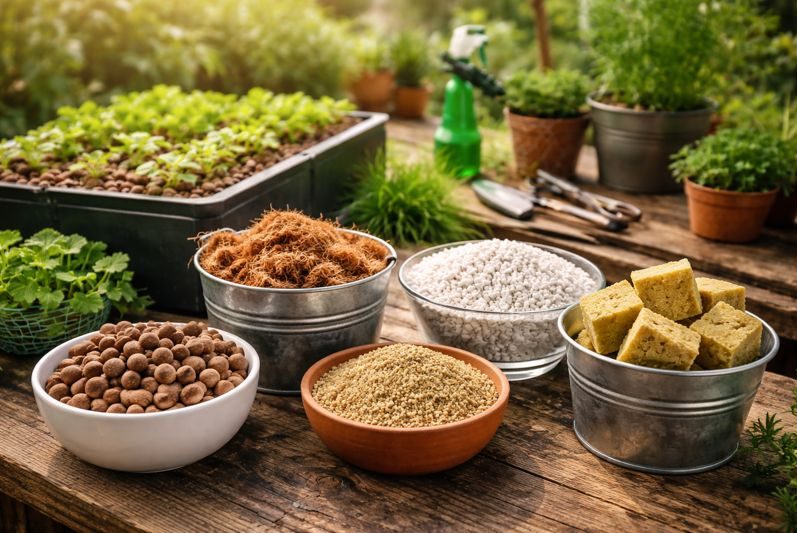
LECA remains one of the most dependable hydroponic grow media because it balances moisture, structure, and aeration better than most alternatives. Its round, porous clay spheres create air pockets that roots love, making it ideal for systems where oxygen flow is essential. Since it’s reusable and pH neutral, many home growers rely on it for long-term setups. The only real drawbacks involve preparation: LECA must be rinsed thoroughly before use, and early pH drift can occur if it’s not conditioned. It works well in hybrid hydroponic setups too, especially systems similar to a hydroponic fish tank, where roots benefit from consistent oxygen flow.
| Pros | Cons |
| Excellent aeration; reusable; neutral pH | Needs rinsing and soaking; slight early pH drift |
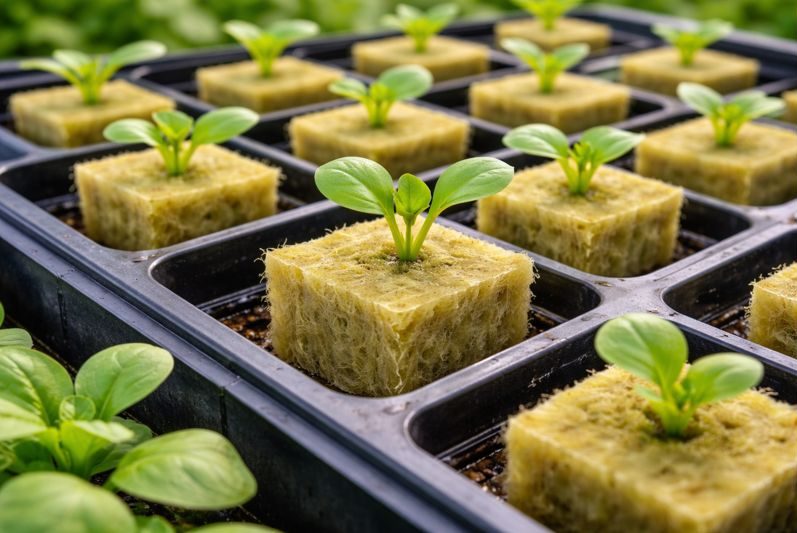
Rockwool Cubes
Rockwool excels at moisture retention, which makes it a top choice for germinating seeds and rooting cuttings. Its airy internal structure keeps young roots consistently hydrated without suffocating them. Because it’s sterile and uniform, Rockwool produces predictable results across batches. Still, it requires pH adjustment prior to use, and it isn’t biodegradable, which may matter for growers looking for eco-friendly materials.
| Pros | Cons |
| Strong moisture retention; ideal for seedlings; sterile and reliable | Requires pH conditioning; not biodegradable; fibers may irritate skin |
Coco Coir
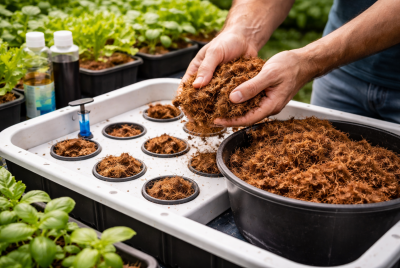
Coco coir offers a natural and eco-friendly alternative with a soil-like feel that many growers enjoy. It absorbs water easily without compacting, which helps maintain a healthy root zone even in tight spaces. Its nutrient-buffering capacity also supports stable plant growth. On the other hand, coco coir can contain excess salts from processing, so flushing before use is essential. It also provides less natural aeration than coarse media like LECA.
| Pros | Cons |
| Renewable material; holds moisture well; prevents compaction | May contain salts; needs flushing; offers less aeration than LECA |
Perlite
Perlite’s super-light structure makes it one of the best options for improving aeration in hydroponic mixes. Its ability to drain quickly helps prevent moisture-related issues and supports faster root oxygenation. Gardeners often mix it with coco coir to create a balanced medium with both airflow and moisture retention. Its two challenges are practical ones: perlite floats in active systems and releases fine dust when dry.
| Pros | Cons |
| Exceptional aeration; fast drainage; lightweight | Floats in some systems; dusty during handling |
Vermiculite
Vermiculite is the moisture powerhouse of hydroponic media. It absorbs water and nutrients like a sponge, slowly releasing them to developing roots. This makes it especially useful for seedlings or plants that prefer consistently damp environments. However, because it holds so much water, vermiculite can suffocate roots when used alone in systems that require rapid drainage and airflow.
| Pros | Cons |
| Strong nutrient and moisture retention; excellent for young plants | Holds too much water; low aeration when used alone |
Recommended Products
Here are five well-known, widely purchased hydroponic grow media products you can find on Amazon. These are reliable, beginner-friendly, and fit various systems:
- TetraBase Hydroponic Grow Media (1 Liter Bag) – A pH-neutral medium ideal for DWC and flood-and-drain setups. Great for stability and moisture control.
- Legigo 10 LB Organic LECA Clay Pebbles – A top choice for growers who want reusable, consistent clay pebbles with excellent drainage.
- 10 LB LECA Clay Pebbles (4–16 mm) – A versatile batch of clay balls suitable for buckets, net pots, and vertical hydroponic towers.
- WAURHER LECA Expanded Clay Pebbles (1 LB) – A smaller pack ideal for hobby growers, test setups, and small hydroponic systems.
- JolliKids Rockwool Cubes (600 pieces) – Perfect for seed starting, cloning, and transplanting into larger hydroponic units.
How to Choose the Best Medium for Your System
Different hydroponic systems demand different moisture and aeration levels. Here’s a quick guide:
For DWC and bucket systems:
Go with LECA. Roots need oxygen, and clay pebbles provide unmatched airflow.
For seedlings and cuttings:
Rockwool cubes shine. They keep moisture stable while encouraging strong root development.
For drip systems:
Coco coir offers soil-like comfort with better nutrient absorption.
For blends:
Combine coco coir with perlite for a moisture-balanced, aerated mix.
For wick systems or passive hydroponics:
Perlite or coco coir works well depending on moisture needs.
Research-Backed Benefits of Hydroponic Grow Media
Scientific findings continue to support hydroponics as a highly efficient way to grow plants. Multiple agricultural studies show:
- Inert media like LECA prevent pathogen buildup, reducing risks of soil-borne diseases. A comprehensive review of hydroponic substrates highlights how high-porosity media, including LECA, improve oxygen flow and lower the likelihood of pathogen development.
- Rockwool maintains stable moisture, which improves germination consistency. Researchers note that its uniform structure helps seedlings establish quickly because the moisture level stays steady across the cube.
- Coco coir enhances nutrient uptake, especially potassium and nitrogen, compared to peat-based mixes. One study comparing coco coir and rockwool found that plants grown in coir absorbed more nutrients and produced higher yields overall.
- Proper aeration boosts root respiration, leading to faster growth and stronger nutrient absorption. The same substrate review emphasizes that pore space and airflow directly influence root efficiency and overall plant performance.
These insights underscore how much your grow medium can elevate your system’s performance.
Conclusion
The grow medium you choose becomes the foundation of your entire hydroponic system. When you match the right medium to your setup, everything becomes easier—watering, feeding, maintenance, and root development. Whether you lean toward LECA for aeration or rockwool for germination, investing in quality media shapes your long-term success as a home grower.
Hydroponics is all about control, efficiency, and growth potential. With the right medium, your plants will reward you with stronger roots and higher yields. Now is the perfect time to experiment, test different media, and discover what fits your system best.
FAQs
1. What is the best hydroponic grow media for beginners?
LECA clay pebbles are the easiest to work with because they provide excellent aeration and simple maintenance.
2. Can I mix different hydroponic grow media?
Yes. Many growers blend coco coir and perlite to balance moisture retention and airflow.
3. Do I need to sterilize my grow media?
Reusable media like LECA should be rinsed and sterilized between cycles to prevent contamination.
4. Is rockwool safe for hydroponics?
Yes, but it needs pH conditioning before use. Wear gloves when handling due to its fibrous texture.
5. How do I know when to replace my grow media?
Replace it when you notice salt buildup, mold, or compacted areas that restrict airflow.