How To Build A Hydroponic Fish Tank
We may earn a commission for purchases made using our links. Please see our disclosure for more details.
A hydroponic fish tank is one of the simplest ways to grow fresh plants while keeping fish in a clean, balanced environment. Instead of relying on soil, your plants use nutrients produced naturally by the fish, creating a closed-loop system that’s efficient, sustainable, and surprisingly easy to maintain. Whether you’re a beginner or upgrading an existing setup, this guide walks you through how a hydroponic fish tank works, what equipment you need, and the exact steps to build a healthy, self-sustaining system.
What Is a Hydroponic Fish Tank and Why Build One?
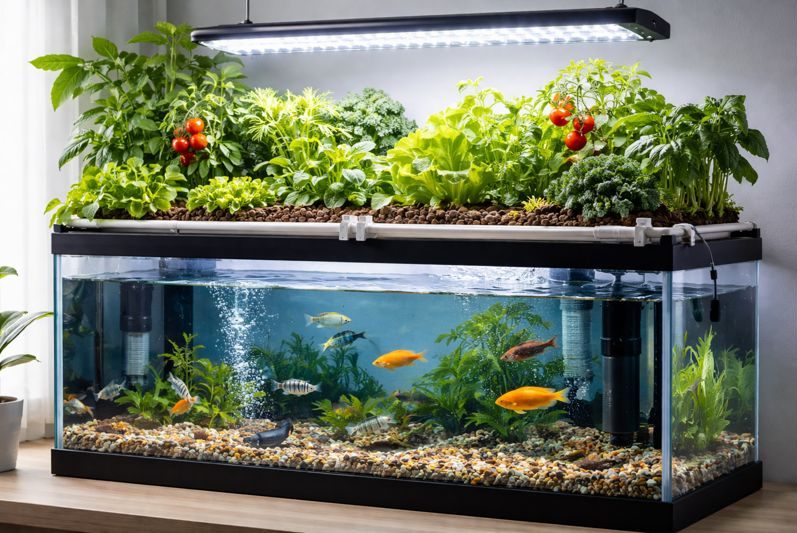
A hydroponic fish tank combines fishkeeping with soil-free plant growing, creating a small ecosystem where each part supports the other. Fish produce nutrient-rich waste, beneficial bacteria convert that waste into plant food, and the plants help keep the water cleaner for the fish. Because the system recycles water and nutrients, it’s efficient, compact, and ideal for indoor growers who want a low-maintenance setup with steady results.
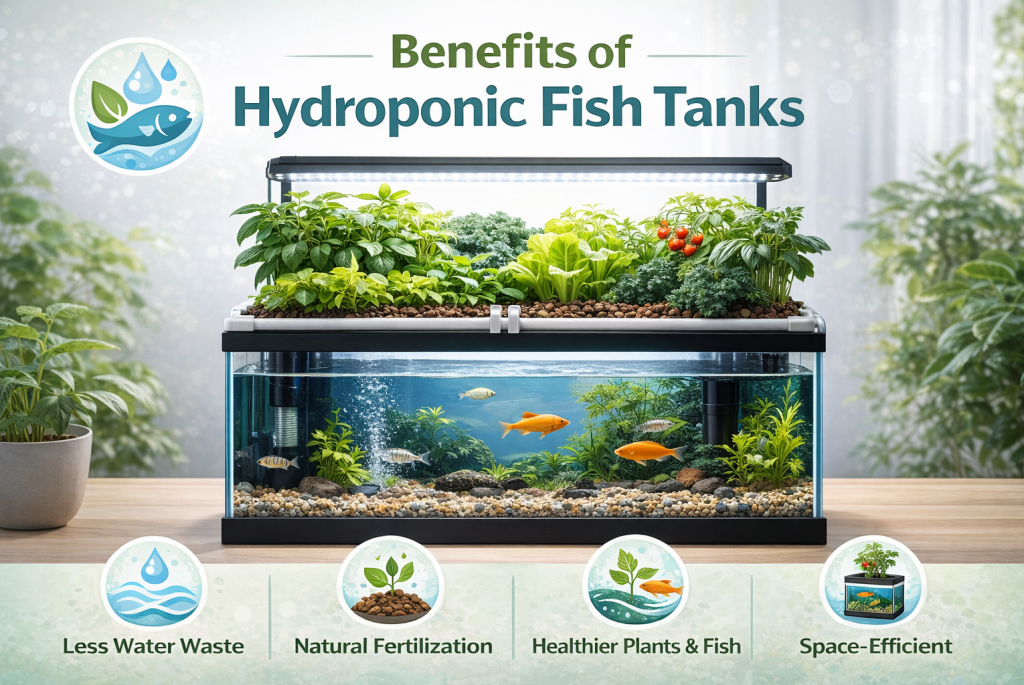
One major benefit is sustainability. Hydroponic fish tanks use significantly less water than traditional gardening because the water is constantly reused rather than lost through soil absorption. They also provide faster plant growth since nutrients are delivered directly to the roots. For many people, the appeal goes beyond gardening—these systems offer a hands-on way to understand how natural cycles work, making them great for families, classrooms, and anyone who enjoys eco-friendly projects.
Because the plants and fish support each other, maintenance becomes simpler over time. Once the system stabilizes, you spend less time cleaning the tank or adjusting nutrients and more time enjoying a steady supply of fresh herbs or leafy greens. It’s an efficient, rewarding way to grow food while caring for fish in a healthier, more balanced environment.
How a Hydroponic Fish Tank Works
Here’s the big picture:
- Fish produce ammonia-rich waste.
- Helpful bacteria break down the ammonia and turn it into plant-friendly nitrates.
- Plants absorb those nitrates as nutrients.
- Clean, filtered water returns to the tank.
It’s a natural partnership. The plants feed on what the fish don’t need, and the fish enjoy cleaner, healthier water. The only things you manage are feeding the fish and keeping an eye on water parameters.
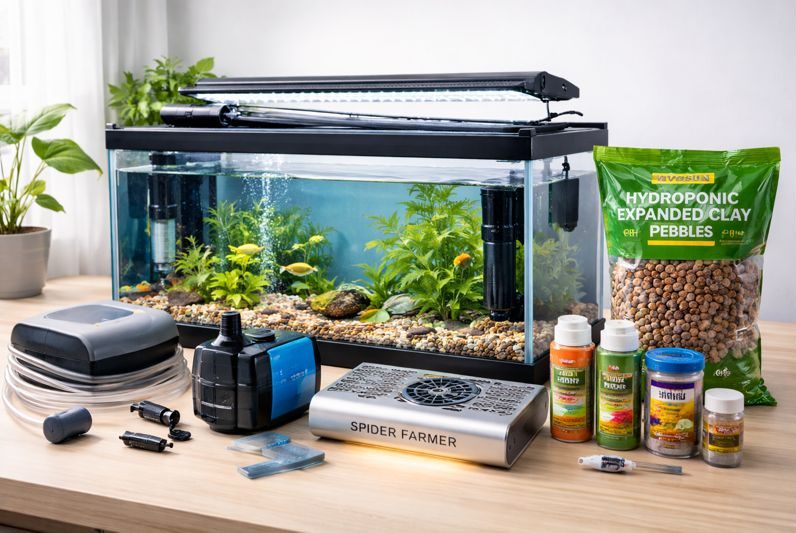
What You Need Before You Start
Tank Size
A larger tank (20 gallons or more) is easier to stabilize. Smaller tanks fluctuate quickly, which can stress both fish and plants.
Pumps & Filtration
A reliable water pump keeps nutrients circulating. A backup air pump ensures oxygen stays consistent—especially during hot days or power fluctuations.
Growing Media
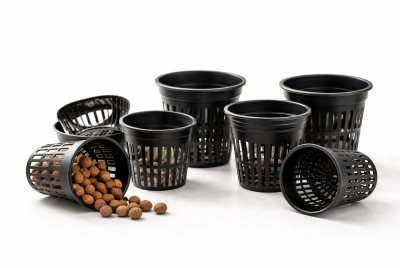
Clay pebbles, gravel, or lava rock all work well. They don’t break down in water and offer plenty of space for bacterial colonies to live.
Lighting Requirements
If you’re growing indoors, use full-spectrum LED grow lights. Leafy greens need at least 10–12 hours of bright, consistent light each day.
Step-by-Step Guide: How To Build a Hydroponic Fish Tank
Step 1 — Choose the Right Fish
You want hardy fish that tolerate a range of water conditions. Popular choices include:
- Tilapia
- Goldfish
- Guppies
- Koi (for larger tanks)
Tilapia grow quickly, while goldfish and guppies suit smaller indoor systems. Avoid sensitive species that can’t tolerate small fluctuations in water parameters.
Step 2 — Set Up the Fish Tank
Rinse the tank, place it on a stable surface, add your substrate (optional), and fill it with dechlorinated water. Install your filter and air pump, then let the tank run for at least 24 hours before introducing anything.
Step 3 — Install Your Pump & Grow Bed
Your water pump will move nutrient-rich water from the aquarium to the grow bed. Ensure the grow bed:
- Sits above the tank
- Has a drainage system
- Uses media like clay pebbles
This step is where your ecosystem begins to take shape.
Step 4 — Add Plants to the System
Start with fast-growing varieties such as:
- Lettuce
- Basil
- Mint
- Spinach
Their quick growth helps stabilize nitrate levels and supports the initial cycling process.
Step 5 — Cycle the System
Cycling establishes the beneficial bacteria that convert fish waste into plant nutrients. It usually takes 2–4 weeks. During this time, test ammonia, nitrites, and nitrates frequently.
You should see:
- Ammonia go up
- Nitrites spike
- Nitrates rise steadily
Once ammonia and nitrites read zero and nitrates appear, you’re good to go.
Step 6 — Maintain Water Quality
Stable water quality keeps both fish and plants thriving. Check weekly:
- pH: 6.5–7.5
- Ammonia: 0 ppm
- Nitrites: 0 ppm
- Nitrates: 20–40 ppm
Small adjustments go a long way in keeping your system balanced.
Best Plants and Fish for Hydroponic Fish Tanks
Best Plants
Leafy greens adapt quickly to aquaponic-style hydroponic tanks. Some excellent choices:
- Kale
- Chard
- Arugula
- Herbs like cilantro and parsley
They consume nitrates efficiently and grow fast.
Best Fish
Choose fish that match your tank size. For indoor systems:
- Goldfish
- Zebra danios
- Mollies
For larger outdoor setups:
- Tilapia
- Carp
- Bluegill
The ecosystem works best when you cut down on overcrowding and keep feeding consistent.
Recommended Products
Here are five reliable products that make building and maintaining your hydroponic fish tank much easier:
1. Hygger Quiet Submersible Pump
This compact and energy-efficient pump is known for its quiet operation and steady water flow. It keeps nutrients circulating evenly throughout the system, which helps maintain healthy water conditions for both fish and plants. A great choice for beginners who want a trouble-free pump.
2. Aqueon LED 20-Gallon Aquarium Kit
A perfect starter tank that includes LED lighting, a preset heater, a filter, and other essentials. Its 20-gallon capacity offers a stable environment for fish, making it easier to balance water parameters when paired with a grow bed.
3. Hydroponic Clay Pebbles
Lightweight, porous, and reusable, these clay pebbles are ideal for hydroponic grow beds. Their structure allows excellent drainage and aeration, helping plant roots stay healthy while providing plenty of space for beneficial bacteria to thrive.
4. NICREW Aquarium Air Pump
A dependable air pump that boosts oxygen levels in the tank—something your fish and beneficial bacteria both need to stay healthy. It produces steady airflow and operates quietly, which is perfect for indoor aquaponic setups.
5. Spider Farmer Full Spectrum Grow Light
This full-spectrum LED light supports strong, even plant growth in indoor systems. It’s energy-efficient, runs cool, and provides the balanced light spectrum that leafy greens and herbs need to thrive in a hydroponic fish tank setup.
Research-Backed Benefits of Hydroponic Fish Tanks
Two recent scientific studies help explain why hydroponic fish tank systems work so well and how simple design choices can improve results.
1) Better Water Management Improves Plant and Fish Health
A 2024 review on ScienceDirect analyzed over 100 aquaponic and hydroponic studies. Researchers found that the way water moves through the system strongly affects plant growth, nutrient balance, and fish health. Systems with steady, well-regulated water flow—especially in media beds or raft systems—showed cleaner water and healthier plants.
Key takeaway:
Consistent water flow and good hydroponic design help plants absorb nutrients more efficiently and keep fish in a cleaner, healthier environment.
2) Proper Flow Rates Boost Growth for Both Plants and Fish
A 2023 Scientific Reports study tested four different hydraulic loading rates (how quickly water flows through the system). Lettuce grew best at a moderate flow rate of 2.4 m/day, while fish performed best with the highest rate tested (3.0 m/day).
Key takeaway:
Adjusting the water flow rate is one of the simplest ways to improve plant growth and support stronger fish performance.
Common Mistakes to Avoid
Here are the issues most beginners face:
- Overfeeding fish
- Adding fish too early (before cycling)
- Choosing the wrong grow media
- Using weak or unreliable pumps
- Ignoring pH swings
- Overcrowding the tank
A little patience and regular monitoring prevent nearly every major problem.
Final Thoughts
Building a hydroponic fish tank is more than a DIY project—it’s a living system that connects you to a natural cycle unfolding every day. Once it stabilizes, you’ll enjoy cleaner water for your fish, fresh greens for your kitchen, and a surprisingly low-maintenance setup. If you love hands-on growing, this system becomes addictive in the best way. The longer it runs, the more you appreciate how beautifully it balances itself.
FAQs
1. Is a hydroponic fish tank the same as aquaponics?
They’re closely related. A hydroponic fish tank is typically a smaller, simplified version of aquaponics designed for home use.
2. How much time does the system need to fully cycle?
Usually 2–4 weeks, depending on temperature and your bacterial colony growth.
3. Is it possible to grow fruiting plants such as tomatoes in this setup?
Yes, but they require stronger lighting and larger systems. Leafy greens are easier for beginners.
4. Do I need special fish food?
A high-quality balanced pellet works fine. Avoid overfeeding to prevent ammonia spikes.
5. How frequently do I need to replace the water?
If your system is balanced, partial water changes every 2–3 weeks are enough.