The Best Hydroponic Fertilizers
We may earn a commission for purchases made using our links. Please see our disclosure for more details.
Growing healthy plants without soil depends on one critical factor: choosing the right hydroponic fertilizers. In hydroponic systems, nutrients are delivered directly through water, so the quality and balance of your fertilizer can make or break your results. The right formula supports faster growth, stronger roots, and higher yields, while the wrong one can lead to nutrient deficiencies and stalled plants. In this guide, you’ll learn what makes a hydroponic fertilizer effective, how to choose the best option for your setup, and which products deliver reliable performance for growers at any level.
Why Hydroponic Fertilizers Matter More Than You Think
In soil gardening, plants can draw on nutrients already present in the ground. In hydroponics, that safety net disappears. Your nutrient solution becomes the whole meal.
So when the fertilizer is off, your plants know it fast.
Leaves may yellow. Growth can stall. Roots can weaken. Even worse, the issue is not always the amount of fertilizer. Sometimes it’s the balance, the pH, or the way certain nutrients interact in water. Oklahoma State Extension notes that pH plays a major role in nutrient availability, and hydroponic nutrient solutions are commonly kept around pH 5 to 6, often near 5.5. Missouri Extension similarly recommends an optimum range of about 5.5 to 6.5 for many hydroponic crops.
That’s a big reason hydroponic fertilizers are not the same thing as regular garden plant food. You need something designed to dissolve well, stay available in water, and deliver macro- and micronutrients in the right ratio.
What Makes a Good Hydroponic Fertilizer
A good hydroponic fertilizer does three things really well.
First, it provides a complete nutrient profile. Your plants need nitrogen, phosphorus, and potassium, of course. However, they also need calcium, magnesium, sulfur, iron, manganese, zinc, boron, copper, and molybdenum. Cornell’s hydroponic recipe guide highlights the importance of delivering the full set of essential elements in the root zone.
Second, it mixes cleanly. Nobody wants sludge, clogging, or weird residue floating through a reservoir.
Third, it fits your growing style. Some growers love the flexibility of multi-part nutrients. Others want a simpler one-part or two-part system that removes guesswork.
The best product is not always the fanciest one. It’s the one you can mix correctly, monitor consistently, and use without turning every feeding into a chemistry exam.
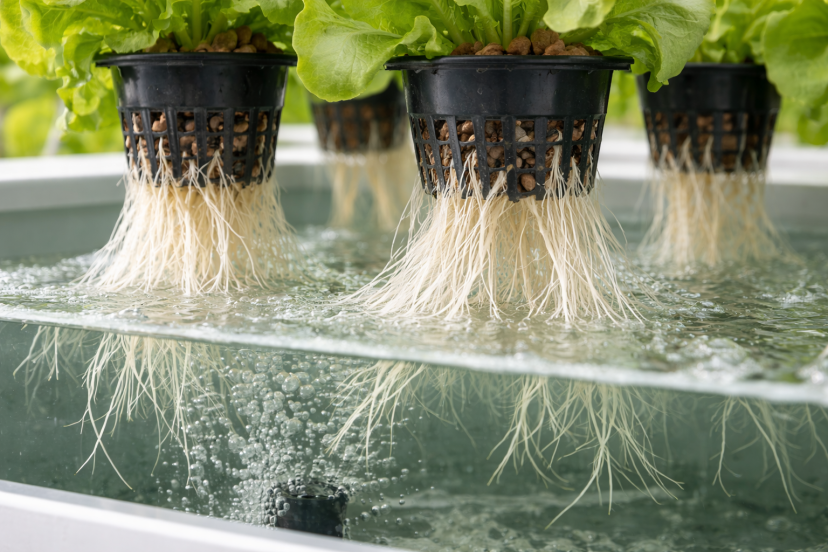
Liquid vs. Powder Nutrients: Which One Should You Choose?
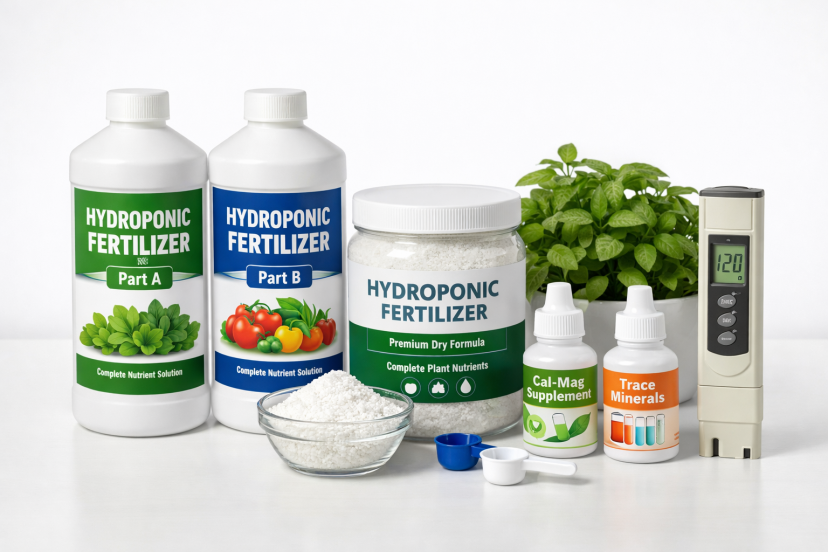
Liquid nutrients are the easygoing option. They’re convenient, beginner-friendly, and usually quick to mix. If you’re just starting out, liquids can make hydroponics feel much less intimidating.
Powdered nutrients, however, usually cost less per feeding and are often preferred by growers running larger systems. They store well, ship more efficiently, and can be very economical over time.
So which is better?
If you want simplicity, go liquid. If you want value and don’t mind measuring carefully, powder is often the smarter long-term play.
One-Part vs. Two-Part vs. Three-Part Formulas
This is where many growers overthink things.
A one-part formula is the simplest. You scoop or pour one product, mix it in water, and move on with your life. That’s great for casual growers and countertop systems.
A two-part formula gives you a bit more control while still staying manageable. It’s popular because some nutrients stay more stable when kept separate until mixing time.
A three-part formula offers the most flexibility. You can fine-tune feeding for seedlings, vegetative growth, and flowering or fruiting stages. That flexibility is useful, especially for growers who like dialing things in crop by crop.
Still, more parts are not automatically better. If a three-part system overwhelms you and you use it inconsistently, a simpler formula may outperform it in the real world.
The Best Hydroponic Fertilizers
These are five strong options based on what growers typically look for: ease of use, flexibility, complete nutrition, and value.
1. General Hydroponics Flora Series
This is a classic pick for growers who want flexibility. Because it’s a three-part system, you can adjust ratios for different growth stages. It works well for people who like control and don’t mind a little measuring.
2. General Hydroponics FloraNova Grow
If you want something simpler, this one stands out. It’s easier to work with than a full multi-bottle program, which makes it a strong choice for beginners or smaller systems.
3. Jack’s 321 Hydroponic Nutrients
This option is popular with growers who want strong value per feeding. It’s a powdered system, so it takes a bit more measuring. Still, once you get comfortable with it, it can be very cost-effective.
4. Botanicare Pure Blend Pro Grow
This is often appealing to growers who prefer a softer, more natural-feeling feeding program rather than a super clinical approach. It’s commonly considered for leafy growth phases.
5. FloraFlex Nutrients V2
For growers running larger setups or wanting concentrated dry nutrients, this is a serious contender. It’s especially appealing when efficiency and storage matter.
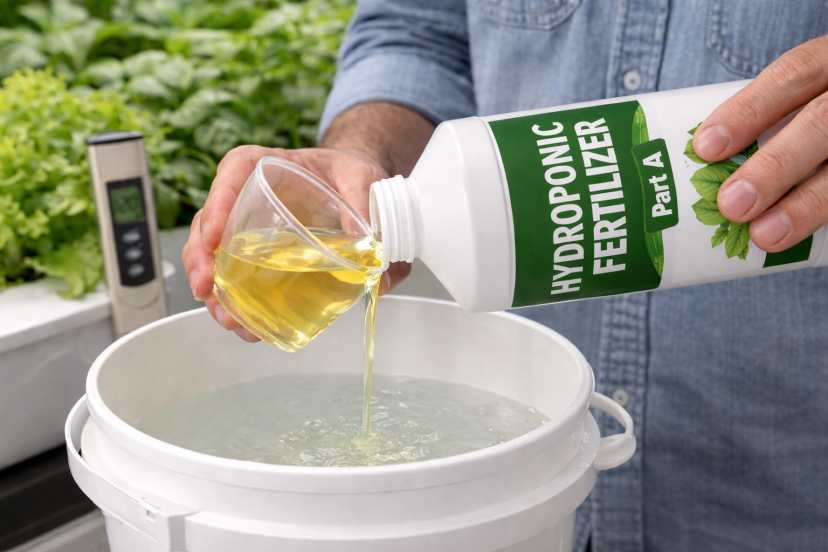
How Nutrient Balance and Fertilizer Choice Directly Impact Hydroponic Plant Growth
Research consistently shows that plants respond quickly to the quality of their nutrient solution. In hydroponics, fertilizer is the plant’s only food source, so even small imbalances can lead to slower growth, weak roots, or reduced yields.
A widely cited review on nutrient solution management in hydroponic systems explains that maintaining proper nutrient ratios is one of the most important factors for healthy plant development and strong harvests. The researchers found that balanced nutrients improve absorption and growth, while imbalances can quickly reduce productivity.
Another major review on organic hydroponic fertilizer performance and sustainability examined how different nutrient sources affect plant growth and system efficiency. The study highlighted growing interest in eco-friendly fertilizers but emphasized that nutrient source selection directly influences crop yield and stability.
The takeaway is simple and practical:
The best hydroponic fertilizer is the one that fits your plants, your system, and your routine.
Focus on these fundamentals for better results:
- Use a complete, balanced fertilizer
- Monitor pH and nutrient strength regularly
- Adjust feeding based on plant growth stage
- Stay consistent with your routine
When these habits become routine, plants typically grow faster, develop stronger roots, and produce more reliable harvests.
How Often You Should Change or Adjust Nutrient Solution
There is no magic schedule that fits every system.
Small reservoirs usually need closer attention because changes happen faster. Fast-growing plants can also pull nutrients out of balance surprisingly quickly. In practice, many growers top off water regularly, monitor pH and EC often, and refresh solution fully on a routine schedule based on crop growth, reservoir size, and system stability.
The key is not guessing. It’s measuring.
Extra Tips for Better Results
Keep your water source consistent. Start with clean water when possible. Measure pH after mixing, not before. Label everything. And when you try a new fertilizer, change one thing at a time so you know what actually caused the result.
That last part sounds boring, I know. Still, boring records beat mysterious plant problems every single time.
Final Thoughts
In the end, the best hydroponic fertilizers are the ones that deliver balanced nutrition and match your growing style. When you choose a reliable formula, monitor your plants regularly, and stay consistent with feeding, healthy growth becomes much easier to achieve. Start simple, learn what works in your system, and let your plants guide your next adjustments. If you’re refining your setup, using the right net pots for hydroponics can help improve root health and nutrient flow.
FAQs
What are the best hydroponic fertilizers for beginners?
Beginners usually do best with simple liquid nutrients because they are easier to mix and use consistently. A less complicated formula reduces dosing mistakes.
Can I use regular plant fertilizer in hydroponics?
Usually, no. Regular fertilizers are often designed for soil and may not provide the right balance or solubility for hydroponic systems.
How often should I add hydroponic fertilizer?
It depends on your system, plant type, and reservoir size. Most growers monitor pH and EC often, then adjust or replace nutrient solution as needed.
Are powdered hydroponic fertilizers better than liquid ones?
Not always. Powdered nutrients are often more economical, while liquid nutrients are usually easier for beginners. The better option depends on your setup and comfort level.
Do organic hydroponic fertilizers work as well as synthetic ones?
They can work in some setups, but results vary. Some recent research found lower lettuce performance with certain organic-based nutrient solutions compared with inorganic controls.