5 Hydroponic pH Level Control Tips to Keep Your System Stable
We may earn a commission for purchases made using our links. Please see our disclosure for more details.
If your plants look pale, weak, or slow to grow, your hydroponic pH level may be the problem. In hydroponics, pH affects how well plants absorb nutrients. When it drifts too high or too low, growth can suffer even if you are feeding correctly. The good news is that pH control does not have to be difficult. In this guide, you will learn five simple tips to keep your system stable and your plants growing well.
Why Hydroponic pH Level Matters
In hydroponics, pH affects how available nutrients are to your plants. If the number moves too high or too low, certain nutrients become harder to take up. That is why a stable pH matters just as much as the nutrients you add.
According to this hydroponic EC and pH guide from Oklahoma State University, most hydroponic crops grow best in a slightly acidic range, though the exact target can vary depending on what you are growing. That small range matters more than many beginners realize.
Unlike soil, hydroponic systems do not offer much buffering. In other words, your nutrient solution reacts faster, and problems can show up sooner. A small drift in pH can lead to weak growth, yellowing leaves, or nutrient lockout before you even notice what changed.
Common Signs Your pH Is Out of Range
Plants usually give clues when pH is off. The signs are not always dramatic at first, but they are worth noticing early.
You might see:
- Yellowing leaves even though nutrients are present
- Slow or stunted growth
- Burnt leaf tips
- Weak new growth
- Ongoing nutrient deficiencies that do not improve
- Daily pH swings that seem hard to control
Of course, pH is not the only thing that can cause these symptoms. Light, temperature, oxygen, and nutrient strength all play a role too. Still, pH is one of the first places to look when your system starts acting unpredictable.
Tip 1: Test Your Water Source First
A lot of growers focus only on the reservoir. However, the real issue often starts before the nutrients even go in.
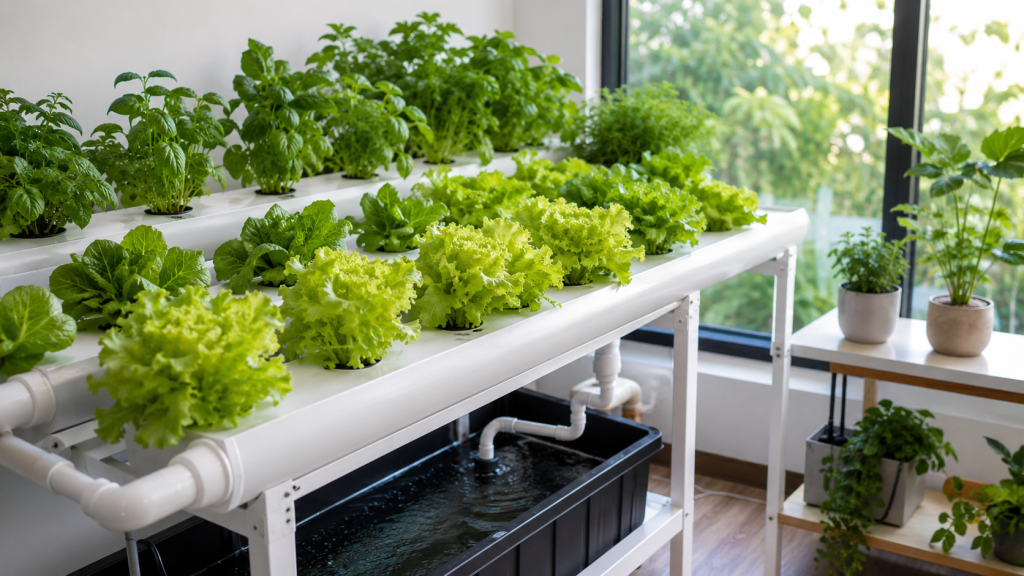
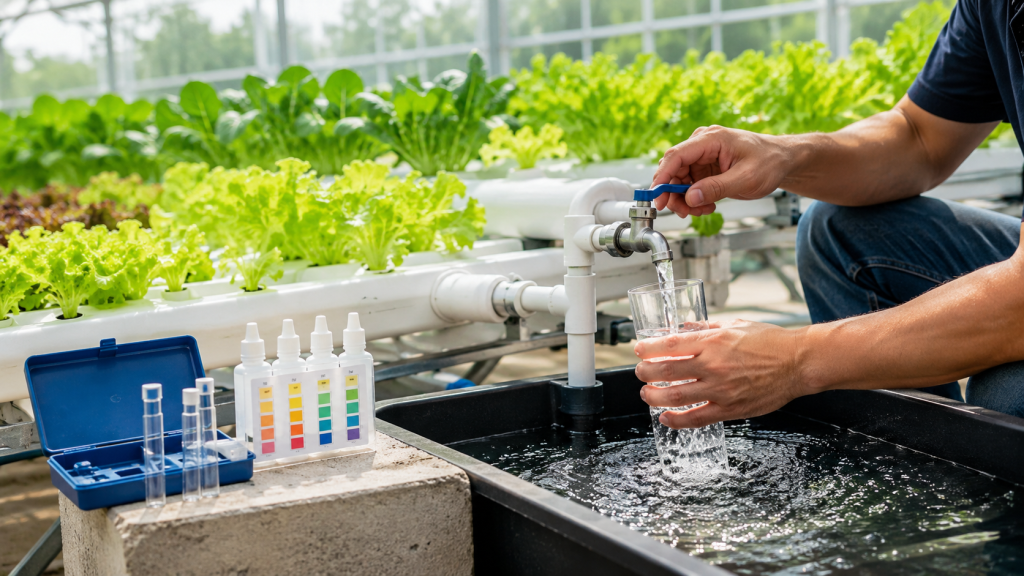
Your source water has a big effect on how stable your hydroponic pH level will be. If your tap water has high alkalinity or a lot of dissolved minerals, it can push the pH upward again and again. That means you may keep adding pH Down without ever solving the root problem.
This is why two growers can use the same nutrients and still get very different results. Their water is different.
If your pH keeps rising, test your source water separately and look at how it behaves before nutrients are added. Hard water often creates more resistance to pH change, while filtered or reverse osmosis water is usually easier to manage.
Starting with better water gives you a stronger foundation. It also makes every other correction more predictable.
If you enjoy simple, low-maintenance growing setups, you may also want to explore the Kratky hydroponic method for beginners, which can pair well with a clean and stable water routine.
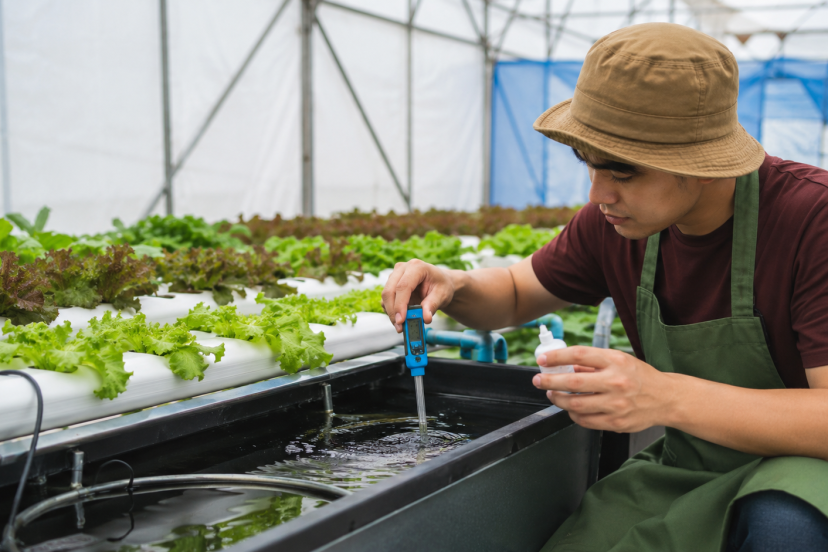
Tip 2: Use a Reliable pH Meter and Calibrate It Often
A poor reading leads to a poor correction. That is how many pH problems get worse.
If your meter is not calibrated, you may think your pH is high when it is actually fine. Then you adjust the reservoir, overcorrect it, and create the exact instability you were trying to avoid.
A dependable meter is one of the smartest investments you can make in hydroponics. It saves time, reduces guesswork, and helps you make smaller, more accurate adjustments.
The University of Missouri guide on greenhouse and hydroponic nutrient management explains that pH meters should be calibrated regularly and stored properly to stay accurate. It also notes that poor meter care can lead to unreliable readings.
That matters more than people think.
A simple meter care routine looks like this:
- Calibrate it on schedule
- Rinse the probe after use
- Store it in the proper solution
- Replace the probe when it stops holding calibration
If your numbers seem random, do not assume your plants are the problem. Sometimes the meter is the one causing the confusion.
Tip 3: Adjust pH Slowly
This tip sounds obvious, but it is where many growers get into trouble.
You check the water, see that the pH is too high, and add pH Down. Then you add a little more just to be safe. A while later, the number has dropped too far, so now you add pH Up. By the end of the day, your reservoir has swung both directions.
Plants do better with stability than with constant correction.
Instead of making large adjustments, add a small amount, stir thoroughly, wait for the solution to settle, and test again. This slower approach helps you avoid overshooting the target.
It also gives you a better feel for how your system behaves. Some reservoirs respond quickly. Others take time to fully mix and stabilize. Once you learn your normal pattern, pH management becomes much less stressful.
Think of it this way: pH control is more like steering than slamming the brakes. Small moves work better.
Tip 4: Pay Attention to Nutrient Changes Too
pH does not move on its own. It responds to what is happening in the whole system.
When plants absorb nutrients, when water evaporates, or when you top off the tank, your solution chemistry changes. That means your hydroponic pH level can shift even if you have not added anything new.
This is why it helps to look at pH together with the rest of your routine. Ask yourself:
- Did I just mix a fresh reservoir?
- Did I top off with plain water?
- Are my plants drinking faster than usual?
- Has the temperature increased?
- Am I changing nutrient strength too often?
These details matter because pH is part of a bigger picture. When you track your nutrient changes and observe how the system responds, it becomes easier to predict drift before it turns into a problem.
In other words, pH control gets easier when you stop treating it like a separate task and start seeing it as part of overall reservoir management.
Tip 5: Build a Simple pH Routine You Can Actually Follow
You do not need to check your system every hour. You just need a routine that is consistent.
That is what keeps small issues from becoming big ones.
A simple pH care routine might look like this:
Daily or Every Other Day
- Check pH
- Look at leaf color and plant posture
- Check the water level
Weekly
- Calibrate your pH meter
- Clean your tools
- Inspect the reservoir and roots
- Review whether your pH has been drifting in one direction
When Mixing Fresh Solution
- Test your source water first
- Add nutrients and mix well
- Let the solution settle
- Test pH after mixing
- Adjust slowly if needed
This kind of routine works because it removes the panic. You are no longer reacting only when plants look stressed. You are preventing problems before they even start.
Recommended Products
Here are five useful product types that can help you manage hydroponic pH more easily:
1. Digital pH Meter
A reliable digital pH meter gives you faster and more accurate readings than test strips. It is one of the most helpful tools for any hydroponic grower.
2. pH Calibration Solution Kit
Calibration solutions help keep your meter accurate. This is essential if you want readings you can trust.
3. pH Up Solution
This is used when your nutrient solution becomes too acidic and needs a gentle increase.
4. pH Down Solution
This helps lower pH when your reservoir drifts too alkaline.
5. Reverse Osmosis Water Filter System
If your tap water is hard or unstable, a reverse osmosis system can make pH control much easier from the start.
Conclusion
Keeping your hydroponic pH level stable is not about chasing the perfect number every hour. It is about creating a system that behaves predictably. Start with your water source, trust a well-maintained meter, make small adjustments, watch how nutrient changes affect the reservoir, and stick to a simple routine. When you do that consistently, your plants usually reward you with healthier growth, stronger roots, and far fewer surprises.
FAQs
1. What is the ideal Hydroponic pH Level?
Most hydroponic crops prefer a slightly acidic range, often around 5.5 to 6.5, though the exact target depends on the crop.
2. Why does my pH keep going up in hydroponics?
This often happens because of source water alkalinity, dissolved minerals, or ongoing changes in the nutrient solution as plants absorb water and nutrients.
3. How often should I test pH in hydroponics?
Most hobby growers should test daily or every other day, especially in smaller systems where changes happen faster.
4. Can I fix pH with household products?
Some household acids and bases can affect pH, but dedicated hydroponic products are usually safer, more stable, and easier to dose correctly.
5. Is a pH meter better than test strips?
Yes. A good pH meter is usually more accurate, easier to read, and better for making small adjustments in hydroponic systems.