Deep Water Culture Guide for Hydroponic Growers
We may earn a commission for purchases made using our links. Please see our disclosure for more details.
Deep water culture provides growers with a simple method of growing plants in water rather than soil. It is a favorite among hydroponic gardeners as it is cheap and simple to install. DWC, however, requires proper oxygenation, pH balance, nutrient delivery and clean water to maintain healthy roots. In this article, we’ll cover how deep water culture works, what materials you’ll need to get started, and what plants are best for it.
What Is Deep Water Culture?
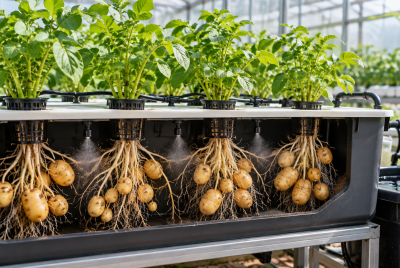
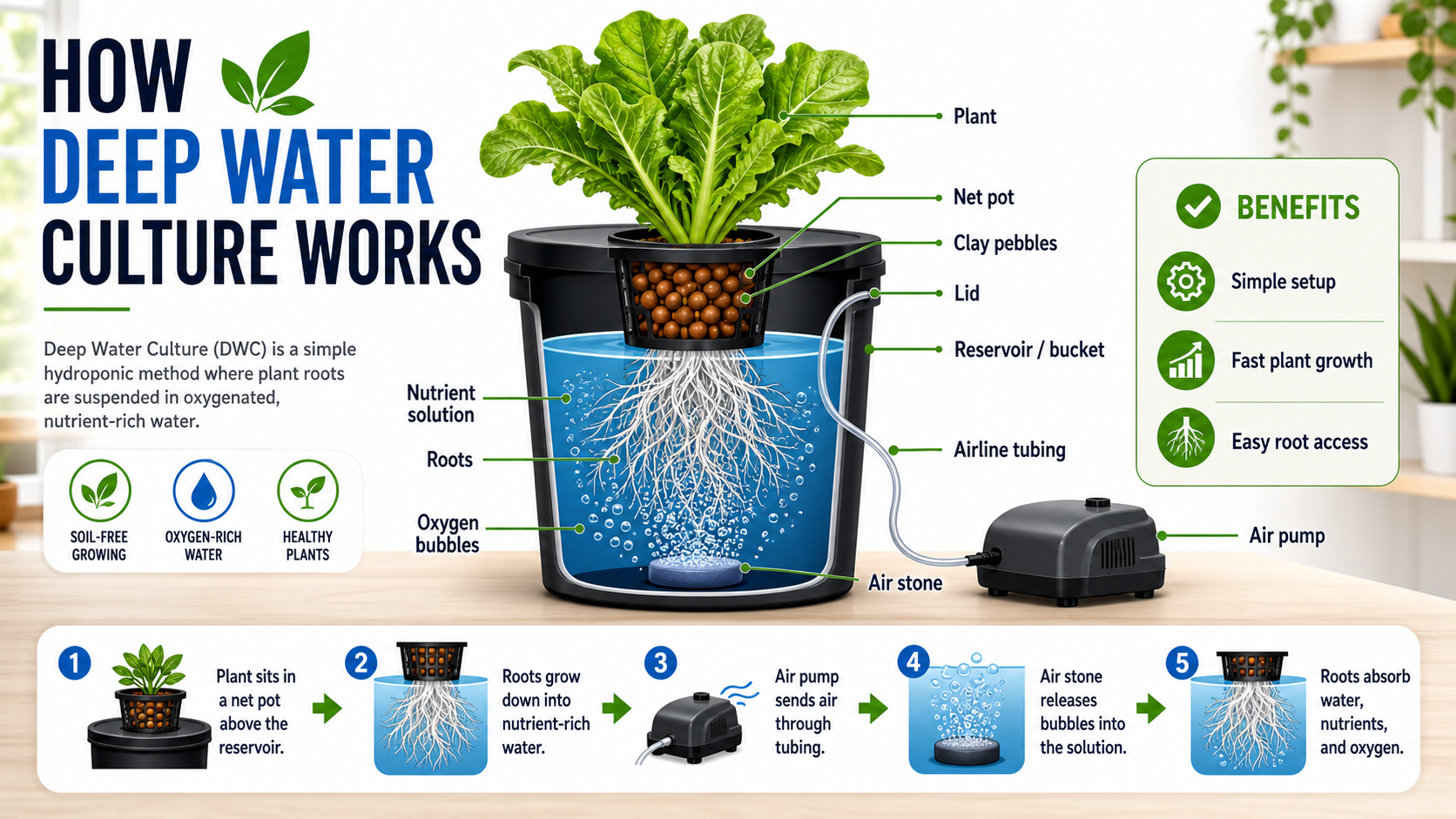
Deep water culture lets plants grow with their roots hanging directly in a water-based nutrient mix. The plant usually sits in a net pot filled with clay pebbles or another support medium. Below that, the roots grow down into the reservoir.
The air pump pushes oxygen through the air stone, helping keep the reservoir well-aerated. That part matters a lot because roots need oxygen to breathe. Without enough oxygen, roots can weaken, turn brown, or develop rot.
According to Oregon State University Extension, DWC keeps plant roots in a nutrient solution while air pumps and air stones supply the oxygen roots need.
In plain English, DWC is like giving your plants a nonstop buffet. Water, food, and oxygen stay close to the roots all day.
How Deep Water Culture Works
A basic DWC system has five main parts:
- A bucket or reservoir
- A lid or floating raft
- Net pots
- Hydroponic nutrients
- Air pump and bubbling stones
The roots sit in the nutrient solution, while the air stone releases bubbles. These bubbles add oxygen and create gentle movement in the water. That movement helps prevent stagnant pockets inside the reservoir.
Research on using deep water culture to improve lettuce productivity while saving water and mineral fertilizers shows why this setup works well: plant roots stay in direct contact with a managed nutrient solution, helping support efficient growth and better resource use.
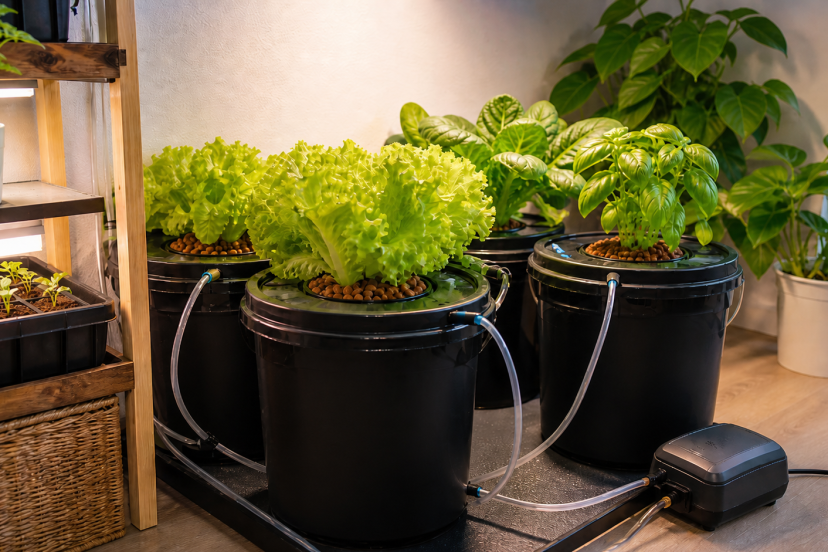
Many beginners start with a 5-gallon bucket system because it is affordable and easy to manage. However, larger growers may use multi-bucket systems, totes, or raft-style beds.
If you plan to grow indoors, your DWC setup also needs the right environment. A grow tent helps control light, airflow, humidity, and temperature. For a full indoor setup, this guide on building a better hydroponic grow tent can help you plan your space before you add buckets and plants.
What You Need to Start a DWC System
You do not need a fancy setup to begin. However, you do need reliable basics.
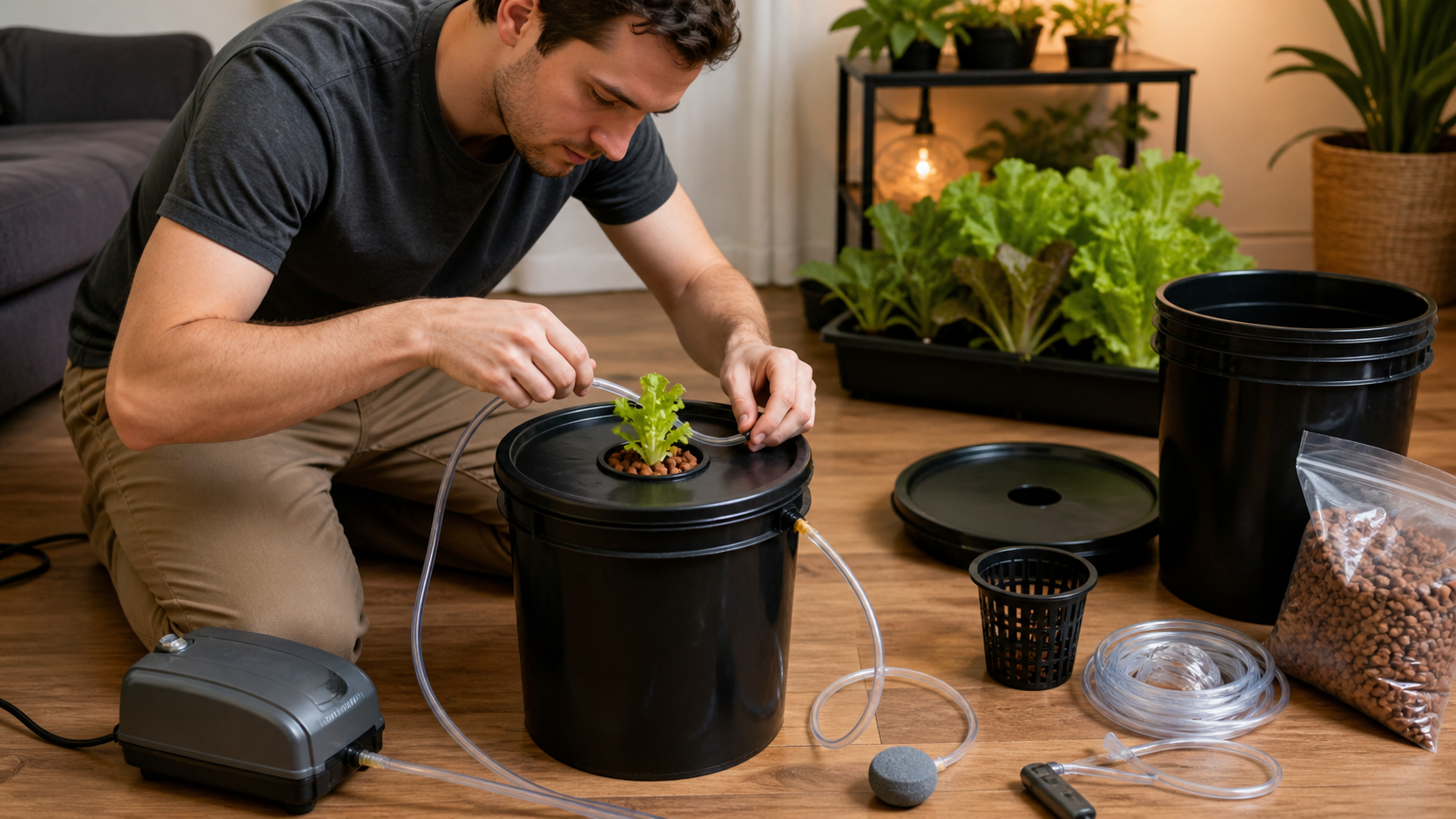
For a beginner DWC system, gather:
- A light-blocking bucket or reservoir: This holds the nutrient solution and helps keep light out to reduce algae growth.
- A net pot lid: This supports the plant while allowing the roots to grow down into the water.
- Clay pebbles: These hold the seedling steady without packing tightly around the roots.
- An air pump: This keeps oxygen moving into the water so the roots can breathe.
- Air tubing: This connects the pump to the air stone.
- Air stone: This creates small bubbles that spread oxygen through the reservoir.
- Hydroponic nutrients: These give your plants the minerals they would normally get from soil.
- pH meter: This helps you check whether the water is in the right range for nutrient uptake.
- EC or TDS meter: This measures how strong your nutrient solution is.
- pH up and pH down: These let you raise or lower the pH so the nutrient solution stays in a healthy range.
- Clean water: Start with clean water so your plants are not fighting unwanted minerals or contaminants.
- Seedlings or starter plugs: These give your plants a stable beginning before the roots reach the reservoir.
Choose a dark bucket or reservoir because light entering the nutrient solution can encourage algae growth. If your container lets light through, wrap it or cover the outside.
Also, do not cut corners on aeration. In DWC, oxygen is not optional—it keeps the whole system alive.
Best Plants for Deep Water Culture
Deep water culture works especially well for leafy greens and herbs.
Good beginner crops include:
- Lettuce
- Basil
- Bok choy
- Kale
- Swiss chard
- Mint
- Spinach
- Cilantro
Lettuce is one of the most common DWC crops because it grows quickly and does not need heavy structural support. Basil also performs well when it gets strong light and balanced nutrients.
You can grow tomatoes, peppers, and cucumbers in DWC too. However, these plants need stronger lighting, more nutrients, better support, and closer pruning. For beginners, leafy greens are much kinder teachers.
How to Set Up Deep Water Culture Step by Step
Setting up a deep water culture system is simple when you break it into small steps.
Step 1: Clean Your Equipment
Wash the bucket, lid, tubing, and air stone before use. Even new gear can have dust or residue on it.
Step 2: Fill the Reservoir
Add clean water to the bucket or reservoir. Leave a little space between the water and the lid so the roots can get oxygen as they grow.
Step 3: Set Up the Air Pump
Attach the tubing to the air pump and air stone, set the stone at the base of the reservoir, and switch the pump on. You should see steady bubbles.
Step 4: Add Nutrients
Mix your hydroponic nutrients based on your plant’s growth stage. If you are growing young seedlings, start with a weaker mix to avoid nutrient burn.
Step 5: Test the Water
Check the pH and EC before adding your plant. Most leafy greens prefer a slightly acidic pH, usually around 5.5 to 6.5.
Step 6: Add Your Seedling
Place the seedling in the net pot. Surround the starter plug with rinsed clay pebbles to keep the plant stable. Avoid burying the stem too deeply.
Step 7: Check the System Regularly
Once everything is running, check the water, bubbles, and roots often. A healthy DWC system should look clean, smell fresh, and keep the roots well-aerated.
Nutrients, pH, EC, and Water Temperature
DWC success depends on water balance. Your plants live in that reservoir, so small changes can matter.
Check pH often. If the pH drifts too high or too low, plants may struggle to absorb nutrients. Even if nutrients are present, the roots cannot always use them properly when pH moves outside the ideal range.
EC or TDS tells you how strong your nutrient solution is. If EC climbs too high, plants may show tip burn. If it drops too low, they may look pale or weak.
Reservoir temperature plays a big role because cooler water can carry more dissolved oxygen than warm water. That is why root problems often appear when reservoirs get too warm.
As a practical rule, keep the water cool, clean, and bubbling. Your roots will usually tell you how things are going.
When Should You Choose DWC Over Other Systems?
Choose deep water culture if you want a simple hydroponic system with fast plant growth and easy root access.
DWC makes sense when:
- You want to grow leafy greens or herbs
- You like checking roots directly
- You want fewer moving parts than drip systems
- You can monitor pH, EC, and water temperature
- You have reliable electricity for the air pump
However, DWC may not be ideal if you lose power often. Without aeration, roots can become stressed. It may also feel tricky in very hot spaces unless you can control reservoir temperature.
For many home hydroponic growers, though, DWC hits a sweet spot. It is simple enough to learn, but powerful enough to produce impressive results.
Conclusion
Deep water culture gives hydroponic growers a practical way to grow faster, cleaner, and more efficiently without overcomplicating the process. The system may look basic, but every part has a job: oxygen keeps roots alive, nutrients feed steady growth, pH controls uptake, and clean water protects the plant from stress. Once those pieces work together, DWC becomes more than a beginner-friendly setup—it becomes a reliable growing method you can build on season after season.
FAQs
What is deep water culture in hydroponics?
In deep water culture, roots grow down into an aerated nutrient solution. The air pump and air stone keep the water circulating and help deliver oxygen to the root zone.
Can beginners start with deep water culture?
Yes, DWC is beginner-friendly because the setup is simple. However, beginners still need to monitor pH, nutrients, oxygen, and water temperature.
What crops work well in a DWC setup?
Lettuce, basil, kale, bok choy, spinach, mint, and Swiss chard grow well in DWC. Fruiting plants like tomatoes and peppers can also grow in DWC, but they need more support and stronger light.
How often should you replace the DWC reservoir?
Many growers change the nutrient solution every 1 to 2 weeks. However, the timing depends on plant size, reservoir volume, nutrient strength, and water quality.
What causes brown roots in a DWC setup?
Brown roots can happen because of low oxygen, warm water, root disease, nutrient staining, or poor reservoir hygiene. Check smell, texture, water temperature, and aeration before making changes.