How To Choose A Hydroponics Growing Medium
We may earn a commission for purchases made using our links. Please see our disclosure for more details.
Picking the right hydroponics growing medium might seem like a small detail, but it actually plays a big role in how your plants turn out. It affects how roots grow, how water is held, and how nutrients are absorbed. With options like coco coir, clay pebbles, and rockwool, it can feel a bit confusing at first. Don’t worry—it’s easier than it looks once you know what to look for.
What Is a Hydroponics Growing Medium?
A hydroponics growing medium is a material used to anchor plant roots in hydroponic systems.
Unlike soil, it doesn’t supply nutrients on its own. Instead, it helps plants in three important ways:
• Supports root structure
• Retains water and nutrients
• Provides oxygen to the root zone
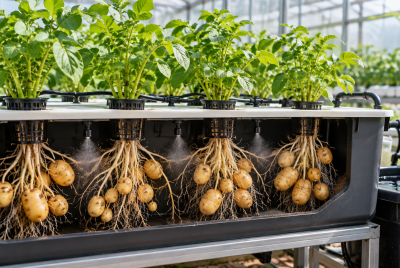
In other words, the medium acts as a physical support system for the plant while nutrient-rich water feeds the roots.
For example, clay pebbles create air pockets that keep roots oxygenated. Meanwhile, coco coir holds moisture longer, making it ideal for thirsty plants.
Because each medium behaves differently, choosing the right one matters.
How Growing Medium Impacts Plant Growth in Hydroponics
Not all hydroponic growing media deliver the same results—and research backs this up.
For example, a study comparing coconut coir, rockwool, and peat found that coco coir supported stronger plant growth, better nutrient uptake, and higher yields, especially in crops like tomatoes.
This is a big reason why many modern growers prefer coco coir—it strikes a balance between holding moisture and allowing roots to breathe.
In addition, a broader review of hydroponic substrates revealed that the best-performing media share one key trait: they maintain the right balance of air and water around the roots. According to this comprehensive review of hydroponic growing media performance, materials with high porosity (around 60–90%) consistently improve root health and nutrient absorption.
So what does this mean for you?
It means the best hydroponics growing medium isn’t just about what holds water—it’s about what creates a stable, oxygen-rich environment for roots to thrive. That’s why growers often choose coco coir, clay pebbles, or blended media instead of relying on a single material.
Common Types of Hydroponic Growing Media
Let’s look at the most widely used options.
Clay Pebbles (Hydroton)
Clay pebbles are one of the most popular hydroponic media.
They are light in weight, can be used multiple times, and allow plenty of airflow around the roots.
Advantages:
• Great drainage
• Reusable
• Stable structure
However, they do not hold much moisture.
Therefore, they work best in recirculating systems.
Coco Coir
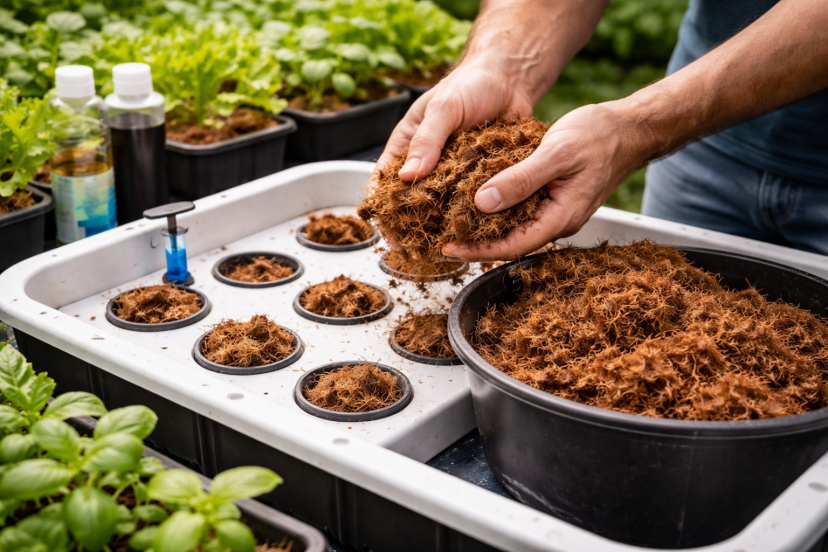
Coco coir is made from the fibrous material found in coconut shells. It behaves similarly to soil but performs better in hydroponics.
Benefits include:
• Excellent moisture retention
• Good aeration
• Sustainable material
Many growers combine coco coir with perlite to improve drainage.
If you’re planning a hydroponic setup, you may also want to explore containers designed for these media.
Choosing the right pots along with the medium helps plants develop strong root systems.
Rockwool
Rockwool remains a favorite among commercial growers.
Manufacturers create it by heating basalt rock and spinning it into fibers.
Advantages:
• Sterile and clean
• Excellent moisture retention
• Ideal for seedlings
However, it requires pH conditioning before use.
Perlite
Perlite looks like small white stones but is actually volcanic glass.
It provides:
• Excellent aeration
• Lightweight structure
• Improved drainage
Many growers mix perlite with coco coir.
Vermiculite
Vermiculite holds a large amount of water.
Therefore, it often pairs with perlite to balance moisture and aeration.
Benefits include:
• High water retention
• Good nutrient holding capacity
However, using it alone can keep roots too wet.
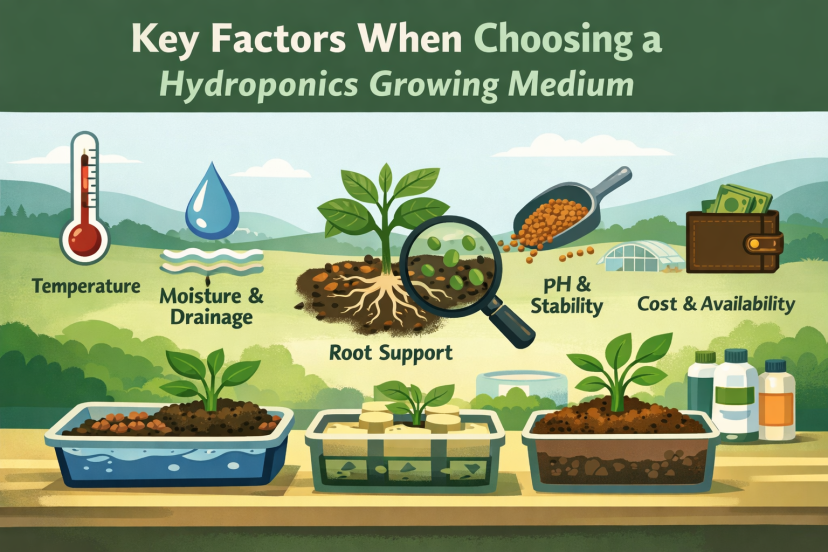
Key Factors When Choosing a Hydroponics Growing Medium
Before choosing a growing medium, take a moment to consider a few key factors.
Water Retention
Some media hold water longer than others. For example:
• Coco coir – excellent moisture retention
• Vermiculite – very high water holding capacity
• Clay pebbles – moderate retention
Leafy greens usually benefit from consistent moisture. On the other hand, herbs often prefer faster drainage.
Aeration and Drainage
Healthy roots require oxygen.
Media with high aeration prevent root rot and improve nutrient uptake.
Examples include:
• Perlite
• Clay pebbles
• Expanded shale
These materials create small air pockets around roots, improving plant health.
pH Stability
Hydroponic systems depend on balanced pH levels.
Some media remain neutral, while others may affect nutrient availability.
For example:
• Coco coir – slightly acidic but stable
• Rockwool – requires pre-soaking to adjust pH
A stable medium makes nutrient management easier.
Reusability
Some growing media can be reused after cleaning.
Reusable options include:
• Clay pebbles
• Perlite
• Expanded shale
However, materials like rockwool are usually single-use.
Reusable media can reduce long-term costs.
Plant Type
Different plants thrive in different environments.
For instance:
• Lettuce prefers moisture-retaining media
• Tomatoes benefit from well-aerated mediums
• Herbs thrive in balanced environments
Matching the medium to the crop improves yield.
Recommended Products
These products are widely used by hobbyists and experienced growers alike.
1. Hydroton Clay Pebbles
One of the most trusted clay pebble brands. Ideal for deep water culture and drip systems.
Features:
• Excellent aeration
• Reusable material
• Neutral pH
2. Mother Earth Coco Coir Mix
A premium coco coir medium used in many hydroponic gardens. Perfect for vegetables and herbs.
Benefits:
• Balanced water retention
• Organic material
• Great root development
3. Grodan Rockwool Starter Cubes
Widely used for germinating seeds. Many commercial farms rely on Grodan products.
Advantages:
• Sterile growing environment
• Excellent moisture control
• Uniform structure
4. Espoma Organic Perlite
A natural soil amendment also useful in hydroponic media blends. Great for mixing with coco coir.
Highlights:
• Improves drainage
• Increases oxygen around roots
• Lightweight and sterile
5. Vermiculite Organic Growing Medium
A classic hydroponic additive. Often combined with perlite for best results.
Features:
• Retains nutrients well
• Helps maintain moisture balance
Tips for Getting the Best Results
Choosing the medium is just the first step. To maximize success, keep these tips in mind:
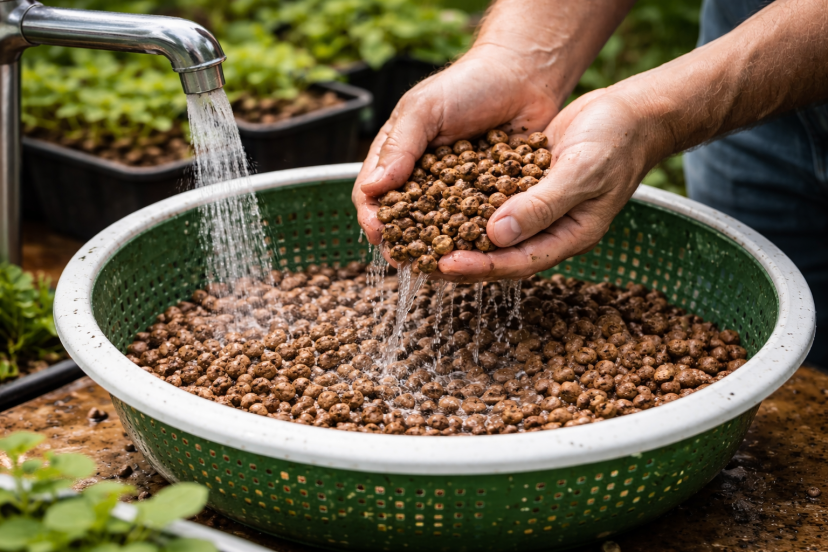
Rinse Media Before Use
Some materials contain dust or salts. Rinsing prevents nutrient imbalances.
Monitor pH Levels
Hydroponic plants absorb nutrients best between pH 5.5 and 6.5. Check levels regularly.
Avoid Overwatering
Even hydroponic plants need oxygen. Ensure roots have enough airflow.
Combine Media When Needed
Many growers blend materials.
For example:
• Coco coir + perlite
• Vermiculite + perlite
Mixing improves balance between water and oxygen.
Conclusion
The right growing medium sets the foundation for everything that follows in your hydroponic system. When roots get the right mix of air and moisture, plants grow faster, absorb nutrients more efficiently, and stay healthier overall. Focus on performance, not popularity—observe how your plants respond and refine your setup over time. That’s where the real gains happen.
FAQs
What is the best hydroponics growing medium for beginners?
Clay pebbles and coco coir are great beginner options. They are easy to use, widely available, and compatible with most hydroponic systems.
Is it okay to combine different hydroponic growing media?
Yes. Many growers combine materials such as coco coir and perlite to improve drainage and aeration.
Do hydroponic growing media supply nutrients to plants?
No. Hydroponic media only support roots and retain water. Nutrients come from the hydroponic nutrient solution.
Is rockwool safe for hydroponics?
Yes, but it requires proper preparation. Growers usually soak rockwool in pH-balanced water before planting.
How often should hydroponic media be replaced?
Reusable media like clay pebbles can last several growing cycles. However, materials like rockwool are usually replaced after one use.